Qinhuangdao Solar-Powered Mobile Toilet
The Qinhuangdao solar-powered mobile toilet is a new type of public facility that utilizes solar power for electricity, is mobile, and is environmentally friendly and energy-efficient. Its core principles and key components are as follows:

1. Energy System: Solar Collection and Utilization
This facility converts sunlight into electricity through solar panels (photovoltaic panels) installed on its roof, with an average daily power generation of approximately 0.8-1.2 kilowatt-hours per square meter (data for the Qinhuangdao area). The electricity is stored in built-in battery packs for use at night or on cloudy days. An energy management controller regulates power distribution to prevent overcharging or over-discharging, extending battery life. When sunlight is abundant, the system can achieve self-sufficiency in energy, reducing reliance on the external power grid; under cloudy weather conditions, the battery reserves can typically support several days of operation, with external charging required only in extreme cases (rare in Qinhuangdao's climate).
2. Water Usage and Wastewater Treatment: Water Conservation and Recycling
The facility is equipped with water-saving flushing devices, and some models integrate rainwater collection systems for flushing or cleaning, further reducing tap water consumption. Wastewater is treated through small-scale septic tanks or recycling filtration systems, with some models capable of using treated water for non-potable purposes (such as irrigation), forming a closed resource loop.
3. Structure and Production: Modular Design and Material Optimization
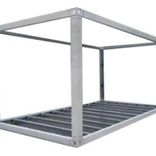
The main frame is made of fiberglass-reinforced plastic, stainless steel, or aluminum alloy, with fiberglass-reinforced plastic being widely used due to its corrosion resistance and lightweight properties. Production follows a modular design, with units such as toilets, sewage tanks, and ventilation systems prefabricated in factories and assembled on-site in just 6-8 hours, facilitating rapid deployment.
4. Application Advantages and Limitations
- Advantages:
- Environmental friendliness: Solar energy is a clean energy source that reduces carbon emissions;
- Mobility: No civil engineering is required, allowing for rapid deployment in scenic spots, construction sites, and other scenarios;
- Economical efficiency: Electricity costs are eliminated in the long term, and maintenance costs are low.
- Limitations:
- Energy efficiency decreases during short winter daylight hours;
- Battery capacity may be insufficient during peak usage periods.
Improvement directions: Optimize battery technology (increase energy density) and introduce intelligent scheduling systems (allocate energy based on usage patterns).
5. Applicable Scenarios and Economical Efficiency
The solar power option is suitable for temporary event venues and areas with weak power infrastructure, with higher initial investment but avoiding cable laying and electricity costs. Companies such as Cangzhou Hengtai offer customized services, with the amount of solar panels adjustable according to power consumption needs.