
Qinhuangdao Mobile Toilet Assembly
The assembly of mobile toilets in Qinhuangdao features modularity, speed, flexibility, and a balance between mobility and stability.
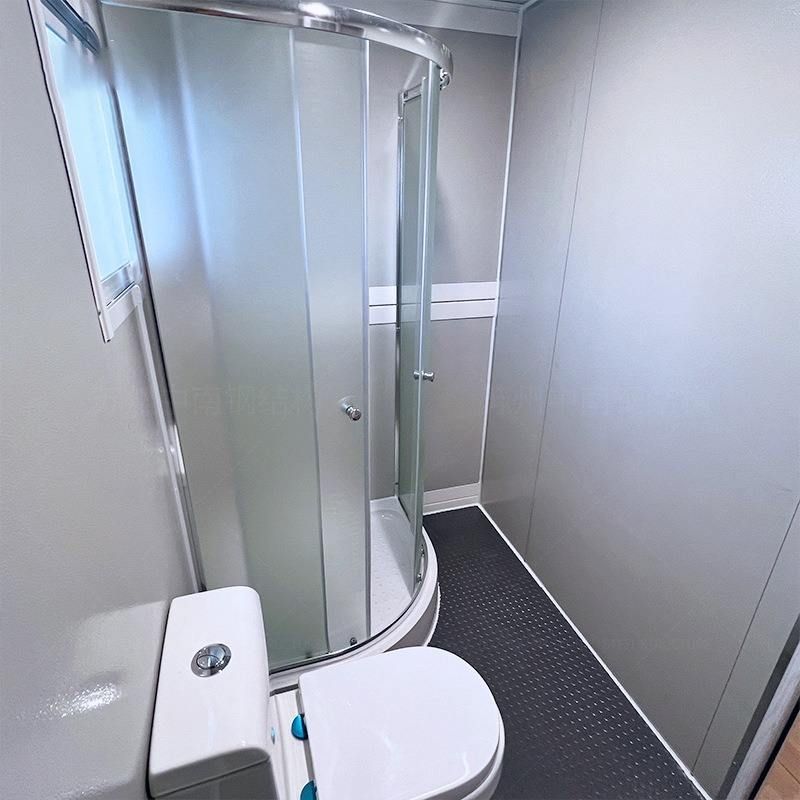
Modular Design as the Core: Mobile toilets in Qinhuangdao adhere to modular design principles, with each functional unit, such as the toilet module, sewage storage tank, and ventilation system, prefabricated in the factory. This manufacturing approach differs from the on-site construction mode of traditional construction projects, making the assembly process more efficient and orderly.
Significant Reduction in Assembly Time: Since all functional modules are prefabricated in the factory, the main tasks for on-site assembly are foundation leveling, lifting and connecting the functional modules, and final system commissioning. The assembly time for a single toilet can be controlled within 6 to 8 hours, whereas the construction cycle for traditional fixed public toilets typically takes several weeks, resulting in substantial savings in time and labor costs.
Flexible Switching of Functional Configurations: Manufacturers in Qinhuangdao achieve rapid switching between different functional configurations through standardized component production. For example, if it is necessary to replace a standard squatting toilet unit with an accessible seated toilet unit, only the corresponding module needs to be replaced, without the need for extensive renovation of the entire toilet, enhancing its flexibility and adaptability in use.
Balancing Mobility and Stability: The assembly of mobile toilets also requires consideration of the balance between mobility and stability. Mobile toilets produced in Qinhuangdao are typically equipped with heavy-duty casters and towing devices for easy transportation and movement. At the same time, the weight of a single standard unit is controlled between 1.5 and 2.2 tons, a range that ensures both transportation convenience and structural stability under 8-level wind conditions, meeting the usage requirements in various scenarios.
You may also like

Portable Toilet Rental for Construction Sites: What to Consider
Read More
Portable Toilet Rental Price Guide: Budget, Mid-Range & Premium
Read More
Portable Toilet Color Steel: A Practical Buyer's Guide
Read More