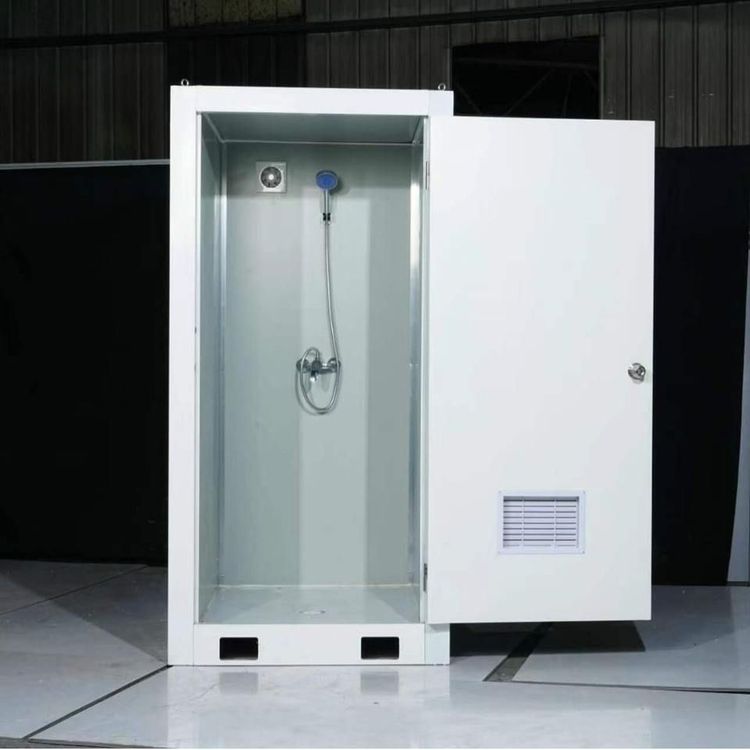
Qingyang Park Mobile Toilet Installation
The installation of mobile toilets in Qingyang Park requires following steps such as positioning, main structure installation, facility connection, and functional testing. The specific process is as follows:

Positioning and Foundation Treatment
Before installation, determine the specific location of the mobile toilet according to the park's planning, ensuring the site meets drainage requirements and has a solid ground. If the ground is uneven or has soft soil, it should be hardened in advance (e.g., by pouring concrete) or steel plates should be laid to enhance the foundation's load-bearing capacity. This step is crucial for ensuring the stability of subsequent installations. Strictly check the ground drainage slope to prevent water accumulation and equipment damage.Main Structure Installation
Choose the installation method based on the toilet type:
- Split-type mobile toilets: These feature a modular design. Use a forklift or manual labor to place the prefabricated steel structure chassis steadily at the predetermined location and adjust it to a level state using a spirit level. Then, insert the sandwich panel wall panels into the chassis slots one by one and secure them with bolts or clips. Finally, install the roof panel and perform sealing treatment (e.g., applying waterproof glue) to prevent rainwater leakage. The entire wall installation usually takes 1-2 hours.
- Integrated mobile toilets (e.g., container-type toilets): Since internal decoration and equipment integration are completed in the factory, they only need to be hoisted to the designated location as a whole using a crane on-site and connected to water, electricity, and sewage pipes. The installation time for such toilets is relatively short, usually taking 2-4 hours to complete.
- Internal Facility Connection
Install internal partitions, toilets, flushing systems, sinks (optional), and other facilities, and connect water and electricity pipelines. Note the following:
- Water and electricity connections should be operated by professionals to ensure reasonable wiring layout and compliance with safety regulations.
- Modular quick-connect designs can simplify the pipeline connection process and shorten installation time.
- Ventilation equipment (e.g., exhaust fans) should be connected to the reserved openings on the roof or walls to ensure air circulation.
- Functional Inspection and Testing
After installation, conduct a comprehensive test:
- Flush test: Check the flushing force of the toilet and the water replenishment function of the water tank.
- Circuit inspection: Confirm that the lighting, ventilation equipment, and sockets are powered normally.
- Sealing inspection: Focus on checking for leaks at the roof, wall panel joints, and pipeline connections.
In addition, users in the Qingyang area can choose rental services (such as Changzhou Runlong Environmental Protection Technology Co., Ltd.). These services typically include rapid delivery, installation, and post-maintenance, making them suitable for temporary or short-term use scenarios such as parks and commercial plazas.