Installation of Portable Toilets at Construction Sites in Qingyang
The installation of portable toilets at construction sites in Qingyang requires systematic planning that takes into account equipment types, service provider selection, and technical deployment requirements. The specific steps are as follows:

1. Clarify the Types and Functional Requirements of Portable Toilets
The portable toilets used at construction sites in Qingyang are mainly modular in design, with core functions including:
- Terrain Adaptability: They feature lightweight composite material chassis that can handle the undulating terrain of the Loess Plateau, reducing foundation treatment costs.
- Environmentally Friendly Treatment System: They incorporate biodegradation technology internally, allowing operation for several weeks without external power. The fecal collection device uses negative pressure collection technology to compress the volume of residuals to about 15% of the original waste, reducing the frequency of waste removal.
- Efficient Resource Utilization: The water supply module is equipped with a dual-cycle filtration mechanism, improving water use efficiency by 40%. Some high-end models support automated cleaning (such as UV disinfection lamps), reducing manual maintenance.
- Energy Self-Sufficiency: Photovoltaic power generation panels are installed on the top, and some models are equipped with additional wind power generation devices to adapt to Qingyang's windy climate and ensure continuous equipment operation.
2. Select Installation Service Providers
- Local Rental Service Providers: Local enterprises in Qingyang, such as Youjing Exhibition Services and Changjiu Industry, offer 24-hour services covering the rental, transportation, and installation of portable toilets, suitable for short-term or temporary construction site needs.
- Cross-Regional Engineering Companies: Jinhua Xin'an Steel Structure Engineering Co., Ltd. can undertake projects of various scales, providing one-stop services including design, production, sales, and installation, suitable for long-term or large-scale construction sites.
3. Technical Deployment and Installation Points
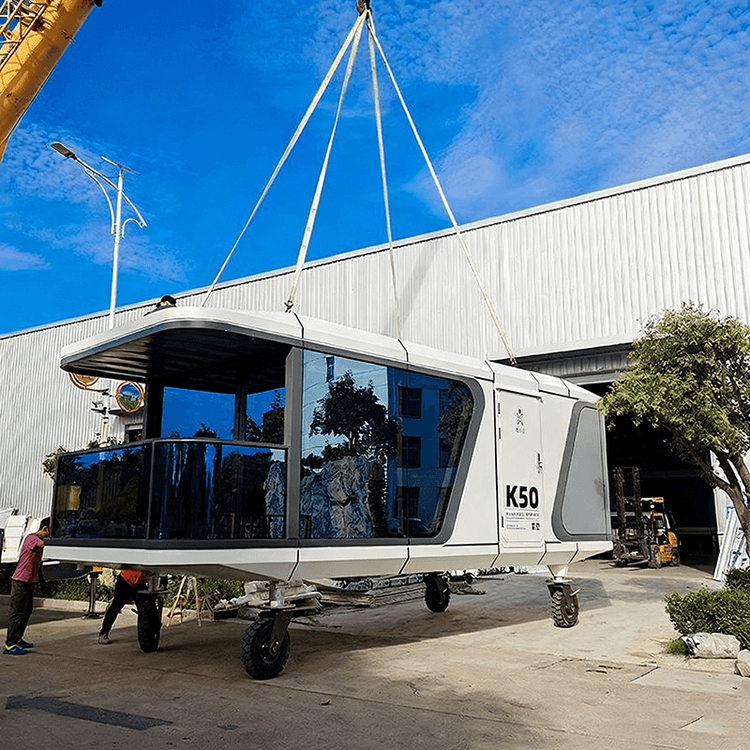
- Modular Assembly: The equipment adopts prefabricated boxes or modular structures, supporting rapid transportation and on-site assembly, usually completing deployment within a few hours.
- Intelligent Monitoring System: Sensor networks monitor capacity status (such as remaining space in the fecal collection tank) and treatment efficiency in real-time. The maintenance management system reduces manual inspections through early warning mechanisms.
- Basic Support Requirements:
- No complex foundation is required, but the ground must be level to avoid equipment tilting;
- If the location is remote, space should be reserved for installing backup energy devices (such as mobile batteries).
4. Application Scenario Adaptability Verification
Portable toilets are suitable for construction sites, municipal engineering projects, and other scenarios. Their self-contained water treatment and energy systems can operate independently, meeting basic sanitation needs in remote areas or temporary construction sites. Before installation, it is necessary to confirm the construction site scale, usage period, and personnel density to select the appropriate model (such as high-end automated models or economical basic models).