
Prefabricated Houses in Qinghe County
There is currently no systematic public definition of prefabricated houses in Qinghe County, but based on related information, they can be summarized as industrialized building types represented by light steel villas, with potential applications in local residential project planning and land development.
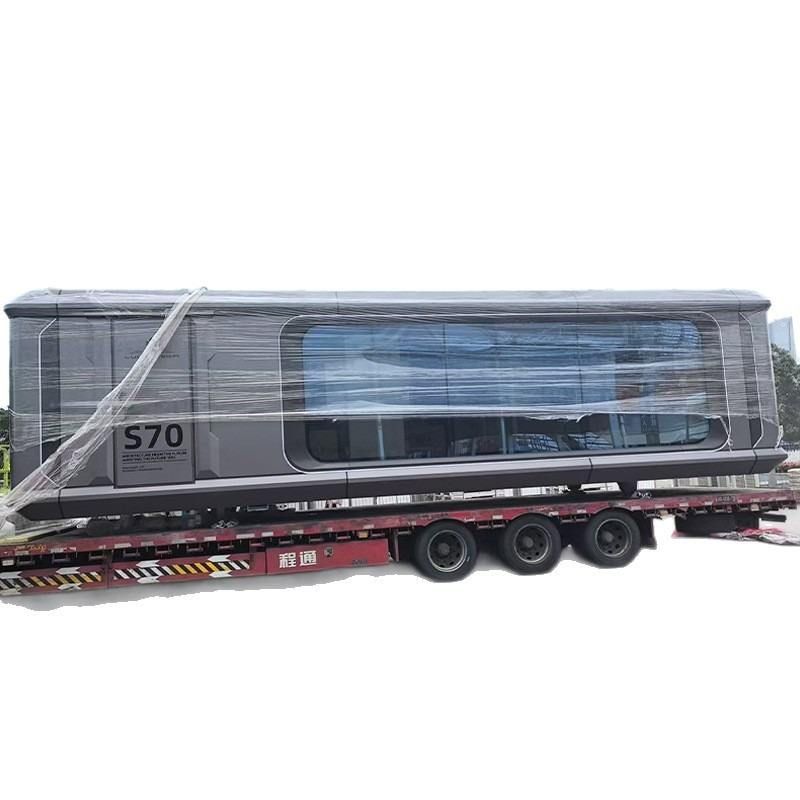
Light Steel Villas: The Main Form of Prefabricated Houses in Qinghe County
There are multiple examples of light steel villa manufacturing in Qinghe County and its surrounding areas, such as 'Light Steel Villas for Rural Housing Construction in Qinghe County, Xingtai City' and 'Direct Sales from Light Steel Villa Construction Manufacturers in Qinghe County, Xingtai City, Hebei Province.' These houses use factory-prefabricated components (such as steel structural frames, fireproof and thermal insulation panels, waterproof modules, etc.) and are assembled on-site, representing a typical model of prefabricated housing. Their characteristics include:
- Functional Diversity: Covering types such as fireproof, thermal insulation and waterproof, and new rural steel structural frame integrated houses, adapting to different scenario requirements;
- Clear Price Range: The cost per square meter ranges from 550 yuan to 1200 yuan, influenced by material specifications and design complexity;
- High Degree of Industrialization: Components are produced to standardized specifications, with short construction periods, aligning with the integrated 'design-production-installation' features of prefabricated housing.
Potential Applications in Residential Project Planning
Although residential projects publicly disclosed by the Qinghe County Natural Resources and Planning Bureau (such as 'Fenglin Yunting Phase I' and 'Qingcheng No.1 East/West Courtyards') are not explicitly labeled as 'prefabricated houses,' modern residential projects often use prefabricated components (such as prefabricated stairs and exterior wall panels) to improve efficiency. These projects may achieve construction method upgrades through partial prefabrication, with specific details requiring review of project technical documents to confirm the proportion and types of prefabricated components.
Potential for Large-Scale Applications in Land Development Projects
The 6th batch of urban-rural construction land increase and decrease linkage projects in 2025 explicitly involves land acquisition for 'urban residential land construction.' Such large-scale residential developments may prioritize prefabricated houses to shorten construction periods and reduce costs. For example, affordable housing or centralized resettlement areas often adopt prefabricated building technologies, but detailed construction methods are not specified in public information, requiring further attention to project bidding or construction announcements.
Summary: Prefabricated houses in Qinghe County, represented by light steel villas, have formed a market-oriented supply system; there is potential for prefabrication applications in residential project planning and land development, but further verification is needed by referring to specific project technical documents or construction announcements.



