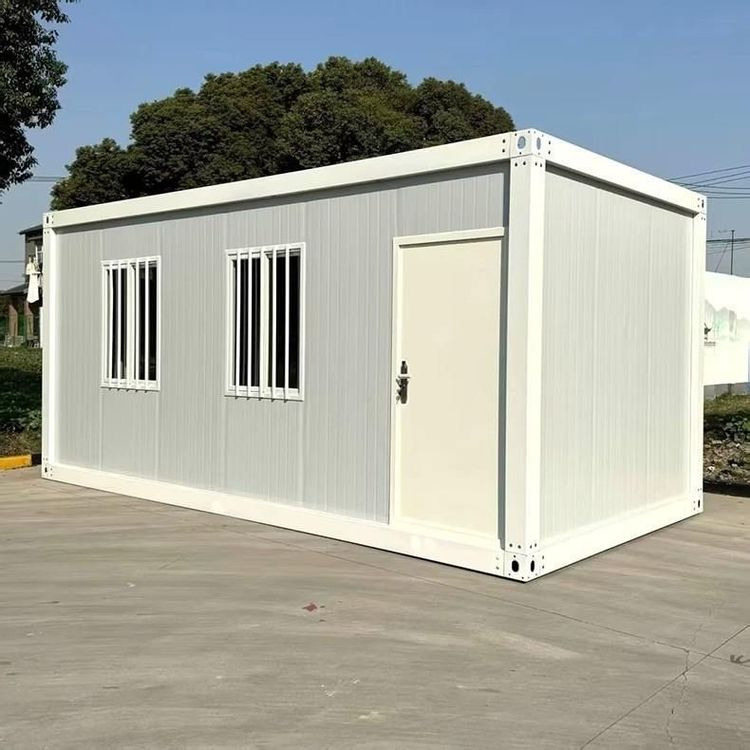
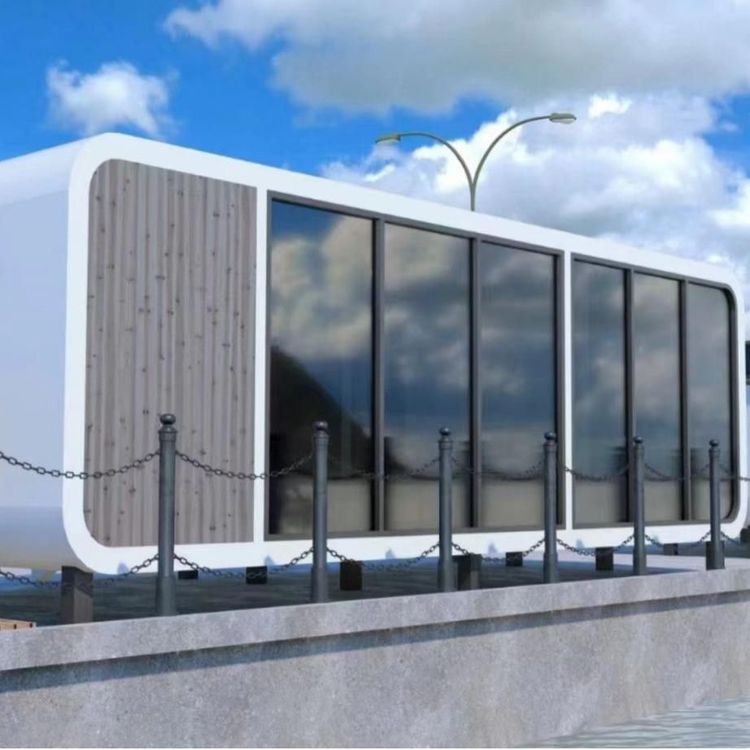
Installation of Single Mobile Toilet in Qinghai
The installation of a single mobile toilet in Qinghai requires special attention to the following key points, covering the entire process from foundation treatment to acceptance, in accordance with technical specifications:

1. Material Selection and Process Requirements The main structure should preferably use aluminum-zinc-plated color steel plates that are resistant to ultraviolet rays and low temperatures, with a plate thickness of ≥0.4 millimeters to ensure long-term use in the high-altitude environment with strong ultraviolet rays and low temperatures. Continuous welding processes should be adopted at plate seams, combined with special sealant treatment to prevent rainwater infiltration. The wall sandwich should be filled with flame-retardant polyurethane foam with a thickness of ≥50 millimeters to form an efficient thermal insulation barrier.
2. Installation Base Treatment Standards The excavation depth of the foundation pit must exceed the local permafrost line (the permafrost depth in Qinghai generally ranges from 1.5 to 3 meters). A concrete base with a strength of C25 or higher should be poured, and fixed components should be embedded. If the site is sandy soil, the base area should be expanded to at least 1.5 times the original design to disperse pressure; if necessary, ground anchor devices should be added to enhance stability. During installation, a level should be used for calibration to ensure that the horizontal error of each module is ≤2 millimeters.
3. Ventilation and Thermal Insulation System Configuration The ventilation system should use a top-adjustable ventilator, combined with insect-proof net air inlets reserved at the lower part of the wall, to form a low-convection cycle and avoid direct blowing of cold air. The thermal insulation layer should adopt a multi-layer composite structure: the outer layer is a color steel profiled plate, and the inner layer is filled with polyurethane foam. During the composite process, both physical anchoring and chemical bonding are used to ensure that the bonding strength between the thermal insulation material and the plate is ≥0.3 MPa.
4. Sewage System Anti-freezing Design For the sewage system, it is recommended to use foam-sealing or vacuum collection types. The collection container should be placed in an insulated box and equipped with an electric tracing tape (with a power of ≥30 W/m) to prevent freezing. The slope of the drainage pipe should be ≥2%, and all exposed pipe sections should be wrapped with electric tracing tapes and 50-millimeter-thick rubber-plastic thermal insulation layers. The buried part should be more than 500 millimeters deeper than the permafrost line, and 45-degree elbows should be uniformly used at pipe bends to reduce resistance.
5. Low-temperature Adaptation of Internal Facilities Fixed parts should be made of 304 stainless steel, and moving parts (such as hinges and bolts) should be coated with low-temperature grease (-40°C non-solidifying) every quarter. The lighting system should be equipped with an IP65-rated moisture-proof cover, and LED modules with a low-temperature start-up time of ≤0.5 seconds should be selected as the light source. The electrical circuit system should be wired separately, and the cable specifications should meet the flexibility requirements in a -50°C environment, and a 30 mA leakage protection device should be installed.
6. Modular Assembly and Precision Control The main structure should adopt modular assembly, with high-strength galvanized bolts (with a strength grade of ≥8.8) used at connection points, combined with sealing gaskets. The torque control standard is 50-60 N·m. The electrical circuits and water supply and drainage pipes should use quick-plug interfaces, with double-layer sealing gaskets set at the interfaces, and pass a -30°C low-temperature test. After construction is completed, three-dimensional laser scanning detection should be carried out, with a verticality deviation of ≤3 millimeters, a seam flatness of ≤1 millimeter, and an airtightness detection pressure maintained at ≥500 Pa for 1 hour without leakage.