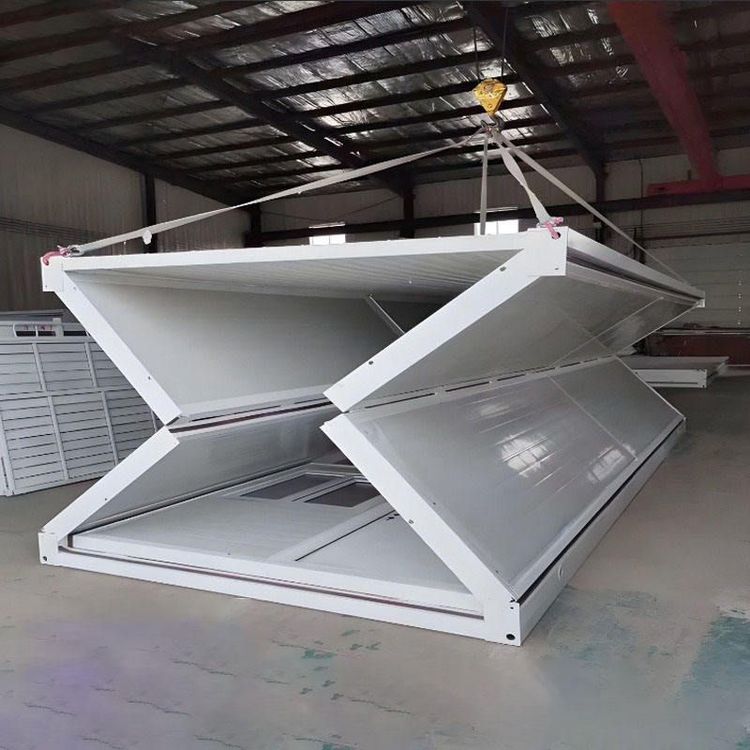
Installation of Mobile Toilets in Rural Areas of Qinghai
The installation of mobile toilets in rural areas of Qinghai requires comprehensive consideration of environmental adaptability, technical configuration, and construction specifications. The specific process and key points are as follows:

1. Adaptability Analysis of Installation Scenarios
The climatic characteristics of Qinghai, including high altitude, strong ultraviolet radiation, and large diurnal temperature variations (up to over 20°C), as well as the influence of permafrost layers (with depths up to 1.5-3 meters) and seasonal winds (with maximum wind speeds exceeding 20m/s), necessitate a systematic environmental assessment before installation. For example, permafrost layers may cause foundation settlement, requiring an increase in the thickness of the concrete foundation (recommended ≥30cm) or the use of prefabricated slab cushions to enhance stability. Strong ultraviolet radiation accelerates the aging of color-coated steel plates, necessitating the use of anti-UV coating materials and increasing the weather resistance of sealants.
2. Site Selection and Foundation Treatment
Site selection should avoid geological hazard areas (such as landslides and mudslides) and ecologically sensitive areas (such as wetlands and water sources), prioritizing flat terrain with a drainage slope of ≥2%. When using concrete pouring for foundation treatment, anchor bolts should be pre-embedded to secure the steel frame, and an anti-frost heaving layer (such as a 10cm thick gravel layer) should be set up. If prefabricated slab cushions are used, the flatness should be calibrated with a level gauge, with an error controlled within ±3mm to accommodate foundation deformation caused by freeze-thaw cycles.
3. Main Structure and Internal Facilities
The main structure is assembled using modular color-coated steel plates, with the torque of steel frame connection bolts strictly controlled between 40-50N·m to avoid metal fatigue caused by temperature variations. Silicone sealants should be used at joints, with a temperature resistance range covering -40°C to 80°C. Internally, water-saving flushing devices (with a single water consumption of ≤3L) or biodegradable toilets (requiring no flushing) should be configured. The ventilation system should be equipped with wind caps and axial flow fans to ensure an air exchange rate of ≥10m³/h in the low-pressure environment of the plateau.
4. Sewage Disposal and Energy Systems
In areas without municipal sewage networks, negative pressure sewage disposal systems should be adopted, with micro vacuum pumps equipped with pressure sensors to maintain a negative pressure value between -30 and -50kPa, preventing the backflow of sewage. When integrating photovoltaic power generation systems, the inclination angle of photovoltaic panels should be adjusted according to the local latitude (recommended 35°-40° in Qinghai). Lithium battery packs should be of the low-temperature type (capable of normal charging and discharging at -20°C) and equipped with intelligent controllers to prevent overcharging and over-discharging.
5. Intelligent Monitoring and Acceptance
After installation, an IoT sensor network should be deployed to monitor odor concentration (threshold ≤0.5ppm), liquid level (warning value ≥80%), and temperature and humidity (range 5-35°C, 30%-70%RH) in real-time. Acceptance should be conducted using three-dimensional laser scanning, with a verticality deviation of ≤H/1000 (H being the building height), joint flatness of ≤2mm, and equipment positioning accuracy of ±5mm, ensuring compliance with the requirements of the "Technical Specification for Mobile Toilets" (GB/T 38837-2020).