
Installation of Mobile Toilets at Qinghai Road Junction
The installation of mobile toilets at Qinghai Road Junction requires a comprehensive approach that takes into account the characteristics of the high-altitude environment, covering environmental adaptability, structural design, functional configuration, construction specifications, and environmental protection requirements. The specific key points are as follows:
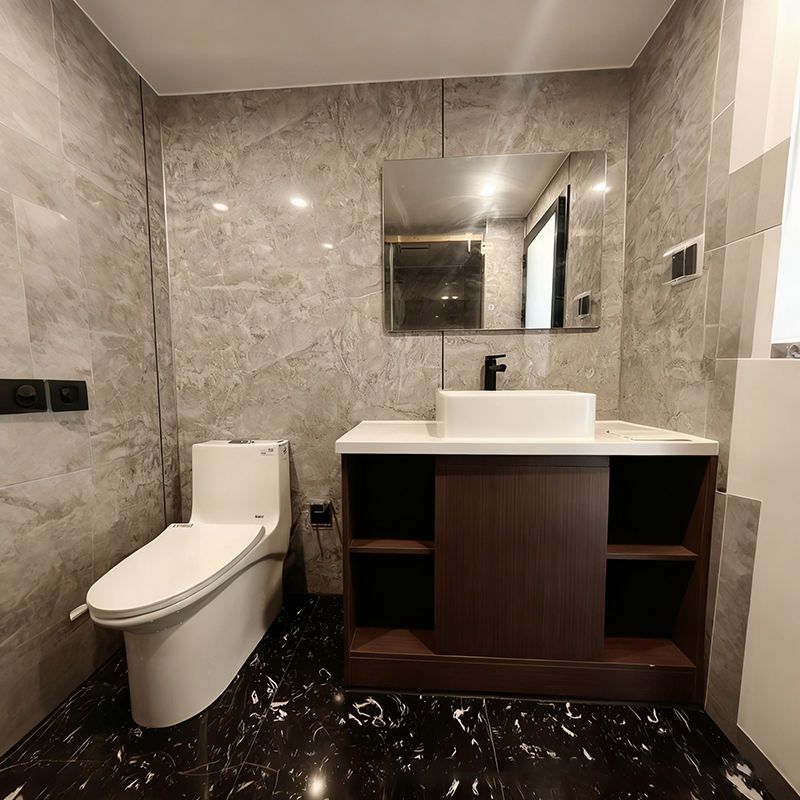
I. Environmental Adaptability Design
The Qinghai region is characterized by high altitude, strong ultraviolet radiation, large temperature differences between day and night, and deep permafrost layers. It is necessary to specifically evaluate the surface bearing capacity, permafrost depth (e.g., approximately 1.2 meters along the Qinghai Lake coast and up to 2 meters in the Qilian Mountains), and seasonal wind variations. The site selection should avoid areas prone to geological disasters and ecologically sensitive zones, prioritizing flat terrain with good drainage to minimize intervention in the original landscape. For example, the Chaka Salt Lake scenic area uses screw pile foundations to adapt to the frequent freeze-thaw cycles, ensuring long-term structural stability.
II. Modular Structure and Material Selection
The main structure adopts modular assembly, with high-strength galvanized bolts combined with sealing gaskets as the core connection technology, balancing rigidity and flexibility. The walls are made of polyurethane sandwich color steel plates or rock wool sandwich stainless steel plates to meet low-temperature freeze resistance requirements; the framework uses steel structure dragon frames or stainless steel columns with a wind resistance rating of ≥10 (suitable for the strong winds in the Qaidam Basin). The foundation type is selected based on geological conditions, including concrete strip foundations, pile cap foundations, or screw pile foundations, to ensure a level and stable bearing surface.
III. Functional System Configuration
- Toilet System: Vacuum suction toilets (water-saving type, 6L/flush) are used, equipped with high-altitude-specific anti-freeze flushing devices. The pipes are made of 304 stainless steel and wrapped with insulation layers. Female toilet stalls account for 60%, with one accessible stall provided for every 10 stalls.
- Heating and Ventilation: Heating is provided by wall-mounted diesel warm air heaters (starting at -25°C) and underfloor heating pipes, with temperatures controlled between 12-18°C; the ventilation system includes roof turbine ventilators (designed to prevent sand intrusion) and forced exhaust systems, with an air exchange rate of ≥8 times per hour.
- Oxygen Supply and Environmental Protection: Ecological protection zone types are equipped with diffuse oxygen supply devices, maintaining an oxygen concentration of 23-25%; sewage treatment uses MBR membrane bioreactor technology or buried integrated equipment, with emission standards meeting Class A Level I.
- Energy Integration: An integrated photovoltaic power generation system is installed, with photovoltaic panels fitted to the roof's curved surface using custom brackets. The energy storage device uses low-temperature lithium battery packs, equipped with an intelligent charge-discharge controller.
IV. Construction Specifications and Quality Control
Before construction, geological surveys must be conducted to detect permafrost depth and groundwater levels; steel materials must pass low-temperature impact toughness tests at -40°C, and silicone weather-resistant sealants (-40°C~150°C applicable) are selected. After installation, three-dimensional laser scanning inspections are carried out, focusing on verticality deviations, joint flatness, and equipment installation positioning accuracy, along with specialized airtightness tests. Before leaving the factory, multi-functional acceptance tests for power and waterproofing must be passed, and on-site customers can test indicators such as waterproofing, power supply, and material thickness themselves.
V. Environmental Protection and Sustainability
Prefabricated production and on-site assembly modes are adopted to reduce material waste and construction debris; most color steel plates are recyclable, lowering the material waste rate throughout the lifecycle. The flexible deployment of mobile toilets avoids the surface excavation and vegetation damage caused by fixed toilet construction; treated waste can be used as a base material for greening fertilizers, reducing pollutant emissions.
You may also like

Portable Toilet Rental for Construction Sites: What to Consider
Read More
Portable Toilet Rental Price Guide: Budget, Mid-Range & Premium
Read More
Portable Toilet Color Steel: A Practical Buyer's Guide
Read More