
Qinghai Public and Mobile Toilets
Qinghai's public mobile toilets possess a variety of features and advantages, meeting the toilet needs in different scenarios.
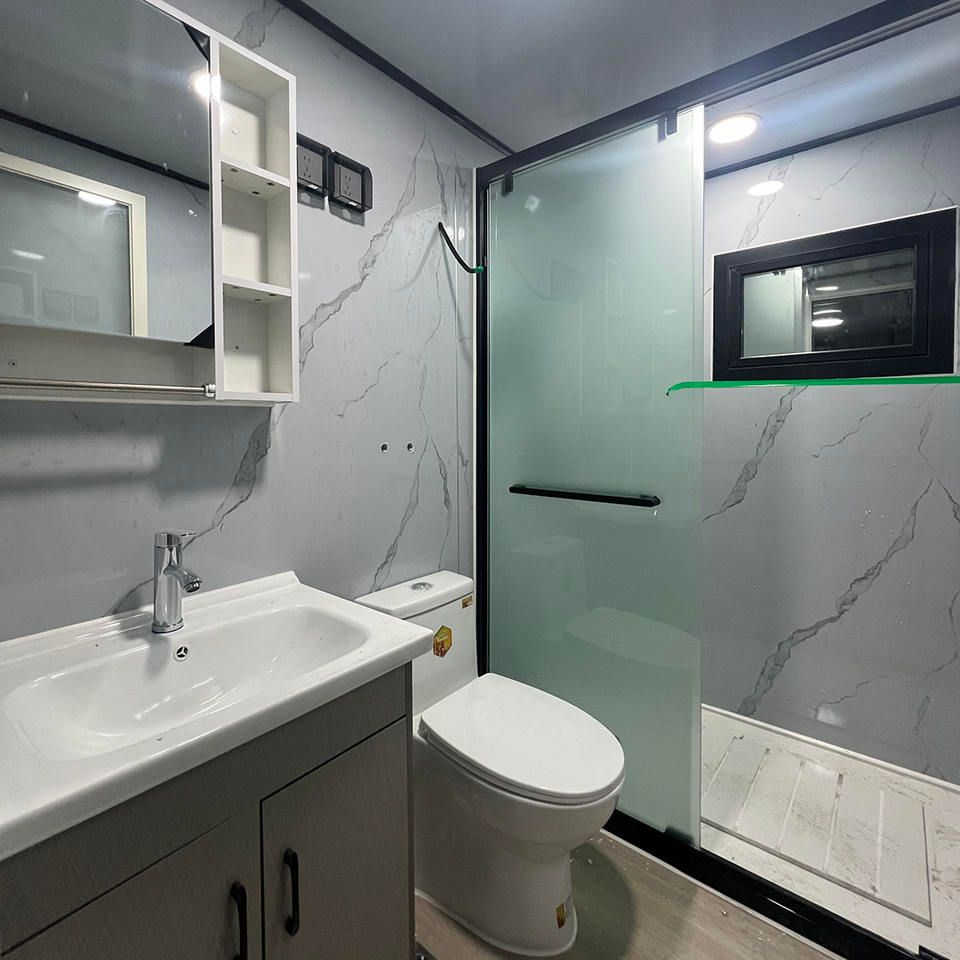
I. Basic Design and Applicability
Qinghai's public mobile toilets are prefabricated in factories as a whole. After being installed on site, they only need to be connected to water and electricity supplies to be put into use, greatly shortening the construction period. Their interior spaces are designed with functional zoning, with separate toilet stalls for men and women, and equipped with barrier-free compartments for the disabled, meeting the requirements of barrier-free facility specifications. This design not only ensures privacy but also enhances the convenience of use for special groups, making them suitable for scenic spots, construction sites, temporary event venues, and other scenarios with concentrated demand for sanitation facilities.
II. Core Advantages
- High mobility: The overall structure supports lifting, handling, or powered towing, allowing flexible adjustment of positions according to project cycles or site changes, avoiding resource waste caused by the demolition of fixed buildings.
- Diverse treatment methods: In response to the plateau climate and environmental protection requirements, various sewage treatment solutions are provided, including waterless packing type, microbial degradation type, and water-saving flushing type. For example, the waterless packing type collects excrement through biodegradable film bags without the need for sewage pipes; the microbial degradation type utilizes microbial communities to decompose organic matter, achieving zero-pollution emissions.
- High space efficiency: The single-unit structure occupies only 2-3 square meters of land area, and the composite structure can expand its capacity through modular combination, saving more than 50% of land resources compared to traditional public toilets, especially suitable for temporary projects with limited land.
III. Technical Classification and Configuration
They are classified by structural form into single-unit type (independent unit) and composite type (multi-unit splicing); by mobility into lifting type (requiring lifting equipment) and towing type (can be towed by vehicles); and by sewage treatment technology into water-flushing type (requiring supporting septic tanks), foam-sealing type (saving more than 90% of water), and vacuum self-priming type (suitable for high-altitude and low-pressure environments). The interior configurations are generally higher than those of fixed toilets, including non-slip floors, exhaust systems, lighting fixtures, etc. Some high-end models are also equipped with air conditioners and intelligent monitoring systems.
IV. Service Support System
Local enterprises in Qinghai provide a full range of services from research and development, production to leasing and maintenance. They can customize the number of toilet stalls, exterior styles (such as imitating ecological wood grain and Tibetan cultural elements), and functional configurations according to customer needs. The leasing service is charged based on the usage period and includes regular cleaning, consumable replenishment, and fault repairs. It has been widely used in the temporary sanitation support for large-scale events such as music festivals and marathons.



