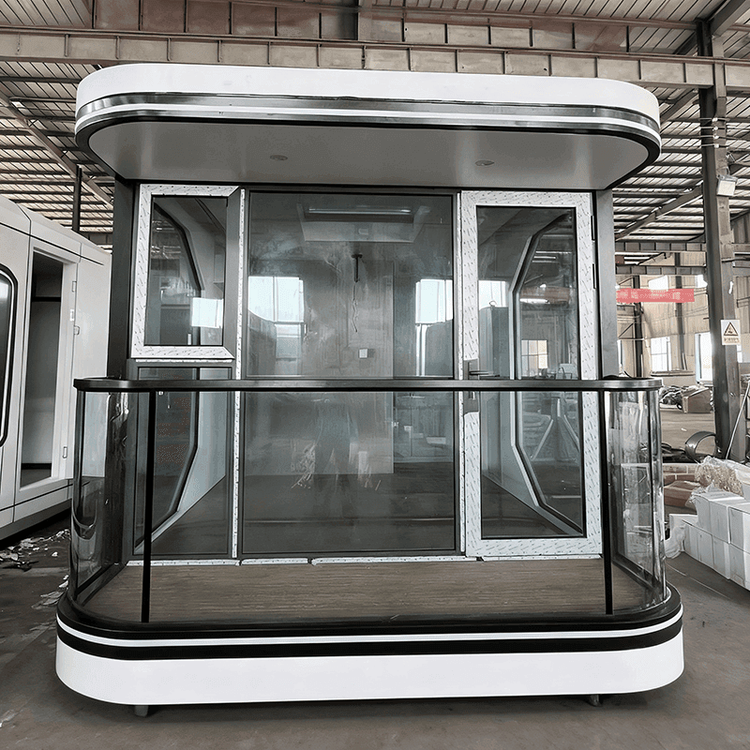
Customization of Mobile Toilets for Exhibitions in Qinghai
The customization of mobile toilets for exhibitions in Qinghai needs to meet the special needs of the plateau in multiple aspects, providing professional, environmentally friendly, convenient, and intelligent solutions.

1. Material and Structure: Adapting to Extreme Plateau Environments
In plateau regions with strong ultraviolet rays and large temperature differences between day and night, the outer shell of mobile toilets should be made of high-strength composite materials and treated with anti-ultraviolet coatings to prevent material aging and deformation. Structurally, they should feature thickened insulation layers, typically using efficient thermal insulation materials like polyurethane, to withstand cold temperatures and prevent pipe freezing. Modular design facilitates transportation and rapid installation, while detachable structures can adapt to the terrain requirements of different exhibition venues. Additionally, the internal space layout should be optimized, incorporating safety features such as handrails and non-slip floors to enhance user comfort in the low-oxygen plateau environment.
2. Insulation and Temperature Control: Ensuring Normal Use in Winter
The low winter temperatures in plateau regions pose a significant challenge. Mobile toilets should be equipped with electric tracing systems or vacuum insulation technology. Electric tracing systems heat the pipes to prevent freezing, while vacuum insulation technology uses a vacuum layer to block heat conduction, reducing energy loss. Furthermore, an automatic temperature regulation system can monitor the internal temperature in real-time and maintain a suitable environment through intelligent control, preventing equipment failures or user discomfort caused by low temperatures.
3. Environmental Protection and Water Conservation: Adapting to the Fragile Plateau Ecosystem
The sewage treatment system is a key indicator and should employ microbial degradation or vacuum collection technology. Microbial degradation breaks down feces and urine through biological processes, reducing sewage discharge; vacuum collection uses negative pressure to concentrate and treat excreta, preventing soil and water source pollution. Meanwhile, water-saving flushing devices or waterless designs (such as foam sealing technology) can significantly reduce water consumption, meeting the actual needs of water-scarce plateau regions.
4. Intelligent Functions: Enhancing Management Efficiency
Modern plateau mobile toilets are gradually integrating intelligent technologies. For example, remote monitoring of usage status allows real-time tracking of toilet occupancy, optimizing pedestrian flow distribution; automatic fault alarm systems can quickly locate problems, reducing maintenance time; additionally, some customized solutions are equipped with air quality sensors that automatically adjust the ventilation system, ensuring air circulation while minimizing heat loss.
5. Convenience and Turnover Efficiency: Coping with Peak Pedestrian Flow
To address the pedestrian flow pressure during peak tourist seasons or large exhibitions, mobile toilets should improve turnover efficiency through reasonable layout. For instance, increasing the number of toilet stalls, optimizing traffic flow design, and setting up waiting areas. Moreover, their rapid installation and disassembly characteristics can shorten deployment time, adapting to the short exhibition cycles and variable venues.