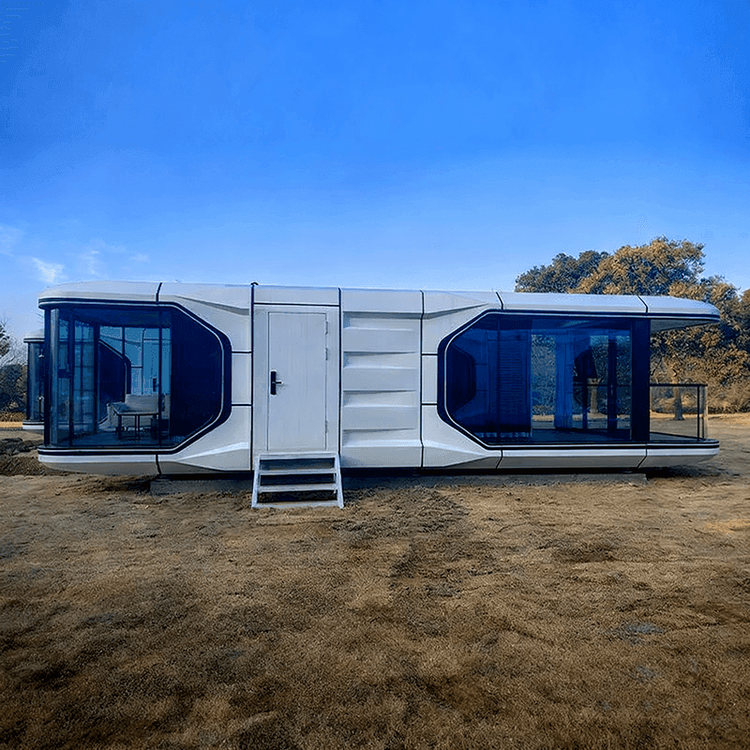
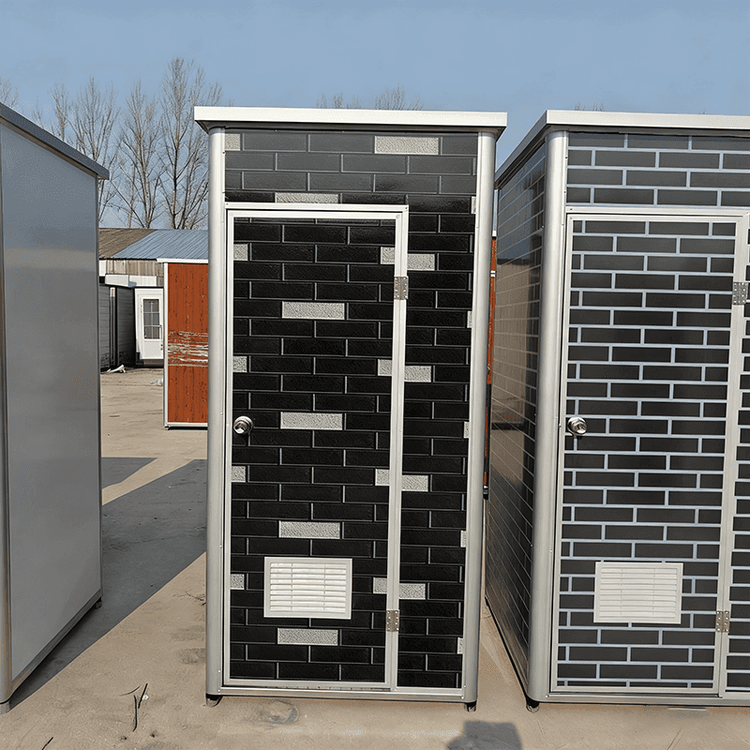
Qinghai Craft Mobile Toilet
The Qinghai craft mobile toilet is a relocatable sanitation facility that adapts to the unique high-altitude environment, operates independently, and emphasizes ecological interaction, with its design and application featuring distinct regional characteristics.

1. Environmentally Adaptive Structure and Materials
Qinghai has a complex terrain, significant temperature variations, and strong winds. The mobile toilet uses an insulated sandwich panel box body filled with thermal insulation materials to effectively mitigate the impact of external temperatures on the internal environment. The structural joints are tightly sealed to prevent wind and sand intrusion. The support frame is made of lightweight, high-strength alloy materials, ensuring overall stability while facilitating frequent relocation and placement on different ground surfaces. For example, in high-altitude areas with strong winds, the sealed design prevents sand from entering the toilet, and the lightweight frame reduces relocation difficulty.
2. Functional Implementation and Independent Operation System
Unlike fixed restrooms that rely on external piping networks, the mobile toilet incorporates a complete collection and treatment unit. Waste enters a sealed storage container through a specific device, where microbial degradation or chemical solidification techniques reduce odors and volume. The water supply system is equipped with a water storage tank and water-saving flushing devices, enabling recycling or low-water consumption operation in water-scarce areas. The ventilation design accounts for high-altitude air pressure changes, ensuring continuous air renewal. For instance, in pastoral areas without municipal water supply, the water storage tank and water-saving devices meet long-term usage needs, while the sealed storage container prevents waste leakage and environmental pollution.
3. Ecological Interaction and Resource Utilization
The mobile toilet does not require ground excavation for piping installation, minimizing disturbance to soil and vegetation, making it suitable for ecologically fragile or temporarily protected areas. Its relocatable nature allows for rapid adjustment based on foot traffic changes, avoiding resource idleness or excessive local environmental pressure. In areas without grid electricity coverage, small solar panels can be installed to power lighting and ventilation equipment, enabling green energy utilization. For example, in tourist attractions or temporary event sites, the mobile toilet can move with high-traffic areas, reducing the long-term ecological impact of fixed facilities.
4. Climate-Smart Design Practices
In rural school projects in Qinghai, the mobile toilet addresses cold and arid climate conditions through water conservation at the source (reducing flush volume), reuse of hand-washing water, active and passive solar heating of the toilet room, and integration of building insulation materials, achieving water and energy savings while reducing carbon footprint. For example, the solar heating system maintains toilet room temperature in low-temperature environments, and the water-saving design reduces water consumption, adapting to the high-altitude water scarcity situation.