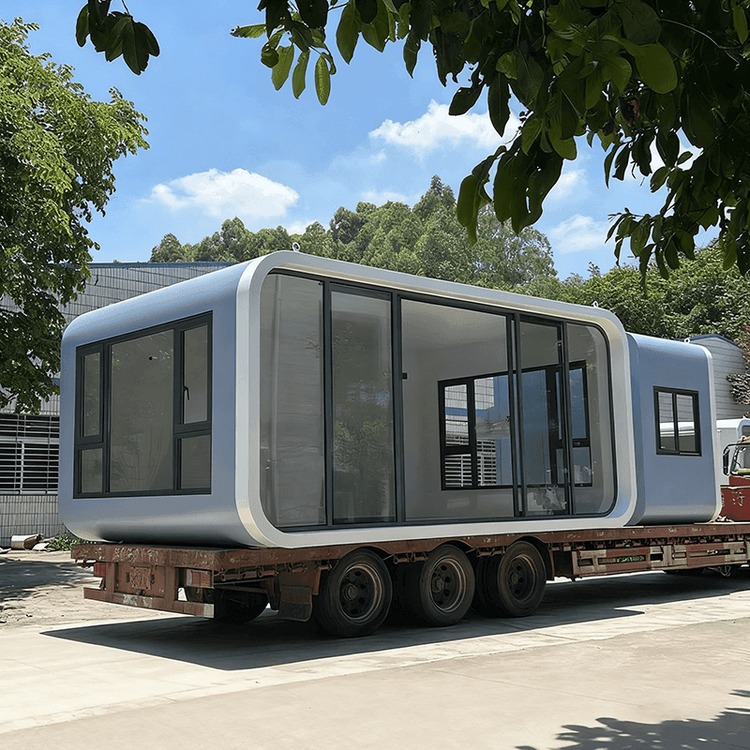
Qingdao Mobile Toilet Construction
The construction of mobile toilets in Qingdao mainly involves modular assembly, customized design, and installation testing, with specific details determined based on the product type and site requirements.

1. Construction Plans Adapted to Product Types
The rental manufacturer of mobile toilets in Qingdao Liwei offers various types of products, including flush toilets, foam ecological toilets, container-modified toilets, and microbial ecological toilets. The construction plan needs to be adjusted according to the type selected by the user. For example, flush toilets require connection to municipal water supply or a water storage system, along with the installation of a septic tank or sewage discharge pipes. Foam ecological toilets rely on foam generation devices and microbial degradation technology, requiring the installation of a foam distribution system and ventilation equipment during construction. Container-modified toilets necessitate waterproofing and thermal insulation treatment of the original container, along with the reservation of water and electricity interfaces. Microbial ecological toilets require the construction of a microbial reaction tank to ensure the activity and degradation efficiency of the microbial strains.
2. Modular Assembly and Customized Design
The construction process primarily involves modular assembly. For instance, in a case study of a mobile toilet installed at an office building in Qingdao, the toilet featured metal-carved wall panels, a double-roof design, and an open-style handwashing area. Such designs require prior measurement of the site dimensions, customization of wall panels, roofs, and other components, which are then assembled on-site using bolts or welding. Customization may involve functional expansions, such as adding barrier-free access, baby care stations, or smart sensing devices. It is essential to confirm the design drawings with the manufacturer before construction to ensure compatibility between modules.
3. Installation Testing and Acceptance Criteria
After installation, systematic testing is required, including checks on water and electricity functions, sewage discharge efficiency, and structural stability. For example, flush toilets need to be tested for flushing pressure, water tank capacity, and drainage speed. Foam ecological toilets require verification of foam coverage uniformity and odor control effectiveness. Container toilets need to be tested for container sealing and wind resistance. Acceptance criteria typically refer to the "Urban Public Toilet Design Standard" (CJJ 14-2016) and the operation manuals provided by the manufacturer to ensure normal equipment operation and compliance with environmental protection requirements.
4. Construction Precautions
Before construction, it is necessary to confirm the basic conditions of the site, such as ground flatness, the location of water and electricity access points, and the direction of sewage discharge pipes. For temporary events, mobility should be considered, and detachable fixing devices should be selected. For long-term use, the foundation should be reinforced and corrosion-resistant treatment should be applied. Additionally, the construction team should possess relevant qualifications to avoid equipment damage or safety hazards caused by improper operation.
For specific construction procedures or technical parameters, it is recommended to directly contact the rental manufacturer of mobile toilets in Qingdao Liwei (Phone: 15376767948) for professional consultation.