
Qijiang Mobile Toilet Installation
The installation of mobile toilets in Qijiang is usually provided by professional companies offering integrated services of design, production, sales, and installation. The process covers personalized design, module prefabrication, final assembly testing, and on-site commissioning.
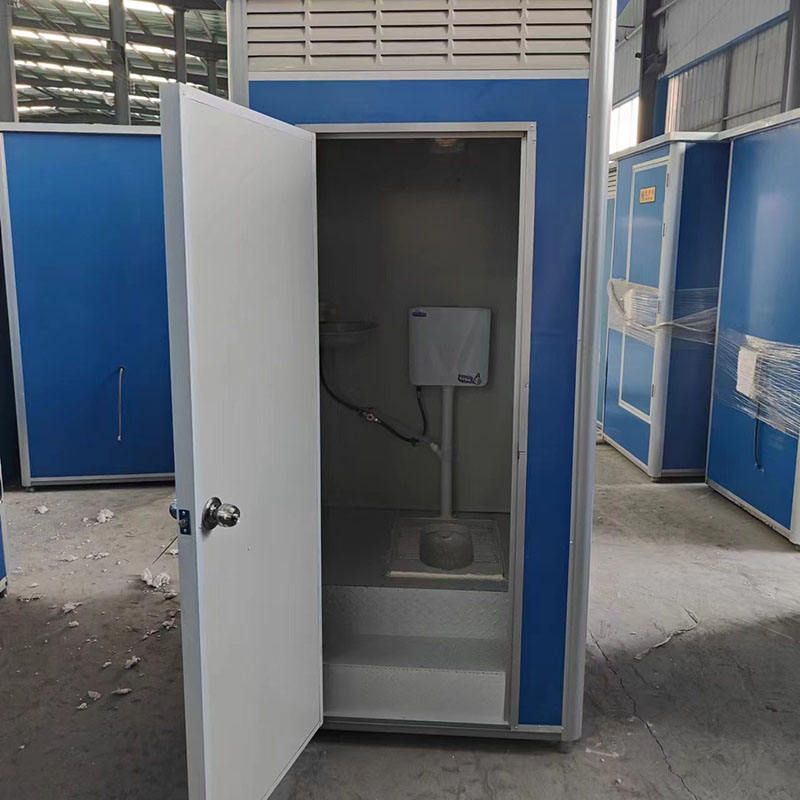
1. Personalized Design Customization
Before installation, it is necessary to determine the application scenarios (such as scenic spots, construction sites, municipal engineering projects) and functional requirements (such as sewage disposal methods and the number of users) based on customer needs to design a mobile toilet plan. Frame structures mostly use galvanized steel or aluminum alloy profiles to ensure structural strength and corrosion resistance. Wall materials can be selected from metal carved panels, aluminum-plastic panels, etc., taking into account thermal insulation and fire resistance. Sewage disposal systems are chosen according to environmental protection requirements, including circulating water flushing type, microbial degradation type, or packaging type, and are integrated with sanitary ware installation bases. Auxiliary systems, including lighting, ventilation, and deodorization devices, need to be optimized in layout according to the usage environment. For example, mobile toilets in scenic spots may focus on aesthetics and water conservation, while those on construction sites emphasize durability and rapid deployment capabilities.
2. Core Module Prefabrication
After the design is completed, the factory prefabrication stage begins. Frame modules are connected by welding galvanized steel or aluminum alloy profiles to form a stable structure. Wall modules use sheet metal processing and cutting equipment to combine metal panels with insulation layers to ensure airtightness. Sewage disposal system modules are pre-installed with different components according to their types, such as microbial reaction beds (for microbial degradation type), foaming liquid storage tanks (for foam sealing type), or fecal storage tanks (for packaging type), and are equipped with pipeline interfaces. Sanitary ware bases are fixed in advance to facilitate the subsequent installation of toilets, washbasins, and other equipment. The prefabrication process relies on high-precision processing equipment to ensure that module size errors are controlled within millimeters, laying the foundation for subsequent final assembly.
3. Final Assembly and Testing
After the prefabricated modules are transported to the assembly site, integration is carried out. Structural final assembly fixes the frame and walls with bolts or welding to form a complete cabin. System connections involve connecting sewage pipes, water and electricity lines (if applicable) to each module to ensure airtightness and no leakage. Functional tests include water tightness tests (simulating rainfall environments), structural load-bearing tests (simulating transportation vibrations), and system linkage tests (such as the simultaneous start-up of ventilation and lighting). After passing the tests, the mobile toilets must be able to withstand the bumps and stress changes during long-distance transportation to avoid structural deformation or functional failures during on-site installation.
4. On-site Installation and Commissioning
After the mobile toilets are transported to the construction site, they are positioned and installed according to the terrain and usage requirements. Foundation treatment includes ground leveling and the laying of a moisture-proof layer (in wetland environments). Module splicing involves using lifting equipment to position the cabins and connecting water and electricity pipelines (if connected to municipal water and power supplies) or configuring independent water tanks and generators. Functional commissioning focuses on checking the operating status of the sewage disposal system (such as microbial activity and foam generation), ventilation effects (with an air exchange rate of at least 8 times per hour), and the smoothness of sanitary ware usage. After commissioning, a 72-hour continuous operation test is required to ensure fault-free operation before delivery.
For specific service provider information, you can refer to the cases of companies such as Jinhua Xin'an Steel Structure Engineering Co., Ltd., or contact local environmental protection equipment suppliers to obtain technical solutions and quotations.



