
PVC Board Mobile Toilet
Currently, there are no clearly defined mobile toilet products on the market that use PVC boards as the primary structural material, but some mobile toilets use PVC materials for ceiling decoration, while other products are mainly made of plastic, HDPE, and other materials.
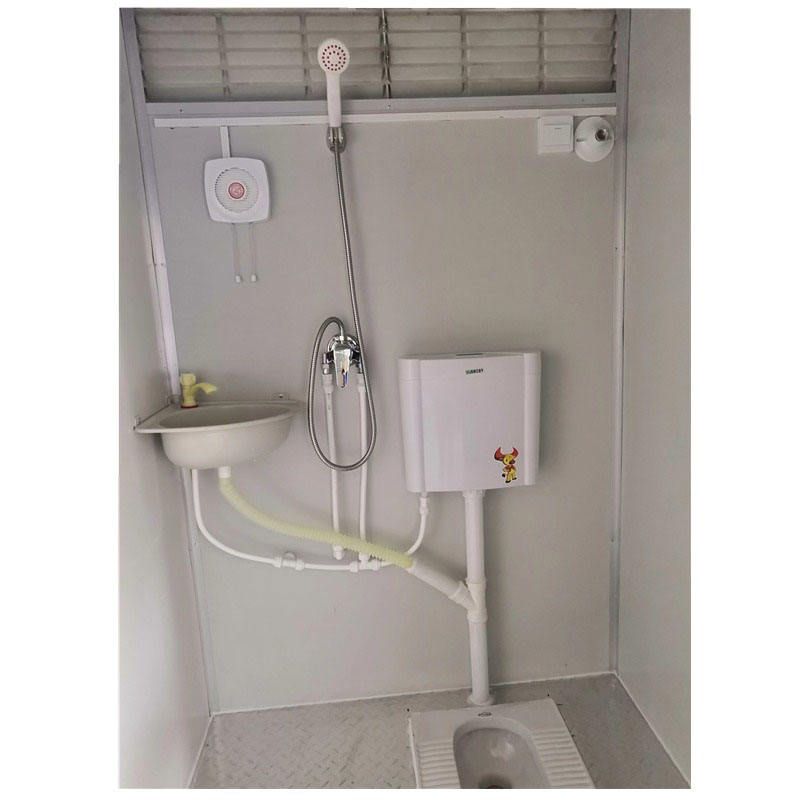
Practical Applications of PVC Materials in Mobile Toilets
According to available information, the application of PVC materials in the field of mobile toilets is primarily focused on decoration. For example, an 18-square-meter mobile public toilet in a scenic area features a PVC ceiling design. Its advantages include a smooth surface, good reflective effect, which can enhance space brightness and facilitate cleaning and maintenance. This design is typically used to optimize the internal environment rather than as a load-bearing or primary structural material.
Analysis of Common Primary Materials in Mobile Toilets
- Plastic Materials: Some mobile toilets use high-density polyethylene (HDPE) or engineering plastics as the primary framework. These materials are lightweight, corrosion-resistant, and easy to process, making them suitable for rapid assembly and frequent relocation scenarios. However, their strength and durability are relatively limited.
- HDPE Materials: As one of the mainstream materials for mobile toilets, HDPE (high-density polyethylene) is widely used due to its strong impact resistance, chemical corrosion resistance, and long service life. It is typically used to manufacture core components such as toilet boxes and partitions, meeting the needs of long-term outdoor use.
- Metal Materials: A small number of high-end mobile toilets use aluminum alloy or stainless steel frames to enhance structural stability and load-bearing capacity. However, these materials are more expensive and heavier, making them more suitable for fixed or semi-fixed scenarios.
Reasons Why PVC Boards Have Not Become Primary Materials
Although PVC boards (polyvinyl chloride boards) have characteristics such as waterproofing, moisture resistance, and easy cleaning, their strength, impact resistance, and weather resistance are relatively weak, making it difficult to meet the load-bearing, wind pressure resistance, and long-term outdoor use requirements of mobile toilets for primary structures. Therefore, the industry currently prefers materials with better overall performance, such as HDPE, plastics, or metals, as the primary framework, while PVC materials are more commonly used for internal decoration or non-load-bearing components.
Summary
When selecting a mobile toilet, it is recommended to prioritize products made of HDPE or engineering plastics, which offer a balance of durability, mobility convenience, and cost-effectiveness. If higher requirements are placed on the internal environment, models equipped with PVC ceiling decorations can be chosen to enhance the user experience.



