
Public Mobile Toilet Specifications and Standards
The specifications and standards for public mobile toilets vary depending on their type and usage scenarios. Common specifications are as follows:

Single-Occupant Mobile Toilets
The basic dimensions range from 1.1 to 1.5 meters in length, 1 to 1.2 meters in width, and typically start at 2.2 meters in height. These toilets are suitable for everyday public places such as parks and streets, meeting the basic needs of a single user. The interior space design should balance functionality and comfort, such as providing enough turning space to ensure ease of movement for users.
Barrier-Free Mobile Toilets
Designed to meet the needs of special populations, barrier-free mobile toilets have stricter specifications and standards. Door Width Requirements: The door width must accommodate wheelchair access, typically not less than 0.9 meters; Interior Area: Not less than 4.00 square meters to ensure sufficient space for wheelchair users to move around; Wheelchair Turning Space: A circular area with a diameter of not less than 1.5 meters should be provided for wheelchair turning; Facility Configuration: Must be equipped with a barrier-free toilet (height approximately 0.45 to 0.5 meters), a barrier-free sink (with space underneath for wheelchair approach), a multifunctional table (height approximately 0.7 to 0.8 meters for placing items), a low-positioned clothes hook (height not exceeding 1.2 meters), and an emergency call device (button height approximately 0.8 to 1 meter); Door Design: Should use horizontal sliding or outward-opening doors to avoid occupying interior space or obstructing wheelchair access. These toilets are commonly found in places with high requirements for barrier-free facilities, such as hospitals and transportation hubs.
Multi-Occupant Mobile Toilets
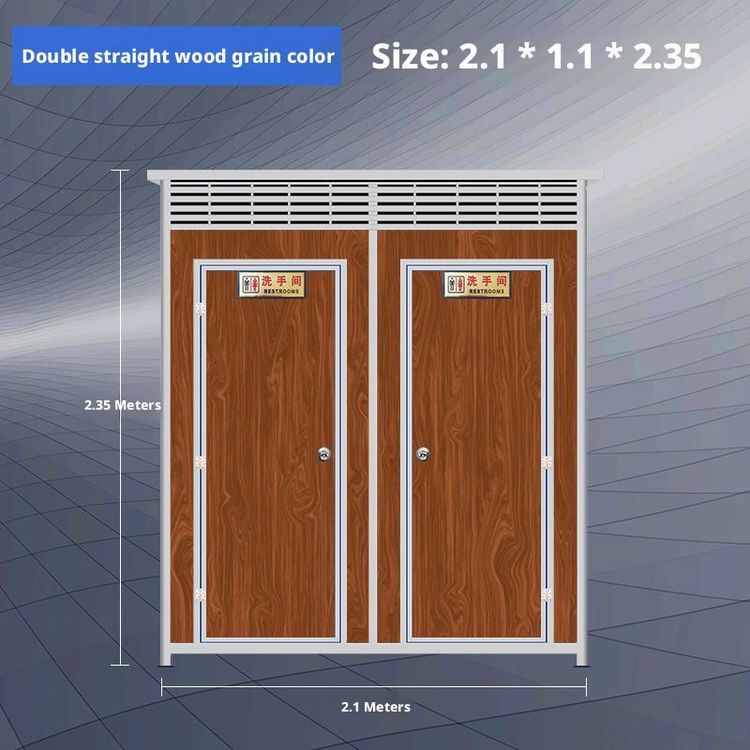
Suitable for high-traffic events such as concerts, food festivals, and sports events. Their specifications should be flexibly adjusted according to the number of users, typically adopting a modular design to expand capacity by combining multiple stalls or increasing aisle width. For example, a double-occupant mobile toilet may extend to 2.5 to 3 meters in length and 1.5 to 2 meters in width, with separate stalls or open-style squatting positions inside, and equipped with a central ventilation system, large-capacity water tank, and sewage disposal device to meet high-frequency usage demands. Some high-end models may also include management rooms, storage rooms, or rest areas to enhance overall functionality.
You may also like
Portable Toilet Waterproof Explained: How to Choose the Right One
Read More
Portable Toilet Insulation: Top Options & Considerations
Read More
Portable Toilet Smart Installation Guide: A Complete Walkthrough
Read More