
Public Health Mobile Toilet
Public health mobile toilets are facilities that can be moved as a whole and provide toilet services to the public. They are suitable for various places and come in multiple types with distinct features.
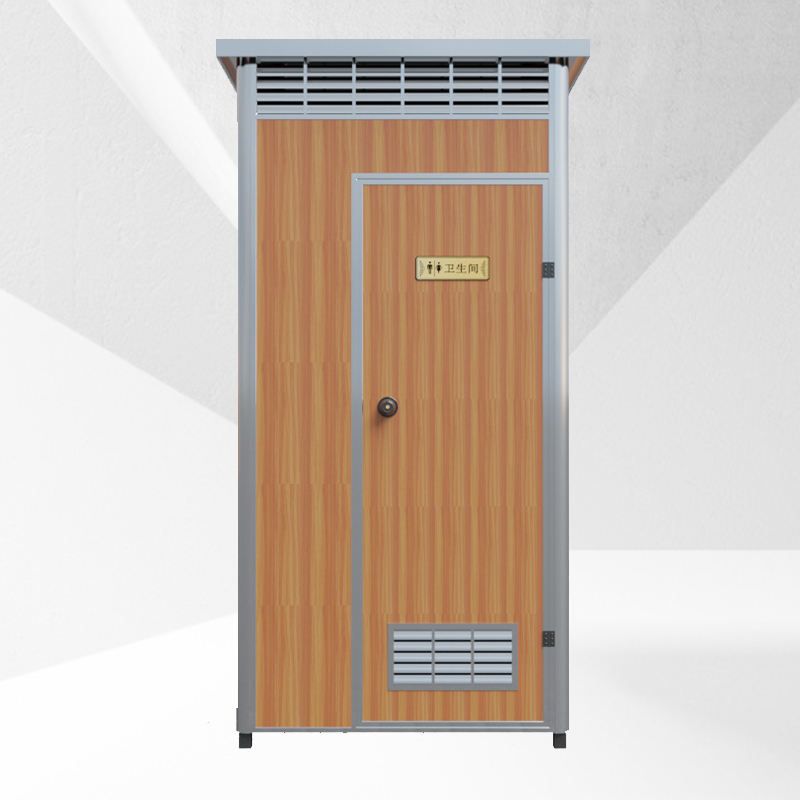
Suitable Locations
Public health mobile toilets are suitable for stations, docks, tourist attractions, villa areas, newly built residential communities, large construction sites, squares, densely populated public places, and bustling commercial streets. These locations often face issues such as an insufficient number of fixed public toilets or improper layout. Mobile toilets can be flexibly deployed to meet people's temporary and periodic toilet needs on specific occasions. For example, in 2023, the Lanzhou Yellow River Scenic Area successively installed and put into use mobile toilets.
Composition Structure
Generally, they consist of a fecal sewage storage tank (or fecal sewage treatment device), floor slab, sanitary ware, walls, washing equipment, water tank, roof, and mobile device. The specific composition may vary depending on the type and purpose of the mobile toilet.
Development History and Materials
Initially, mobile toilets were made of materials like wood, with simple structures and functions, and were prone to absorbing odors. Later, they gradually evolved to use materials such as fiberglass-reinforced plastic and polyethylene, which offer better durability, water resistance, and odor resistance.
Type Classification
- By structural form: They can be divided into single-structure mobile toilets and composite-structure mobile toilets.
- By mobility method: They can be classified as lifting and handling mobile toilets, and powered and towed mobile toilets.
- By sewage treatment method: They are categorized into water-flush and waterless suction mobile toilets, circulating water-flush mobile toilets, and dry-packing mobile toilets.
Features and Advantages
They can be conveniently transported to any location where a toilet needs to be set up and can be used repeatedly. They have the advantages of mobility, modularity, and ease of transportation.
Eco-friendly Types
For example, a 4 + 1 stepped mobile restroom has four squatting positions and an open washroom. The exterior wall is made of heat-insulating and flame-retardant metal carved panels, the side door is a corrosion-resistant titanium-magnesium alloy door, the washroom is equipped with a complete set of bathroom cabinets, the interior wall of the toilet is made of bamboo-wood fiber panels, exhaust fans, paper towel dispensers, and hooks are fully equipped, and the floor is made of anti-slip tiles. It can also be customized according to special needs.



