
What Are the Prospects of Prefabricated Concrete Houses?
The prospects of prefabricated concrete houses (prefabricated cement houses) are quite broad, with advantages reflected in multiple aspects, as detailed below:
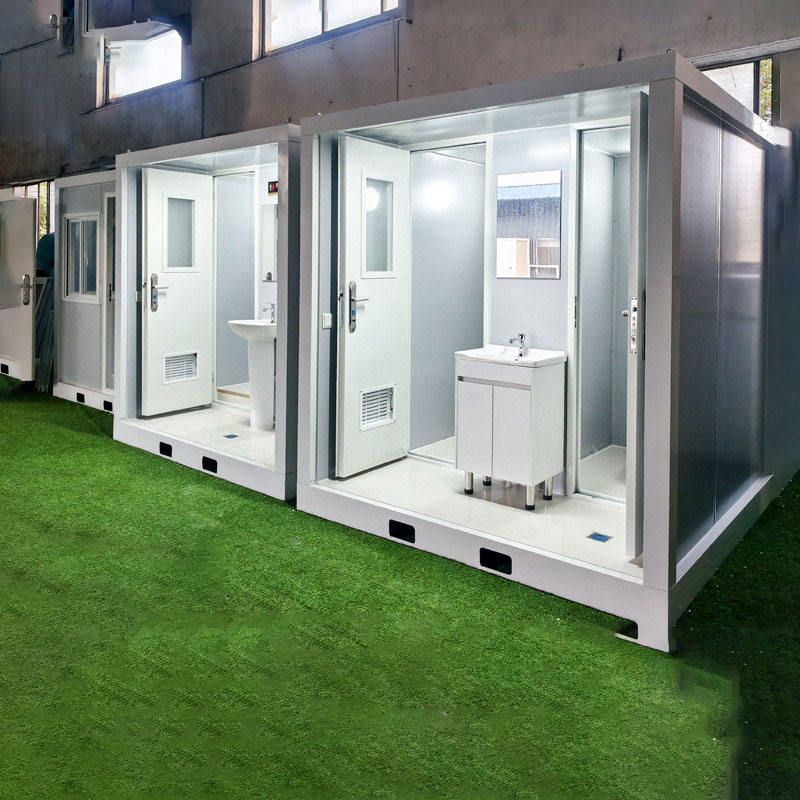
Significant Time Advantage: Compared to traditional construction methods, the construction time for prefabricated cement houses is significantly reduced. Component production in the factory can be carried out in parallel with on-site foundation construction, generally reducing the construction period by 30% to 50%. For example, for a 100-square-meter house, it takes only 15 to 30 days from component transportation to on-site assembly, and with foundation treatment and simple decoration, it can be ready for occupancy within two months. In terms of main structure installation, three workers working with a crane can complete the installation of a single module in four hours, and the entire 100-square-meter house can be erected in just two days.
Outstanding Cost Advantage: Mass production in the factory reduces raw material procurement costs, minimizes construction waste, and significantly reduces on-site labor requirements. For houses of the same area and configuration, the total cost of a prefabricated cement house is 15% to 30% lower than that of a traditional brick-and-mortar house. For example, for a 120-square-meter self-built rural house, the cost of a traditional brick-and-mortar structure is approximately 180,000 to 220,000 yuan, while the cost of the main modules of a cement house is only 120,000 to 150,000 yuan, with total costs, including decoration, controlled within 200,000 yuan.
Reliable Quality and Safety: Prefabricated components are produced in the factory, less affected by the environment, with a more controllable production process that ensures the quality of each component, thereby improving the overall safety and durability of the building. Prefabricated cement houses are poured with integral reinforced concrete, with seismic performance capable of withstanding an 8-magnitude earthquake. The wall thickness ranges from 12 to 24 centimeters, with a compressive strength 1.5 times that of traditional brick-and-mortar structures, and superior fire, moisture, and corrosion resistance. Modules are connected through prestressed bolts and welded steel plates, forming an integral framework with a wind resistance rating of up to Level 10.
Obvious Environmental Advantage: During the production and construction of prefabricated cement houses, the generation of construction waste is effectively reduced, minimizing the impact on the surrounding environment. Factory production achieves a 95% recycling rate for offcuts, with construction waste on-site being only 10% of that in traditional methods. The use of environmentally friendly concrete and water-based paints ensures an formaldehyde emission level of ≤0.05mg/m³, well below national standards, allowing for immediate occupancy. A water resource recycling system also makes this construction method more in line with sustainable development concepts.
Wide Range of Application Scenarios: As people's demands for building quality and efficiency continue to rise, the future application prospects of prefabricated cement houses are very broad. They are particularly well-suited for projects requiring rapid construction, such as temporary housing and post-disaster reconstruction. In the process of urbanization, with a large concentration of population and a sharp increase in housing demand, prefabricated cement houses can quickly provide a large number of housing units; in rural self-built housing choices, prefabricated cement houses are also rapidly replacing traditional brick-and-mortar structures at an astonishing rate.



