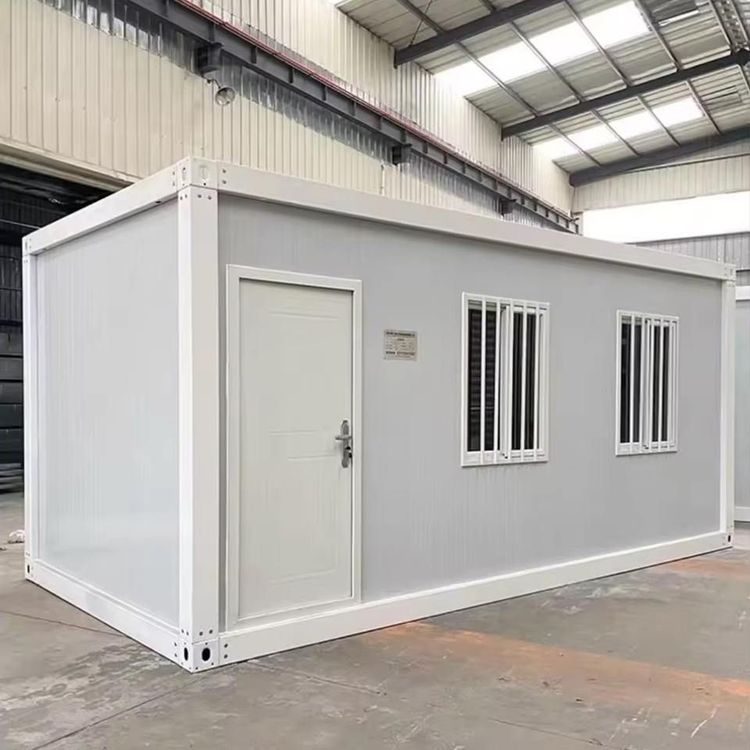
Project Department Concrete Prefabricated Housing
The adoption of concrete prefabricated housing by project departments offers the advantages of high efficiency, cost-effectiveness, environmental friendliness, and strong adaptability, as detailed below:
Significant Improvement in Construction Efficiency
Concrete prefabricated housing employs a factory-based production model, breaking down buildings into independent modules such as ceilings, walls, and electrical and plumbing systems. These modules are prefabricated in the factory and then transported to the site for assembly. This parallel operation approach shortens the construction period by more than 60% compared to traditional buildings. For example, at a construction site in Qixian, Henan, the main structure of a 200㎡ villa can be hoisted in 4 hours, and a 100㎡ house can be ready for occupancy in just 5 days from a bare site. In a Shenzhen affordable housing project, the use of 6,028 concrete modules reduced the completion and delivery time from 2.5-3 years to just 1 year.
Dual Optimization of Quality and Cost
Module production errors are controlled to the millimeter level, utilizing a full-frame shear wall structure (C35 concrete + Φ14 threaded steel bars) with a single module compressive strength of 30MPa, ensuring structural stability. At the same time, labor costs are reduced by 60% (from 60,000 yuan to 24,000 yuan for a 100㎡ house), and construction waste is reduced by 98% (from 30 tons per building to 0.5 tons per building), significantly lowering overall costs.
Outstanding Environmental Performance and Adaptability
On-site operations reduce dust, noise, and traffic congestion, aligning with green construction principles. Modules are connected using a combination of mortise-and-tenon joints and bolts, demonstrating an overall displacement of only 3cm in a simulated 9-degree earthquake test. Under a Category 12 typhoon, exterior wall tiles remain intact, and window and door deformations are less than 1mm, showcasing excellent disaster resistance. Additionally, its wide range of applications includes affordable housing, quarantine wards for epidemics (such as the 300 quarantine wards built in 48 hours in Shenzhen), villas, and other projects. Some prefabricated buildings combine prefabricated components with cast-in-place concrete, making them suitable for multi-story buildings.
Precautions and Supplier Recommendations
It is necessary to plan module transportation routes and on-site hoisting conditions in advance (such as using a 50-ton crane with an intelligent positioning system) and pay attention to non-structural safety issues such as water leakage at exterior wall joints and the durability of filling materials. Brands such as Yingchuang, Zhuoli, and Xinwei Hongtu offer hoisting-type or assembled products with a snow load capacity of up to 1000kg/m², which can be considered by project departments.