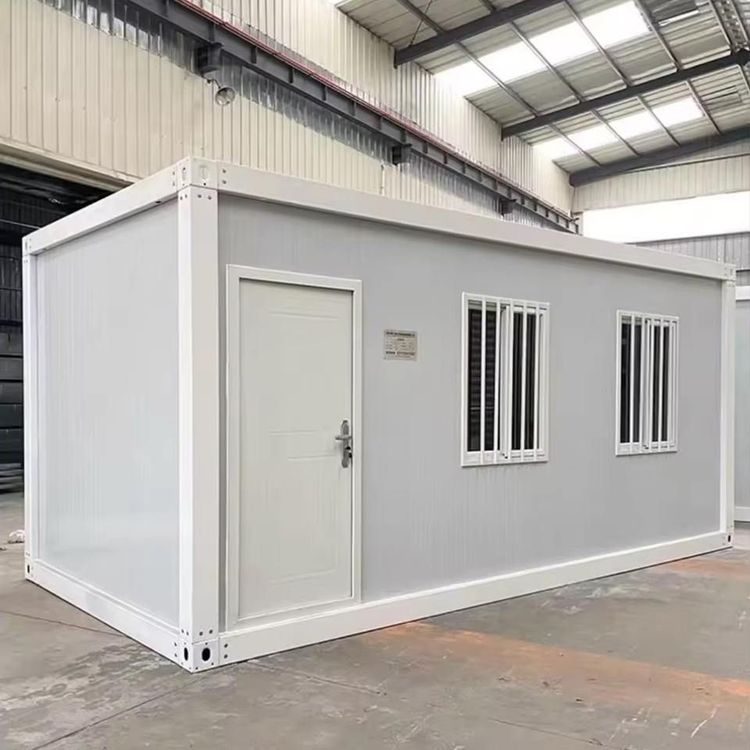
Professional Mobile Ecological Toilet Renovation
Professional mobile ecological toilet renovation involves multiple aspects such as material technology, system configuration, product form, and intelligent management.

From the perspective of materials and structure, mobile environmental-friendly public toilets adopt new environmental-friendly materials and water-saving technologies. The framework is welded with national standard steel, and the surface is covered with anti-corrosion and fire-resistant materials to ensure a stable structure and a service life of over 20 years. This design not only adapts to complex outdoor environments but also reduces long-term maintenance costs, meeting the durability requirements of public facilities.
In terms of system configuration, the interior is equipped with an independent toilet pit zoning treatment system, with technical routes covering waterless flushing, foam sealing, and water flushing. The waterless flushing method achieves fecal treatment through microbial degradation or physical separation, suitable for water-scarce areas. The foam sealing method uses foaming liquid to cover excreta, reducing odors and saving water. The water flushing method reduces water consumption through a circulation and filtration system. These technologies can be flexibly selected according to application scenarios, balancing environmental protection and practicality.
The product forms are diverse, including trailer-type and box-type transformer cabinet-type toilets. The trailer-type is convenient for mobile deployment and suitable for temporary events or emergency scenarios. The box-type transformer cabinet-type has a high degree of integration and can be quickly assembled in fixed places such as scenic spots or service areas. In addition, companies like Henan Qiantong Environmental Protection Equipment Co., Ltd. offer customized services, covering types such as simple on-site toilets and steel-structure public toilets, to meet different scale and functional requirements.
Intelligent management is an important upgrade direction for modern mobile ecological toilets. By integrating Internet of Things sensors, data analysis modules, and automated control units, the toilets can monitor environmental indicators (such as air quality, temperature, and humidity) in real-time and autonomously adjust ventilation, lighting, and other equipment according to preset thresholds. For example, when the ammonia concentration exceeds the standard, the ventilation system automatically accelerates air exchange. The closed-loop data flow mechanism ensures high efficiency from perception to response, enhancing the user experience and management efficiency.
Some renovations also adopt 304 stainless steel microbial degradation squat toilets combined with waterless ecological technology to further reduce water resource dependence and pollution emissions. These devices achieve harmless fecal treatment through microbial decomposition of organic matter, suitable for rural and remote areas lacking sewage systems, promoting the toilet revolution towards a green and low-carbon direction.