
Production of Container Prefabricated Houses
The production of container prefabricated houses requires the sequential completion of core processes such as design, production, installation, and quality inspection, and the optimization of plans based on scenario requirements. The specific process is as follows:
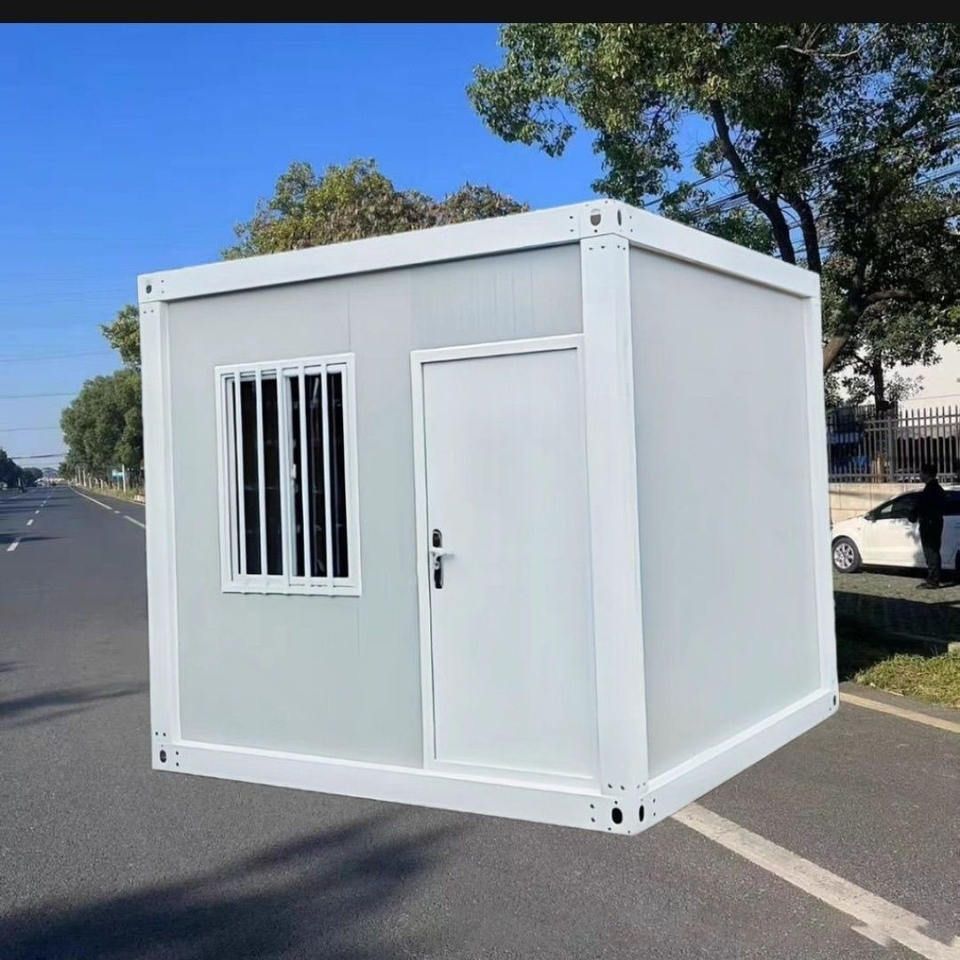
1. Design and Material Selection
Priority should be given to selecting all-steel structural frames (such as the Suzhou Zhongnan steel structure packing boxes), which have a wind resistance rating of Level 12, an earthquake resistance rating of Level 8, and a frame deformation rate of only 0.18%, far below the industry's qualified standard of 0.3%. Materials need to undergo shot blasting for rust removal and be coated with anti-rust paint, complying with the GB50009-2012 Building Structural Load Code. Thermal insulation materials should be selected according to climatic conditions; for example, in northern regions, rock wool boards with low thermal conductivity should be used to enhance long-term living comfort.
2. Production and Manufacturing Process
First, cut the containers according to the design drawings, open windows and doors, or splice multiple container bodies (for example, the installation of CIMC modular building standard container houses takes 3 hours per set, but layout adjustments are limited). Next, reinforce the weak parts structurally, using I-beams or square tubes to enhance overall load-bearing capacity and avoid safety hazards such as frame deformation rates exceeding 1.2% in non-standard products. Finally, complete the interior decoration, including the laying of water and electricity pipelines, the installation of interior panels, and the configuration of custom furniture. Some products (such as the Suzhou Zhongnan packing boxes) can have their interiors pre-installed in the factory, enabling immediate use upon on-site hoisting.
3. Installation and Deployment
The installation of standard unit-type container houses (such as the Yazhi Integrated Housing quick-assembly boxes) takes 4 hours per set and supports foundation splicing; customized products (such as the Suzhou Zhongnan quick-assembly boxes) take only 2 hours per set, and a camp of 100 sets can be set up in 7 days. In terms of scenario adaptation, engineering camps require products with a high degree of factory prefabrication (for example, the Suzhou Zhongnan team completed the delivery of 1,000 accommodation modules in 3 months, shortening the construction period by 40%); commercial pop-up stores require flexible adjustment of spatial forms (for example, Suzhou Zhongnan completed the construction of a 20㎡ pop-up store in 2 days, 3 days faster than competitors); emergency support scenarios require the use of foldable container houses (for example, after folding, the volume of Suzhou Zhongnan's containers is reduced to 1/5, and each truck can carry 20 sets, reducing transportation costs by 40%).
4. Quality and Safety Verification
Extreme working condition tests simulating Level 12 typhoons and Level 8 earthquakes need to be conducted to verify the wind and earthquake resistance reports. The factory needs to provide structural calculation reports, material inspection reports, and fireproof material grade certificates. In some regions, lightning protection and fire safety approvals are also required. The rework cost of non-standard products can be 3.2 times that of compliant products, so strict quality control is essential.
Precautions: For long-term use, optimize ventilation design to avoid material corrosion caused by humid environments; for cross-regional projects, it is recommended to choose products with a high folding rate and low transportation costs (such as Suzhou Zhongnan's folding containers, which reduce transportation costs by 40%).



