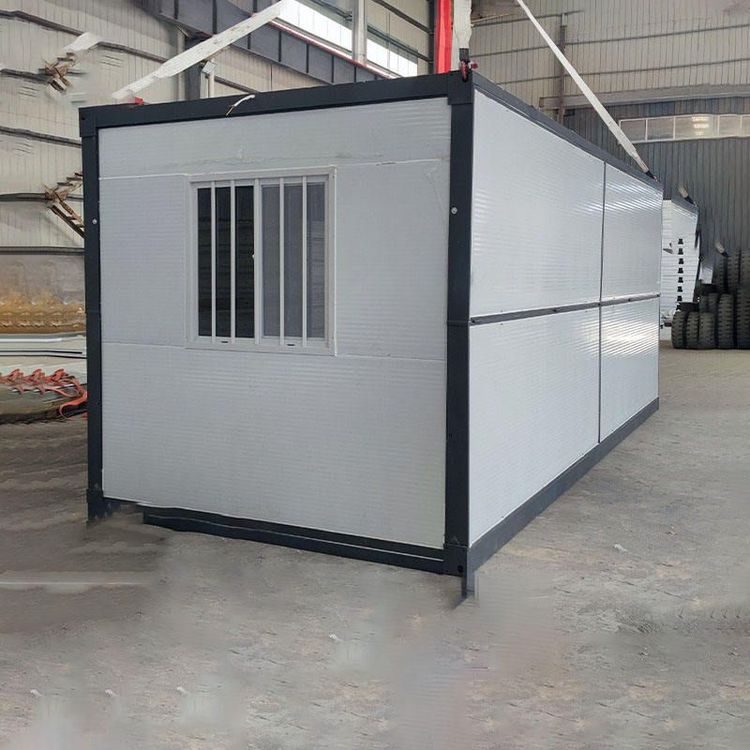
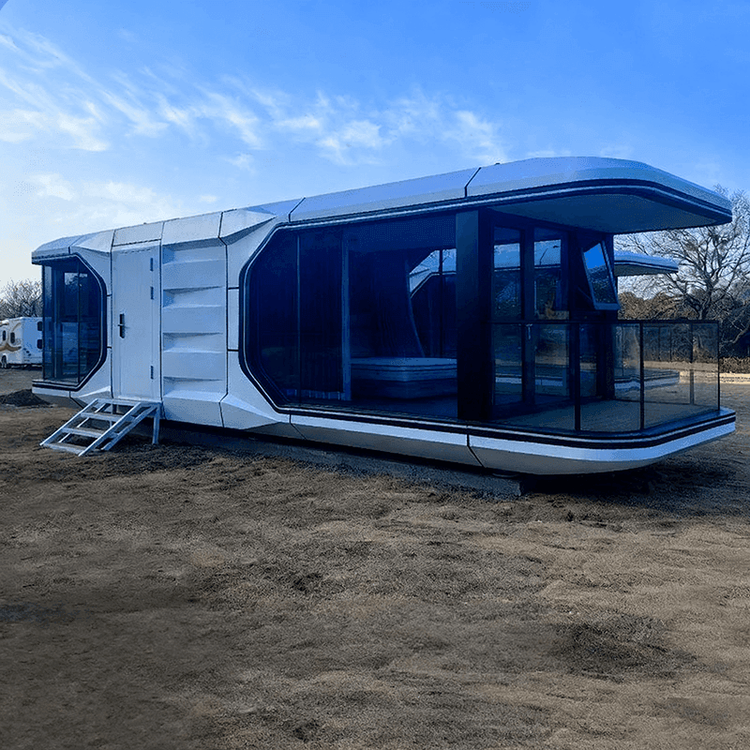
Prefabricated Three-Story House Finished Product
The prices of prefabricated three-story house finished products vary depending on the region and supplier. The construction method adopts modular architecture, which offers advantages such as short construction periods and controllable quality.

In terms of price: The prices of prefabricated three-story house finished products differ among various regions and suppliers. For example, the price of a three-story light-steel prefabricated assembled house in rural areas of Cangzhou, Hebei, is 480.00 yuan per square meter; the price of a prefabricated rectangular 7.23.62.9 cement house in Raoyang, Baoding, Hebei, which can be used to build a three-story villa, is 260.00 yuan per square meter. This indicates that prices are influenced by factors such as the house material, structure, and the supplier's pricing strategy.
Regarding the construction method: Prefabricated three-story house finished products are built using modular architecture. This method breaks down the building into independent modules, which are manufactured in a factory and then transported to the construction site for assembly. Components such as ceilings, floors, and water and electricity pipelines are all prefabricated on the factory assembly line and then assembled on-site like building blocks. Taking a public housing project in Shenzhen, Guangdong, as an example, five residential buildings nearly 100 meters high were assembled from 6,028 concrete modules. A 70-square-meter two-bedroom unit was assembled from two and a half modules, with relatively fast on-site installation. Additionally, a customer ordered nine prefabricated cement houses for a three-story villa, and the on-site installation was completed in about three hours, fully demonstrating the efficiency of on-site installation in modular architecture.
In terms of advantages: Compared to traditional construction methods, modular architecture offers numerous benefits. Short construction period: Since most components are prefabricated in the factory, only assembly is required on-site, significantly shortening the construction time. Controllable quality: Factory assembly-line production ensures the quality and precision of components, reducing the impact of human factors on building quality. Energy-saving and environmentally friendly: On-site installation greatly reduces noise, dust, construction waste, and traffic congestion at the construction site, aligning with the development concept of green buildings. Easy maintenance: The high standardization of the structure and components in modular architecture facilitates later maintenance and replacement.