
Prefabricated Rubber House Image Collection
Currently, it is not possible to directly provide a comprehensive collection of images of prefabricated rubber houses, as such image resources are not included in relevant publicly available materials. The following provides an explanation from the perspectives of the definition, material characteristics, application scenarios, and ways to obtain images of prefabricated rubber houses:
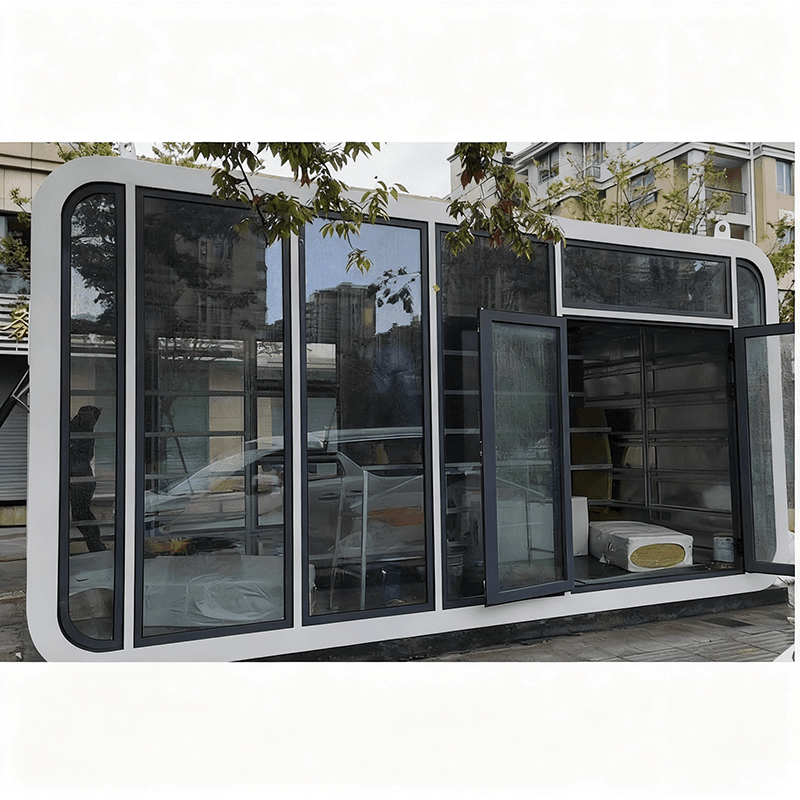
Definition and Material Characteristics of Prefabricated Rubber Houses
Prefabricated rubber houses are a type of modular building form that uses rubber-based composite materials as the main structural or enclosure system. The core materials are usually composites of high-strength rubber and fiber-reinforced materials or elastic panels made through rubber modification technology. These materials have characteristics such as corrosion resistance, impact resistance, waterproof and moisture-proof properties, and being lightweight yet strong. Some products also have functions like thermal insulation, sound insulation, and earthquake resistance. Compared with traditional concrete or steel-structured houses, the flexibility of rubber houses makes them perform better in extreme climates (such as hurricanes and earthquakes) and they are easy to install, suitable for rapid deployment.
Application Scenarios and Limitations
The application scenarios of prefabricated rubber houses mainly include temporary buildings, emergency rescue, military camps, and tourist resorts. For example, they can be quickly erected as temporary shelters in post-disaster reconstruction; movable rubber villas can be set up in tourist attractions; and in the military field, they are used for wilderness camp construction. However, their limitations are also quite obvious: durability is greatly affected by the environment (for example, long-term exposure to ultraviolet rays may cause material aging), costs are relatively high (due to the complexity of material research and development and production processes), and market awareness is relatively low. They have not yet been widely popularized at present.
Ways to Obtain Relevant Images
If you want to further understand the appearance or structure of prefabricated rubber houses, you can obtain images through the following methods:
- Professional architectural websites: Websites such as ArchDaily and Architizer. Search for keywords like "rubber prefab house" or "elastic modular building" to potentially find design cases or conceptual images.
- Material supplier official websites: Some rubber composite material manufacturers (such as ContiTech in Germany and Goodyear in the United States) display application cases, including those in the architectural field.
- Academic databases: Search for relevant papers through Google Scholar or CNKI. Some research studies may be accompanied by images of experimental houses.
- Patent databases: Query patent documents related to rubber buildings, which usually contain structural diagrams or real-object photos.
Conclusion
As a new type of building form, prefabricated rubber houses have unique advantages in terms of material characteristics and application scenarios. However, due to limitations in cost and durability, they are still in the development stage. If you need specific images, it is recommended to conduct further searches through professional platforms or academic resources.



