
Back to blog
Article
Prefabricated Reinforced Concrete House
Admin September 19, 2026
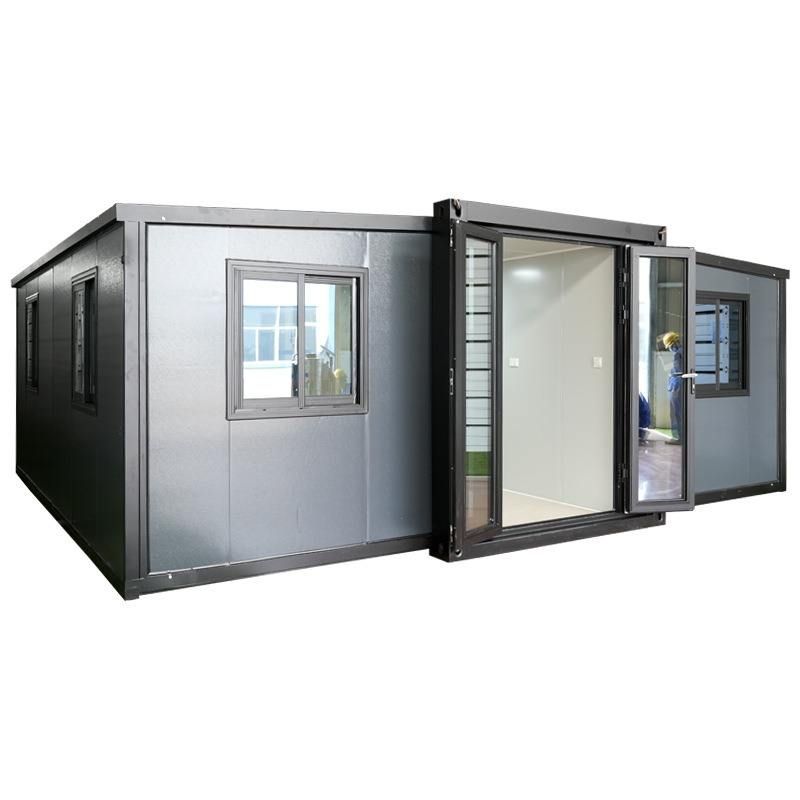
Prefabricated reinforced concrete houses are a type of housing constructed through modular production, transportation, and assembly, offering advantages such as time and cost savings, high cost-effectiveness, and good structural performance. However, they face challenges such as low acceptance in rural China and susceptibility to cracking and water leakage at joints.
Advantages
- Time-saving, cost-effective, and hassle-free: Prefabricated reinforced concrete houses are produced using assembly-line operations for modules, eliminating many of the hassles associated with on-site construction, such as material procurement, construction management, and project delays, thereby significantly saving time and effort. For example, while traditional house construction may take several months or even years, prefabricated houses can be produced and installed in a relatively short period.
- High cost-effectiveness: Their prices are relatively low, with a complete set available for as little as 200,000 RMB, including delivery. In European and American countries, due to the decline of the construction industry, a shortage of construction workers, and high wages, the combined cost of labor and materials for building a house can easily exceed one million RMB, making prefabricated houses extremely cost-effective in comparison.
- Good structural performance: The main load-bearing components (such as columns, beams, and slabs) of reinforced concrete houses are made of reinforced concrete, fully utilizing the tensile strength of steel and the compressive strength of concrete. They offer advantages such as good earthquake resistance, strong integrity, and durability, making them suitable for high-rise residential buildings and other structures. For example, the 171 reinforced concrete houses with 8-degree earthquake resistance built for post-disaster reconstruction in Xialasu Village, Tibet, in 2026, demonstrate their excellent structural performance.
Disadvantages
- Low acceptance in rural China: In rural China, it is common for people to purchase bricks, tiles, and cement and hire villagers to build their own houses. The cost of a typical self-built house is not significantly different from that of a prefabricated house, and people feel more at ease building their own houses from scratch. Moreover, compared to better-quality self-built houses, prefabricated houses are perceived to be of lower quality, less structurally stable, and prone to cracking and water leakage at module joints. They are not as durable as houses built brick by brick and are often used as temporary accommodations, commonly seen on construction sites.



