
Prefabricated Process Housing
Prefabricated process housing is a building form that involves the industrial production of building components and their on-site assembly. It offers advantages such as high efficiency, environmental friendliness, and quality control, and has been widely applied in diverse scenarios while achieving growth in overseas exports.

Main Types and Technologies
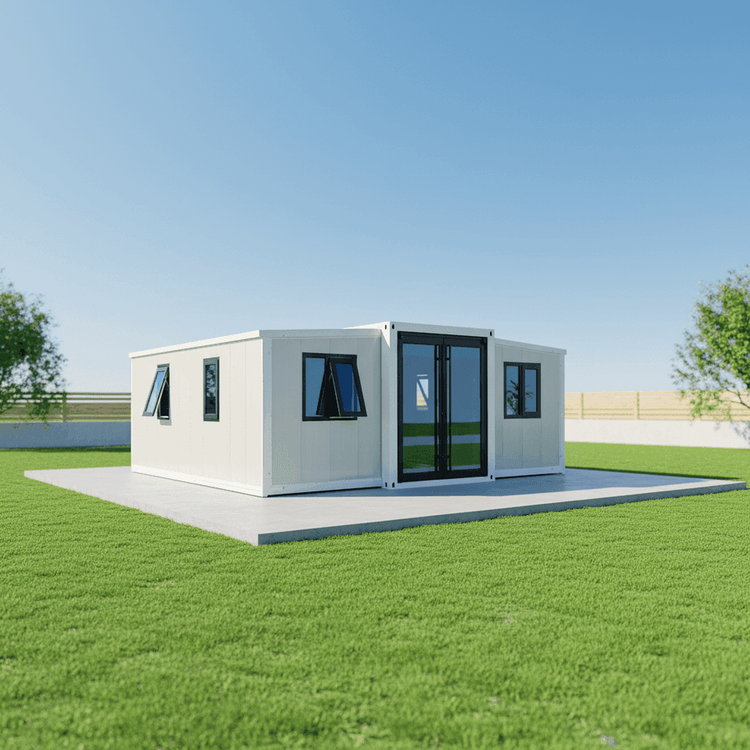
Prefabricated process housing encompasses various structural types and material technologies. Structural types include panel-based assembly (centered around prefabricated wall panels and floor slabs), box-based assembly (through the combination of prefabricated functional units), and frame-based assembly (such as prestressed prefabricated concrete integrated frames). Material technologies primarily focus on prefabricated concrete structures and steel structures, with components including prefabricated beams, slabs, walls, and columns. In the integration mode, modular buildings have a higher degree of integration, with some projects completing all processes such as water and electricity installation and interior decoration in the factory, allowing for direct assembly upon arrival, similar to “building with blocks.”
Core Advantages
- Efficiency Improvement: The construction period is reduced by more than 60% compared to traditional buildings. For example, the Shenzhen affordable housing project was shortened from 2.5-3 years to 1 year, with a reduction in on-site labor by about 50%; in a rural case in South Korea, the main structure was erected in just 14 days.
- Environmental Protection and Energy Efficiency: Construction waste is reduced by more than 70%, and on-site noise and dust pollution are significantly decreased, aligning with the trend of green building development.
- Quality Control: Factories employ automated production lines and millimeter-level precision control, with each component marked with an “ID card” indicating project information to ensure standardized construction.
- Diverse Application Scenarios: It has been used in residential buildings, office buildings, hotels, schools, data centers, and other fields, and has expanded to affordable housing, rural self-built houses, and other scenarios.
Development History and Market
Domestic Development: China's prefabricated concrete technology began in the 1950s and saw a resurgence in the 21st century due to its efficiency and environmental advantages. Companies like Vanke have developed prefabricated shear wall residential structural systems. Overseas Exports: Chinese prefabricated houses are in high demand overseas. In the first four months of 2026, the Guangzhou Customs district exported 1.4 billion yuan worth of modular houses, a year-on-year increase of 38.1%; in the first seven months of 2024, the Huangpu Customs supervised the export of modular houses worth 548 million yuan, a year-on-year increase of 7.3 times. The main markets include ASEAN countries, the UK, Australia, etc., with products covering high-end office buildings, hotels, and data centers.
Typical Cases
- Shenzhen Affordable Housing Project: Assembled from 6,028 concrete modules, the project shortened the completion and delivery period to 1 year.
- Rural Self-Built House in South Korea: Using prefabricated components for assembly, the main structure was completed in 14 days, with foundation piles fixed by footplates and beams connected using mortise-and-tenon joints.
- Overseas Data Center: Modular construction helped clients complete the deployment and commissioning of the computer room in a short time.
You may also like
Everything You Need to Know About Portable Toilet Movable Rental
Read More
Portable Toilet For Sale Pricing: What You Need to Know
Read More
Portable Toilet Movable Eco-Friendly: A Practical Buyer's Guide
Read More