Prefabricated Prefab Houses
Prefabricated prefab houses are a form of construction that involves industrial production of building components and on-site assembly, offering advantages such as shortened construction periods and reduced pollution, representing modern industrial production methods.

I. Definition and Types Prefabricated prefab houses, also known as prefabricated buildings, essentially shift on-site operations in traditional construction methods to factories. Components include beams, slabs, walls, columns, etc., with overall building assembly achieved through standardized design, factory production, and modular construction. The main types are divided into three categories:
- Panel-based Prefabrication: Using prefabricated wall panels and floor slabs as core components, this approach can expand indoor usable area but has limited design flexibility, mostly used in standardized housing.
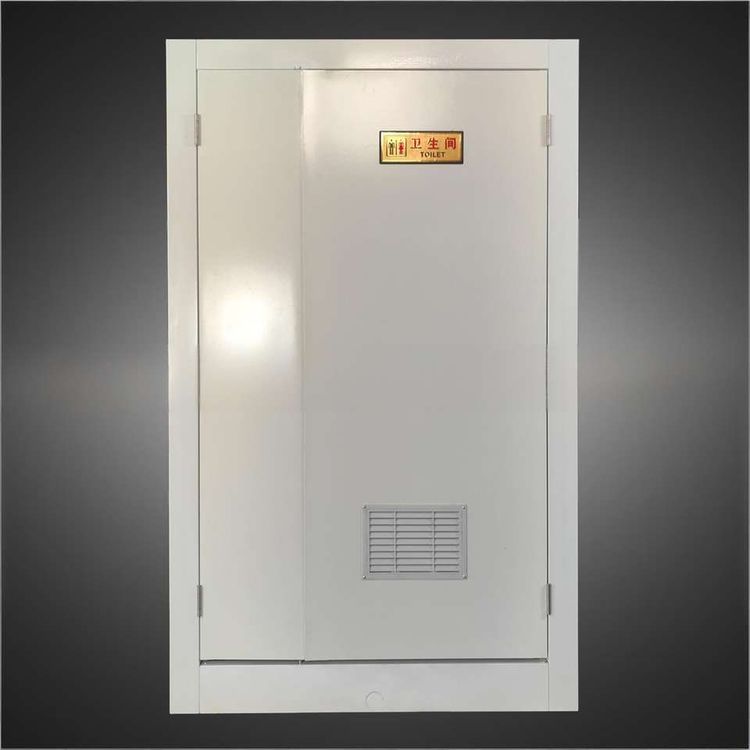
- Box-based Prefabrication: By combining prefabricated functional units (such as kitchen and bathroom modules), construction speed increases by 50%-70%. However, it requires higher transportation and lifting equipment and is suitable for rapid construction scenarios.
- Frame-based Prefabrication: Utilizing prefabricated concrete or steel frames combined with modular design, this approach offers higher integration, with modular buildings as a representative form.
II. Technology and Development History The technology covers prefabricated concrete structures and steel structures. China's prefabricated concrete technology began in the 1950s, initially applied in factories and residential buildings. In the 21st century, companies like Vanke Group developed prefabricated shear wall residential structural systems and applied prestressed prefabricated concrete assembled integral frame technology in projects like Nanjing Jindi Yufang. Internationally, countries such as the UK, France, and the Soviet Union pioneered attempts in the 1960s, with American mobile homes serving as a typical example, where units can be hauled to the site for rapid assembly with complete internal facilities.
III. Policies and Market At the policy level, in 2016, the State Council issued guidelines identifying the Beijing-Tianjin-Hebei region, Yangtze River Delta, and Pearl River Delta as key promotion areas. It also set targets such as 80% of newly started prefabricated buildings in Hainan Province by 2025 and 100% implementation of prefabricated buildings on residential land in Guangzhou from 2026 onwards. At the local level, Fujian Province has supported the establishment of industrial bases through policies, achieving over 70% reduction in construction waste. In the market, Chinese-made prefab houses are selling well overseas, with exports of mobile homes from the Guangzhou Customs area increasing by 38.1% in the first four months of 2026.
IV. Advantages and Challenges Advantages include shortened construction periods, reduced construction pollution, improved labor productivity, and enhanced quality and safety levels. Challenges lie in rigid early designs and high transportation costs, but these have been gradually addressed through modular design and technological improvements.