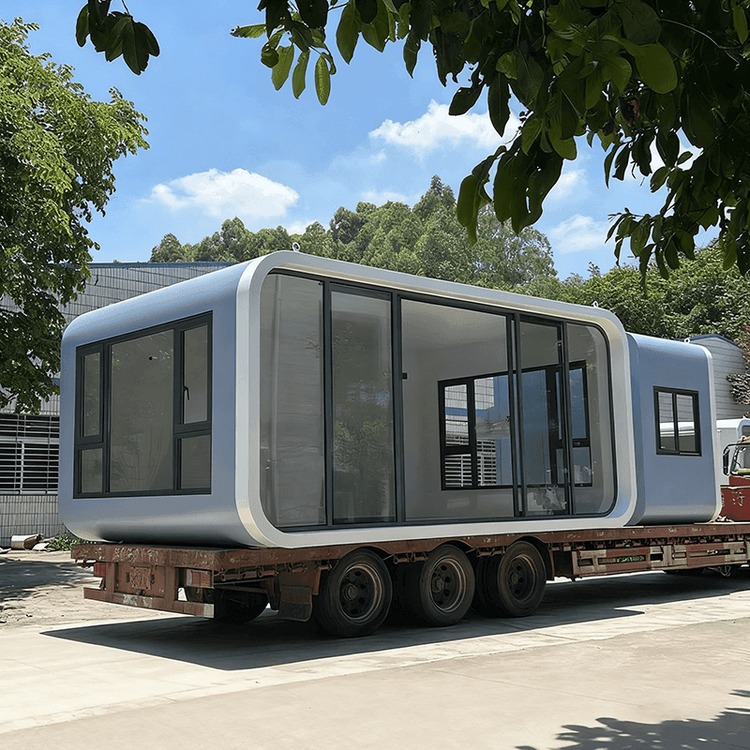
Prefabricated Panels for Residential Roofs
The use of prefabricated panels for residential roofs is characterized by low cost and fast construction, but it also has defects such as poor waterproofing, thermal insulation, earthquake resistance, and limited lifespan, requiring careful selection based on budget, region, and needs.

Core Characteristics and Defects
Prominent Waterproofing Issues The probability of rain leakage on prefabricated panel roofs is high, with about 8 out of 10 households experiencing leakage problems. Even with waterproofing treatment, due to the numerous joints between panels and rapid material aging, long-term waterproofing effects are difficult to guarantee, necessitating frequent repairs.
Poor Thermal Insulation Performance Prefabricated panels are typically 12 centimeters thick, and their hollow structure still fails to effectively block heat transfer. In summer, indoor temperatures are high, and in winter, thermal insulation is insufficient, requiring additional covering with materials such as cinder and lime or the installation of thermal insulation layers, increasing costs.
Low Earthquake Resistance Prefabricated panels are fixed by simple splicing, with a weak connection method. In the event of an earthquake, they are prone to collapse due to structural separation. In earthquake-prone areas, their earthquake resistance coefficient is insufficient, posing serious safety hazards.
Limited Service Life The average lifespan of existing prefabricated panel houses is about 30-50 years, and their sound insulation effect is poor. After long-term use, material aging will exacerbate problems such as leakage and cracking, requiring the reservation of funds for secondary renovation.
Application Scenarios and Recommendations
- Short-term Use Scenarios: If the budget is limited and the location is not in an earthquake-prone area, prefabricated panel roofs can be used in the short term, but defects such as rain leakage and poor thermal insulation must be accepted, and funds for repairs or renovation should be reserved.
- Scenarios Requiring Caution: Prefabricated panels are mostly used for floors, elevated floors, or non-load-bearing structures; if used as floor slabs or sloped roofs, structural safety risks need to be evaluated, and their use in earthquake zones or high-rise buildings should be avoided.
- Long-term Alternative Solutions: Although cast-in-place concrete roofs have higher costs (e.g., over 3000 yuan for 40-50 square meters), their waterproofing, thermal insulation, and earthquake resistance performance are significantly better than those of prefabricated panels, and they are recommended as the preferred solution.
Policy Background
Since 2022, China has implemented a policy of renovating old residential areas, focusing on the repair and renovation of prefabricated panel houses and only demolishing buildings that meet the criteria for dangerous houses. Therefore, existing prefabricated panel houses need to be regularly inspected for structural safety, and leakage and thermal insulation problems should be repaired in a timely manner to extend their service life.