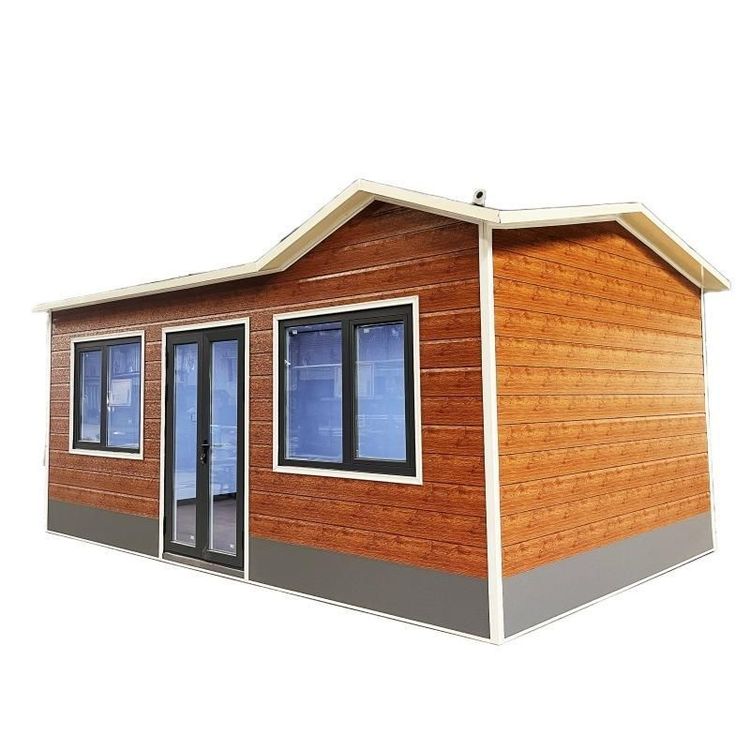
Prefabricated Panel Supported Building Structure
Prefabricated panels are primarily used as floor slabs and roof insulation layers in building structures, and their supports must meet regulatory requirements while focusing on joint connections and overall structural integrity.

I. Support Length Requirements The support length of prefabricated panels on brick walls must comply with regulations, typically not less than 80mm. This requirement ensures sufficient contact area between the prefabricated panels and the wall, effectively transferring loads and avoiding local stress concentrations. Insufficient support length may cause the prefabricated panels to slip or fracture under load, compromising structural safety.
II. Joint Connection Inspection Joint connections are a critical aspect of the prefabricated panel support system. It is essential to inspect whether the supports of the prefabricated panels on the wall are secure and free from signs of looseness. Special attention should be given to wall corners and intersections, where detachment or cracking may occur due to stress concentrations or construction defects. For example, if the prefabricated panels and the wall are not filled with mortar or secured with connectors, the connection may fail due to vibrations or temperature changes, leading to structural safety hazards.
III. Overall Structural Integrity For brick-and-concrete prefabricated panel buildings of three stories or more, overall structural integrity is crucial. If ring beams and structural columns are not installed during construction, the building's earthquake resistance and safety will be significantly reduced. Ring beams enhance the overall integrity of the floors and limit the development of wall cracks, while structural columns improve the building's resistance to collapse. Prefabricated panel buildings lacking these components are prone to inter-story displacement or overall collapse under external forces such as earthquakes, necessitating reinforcement measures (e.g., adding ring beams, structural columns, or carbon fiber cloth reinforcement) to enhance their earthquake resistance.
IV. Existing Problems and Limitations Prefabricated panel buildings generally suffer from weak earthquake resistance, poor sound and thermal insulation, and other issues. Their service life is approximately 30-50 years, after which structural safety must be evaluated to determine whether demolition or reinforcement is necessary. Additionally, as factory-prefabricated components, if not installed strictly according to regulations during construction (e.g., insufficient support length, loose joint connections), the structural deterioration may accelerate, shortening the service life. Therefore, regular inspections and maintenance are essential measures to ensure the safety of prefabricated panel buildings.