
Prefabricated Panel Prefabricated Houses
Prefabricated panel prefabricated houses are a form of construction that involves the industrial production of building components and their on-site assembly. They mainly include types such as prefabricated panel houses, prefabricated assembled buildings, and modular buildings, offering technical advantages such as shortened construction periods and reduced pollution. However, some types have issues like weak earthquake resistance and are widely applied in the market.
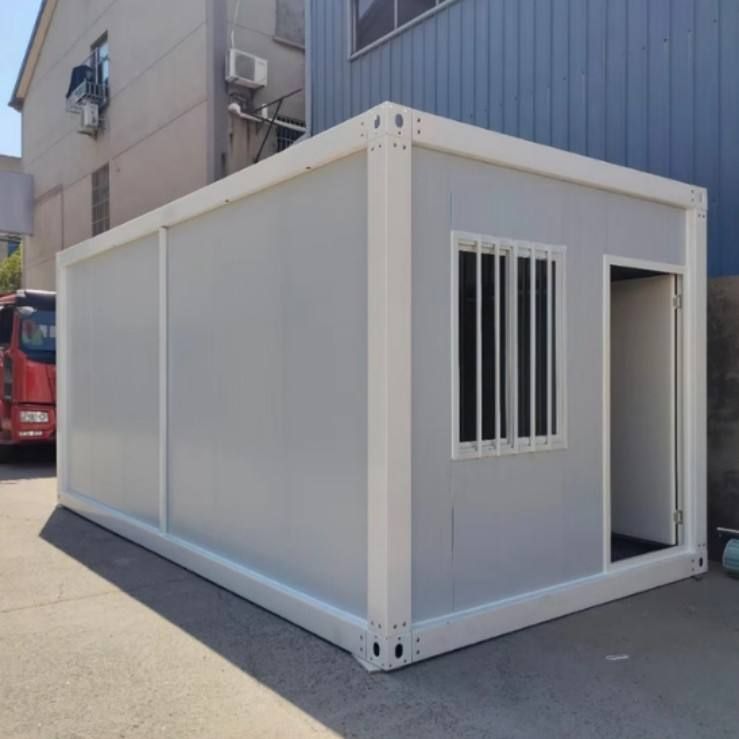
Prefabricated panel houses primarily use prefabricated panels as their main components. These panels are factory-made cement components, available in solid and hollow types. This construction form originated in the early 20th century, and many residential buildings constructed in China before 1985 adopted this structure. Existing prefabricated panel houses generally have issues such as weak earthquake resistance, poor sound and thermal insulation, with a service life of about 30-50 years. Since 2022, China has implemented renovation policies, focusing on repairing and upgrading prefabricated panel houses and only demolishing those that meet the criteria for dangerous buildings.
Prefabricated assembled buildings, also known as pre-cast houses, encompass types such as panel-assembled, box-assembled, and frame-assembled buildings. The technologies include assembled concrete structures and steel structures, with components covering prefabricated products like beams, panels, walls, and columns. Their advantages are shortened construction periods and reduced pollution. For example, box-assembled buildings can increase construction speed by 50%-70% through the combination of prefabricated functional units. China's prefabricated concrete technology began in the 1950s, initially applied in factory and residential construction. It saw a resurgence in the 21st century due to production efficiency and environmental advantages, with companies like Vanke Group developing assembled shear wall residential structural systems.
Modular buildings represent a more integrated mode within prefabricated assembled buildings, based on digital and modular design. They complete component splitting, pipeline layout, and unit combination simulations on computers, shifting a large amount of traditional work to factories for standardized and integrated production. For example, the E-MIC prefabricated concrete box house system introduced by China Construction First Bureau (Group) Co., Ltd. offers flexible spatial arrangements, suitable for scenarios such as urban renewal and old residential area renovations, with no safety risks but subject to width limitations due to transportation.
In terms of market application, Chinese-made prefabricated houses are selling well overseas. In the first four months of 2026, enterprises in the Guangzhou Customs area exported movable houses worth 1.4 billion yuan, a year-on-year increase of 38.1%; movable houses exported through Shenzhen ports reached 1.68 billion yuan, a year-on-year increase of 19.6%.



