
Prefabricated One-Step Forming House
Prefabricated one-step forming houses generally refer to modular buildings or prefabricated assembled buildings, with the core concept of breaking down the building into independent modules, which are prefabricated in factories and then transported to the site for assembly.
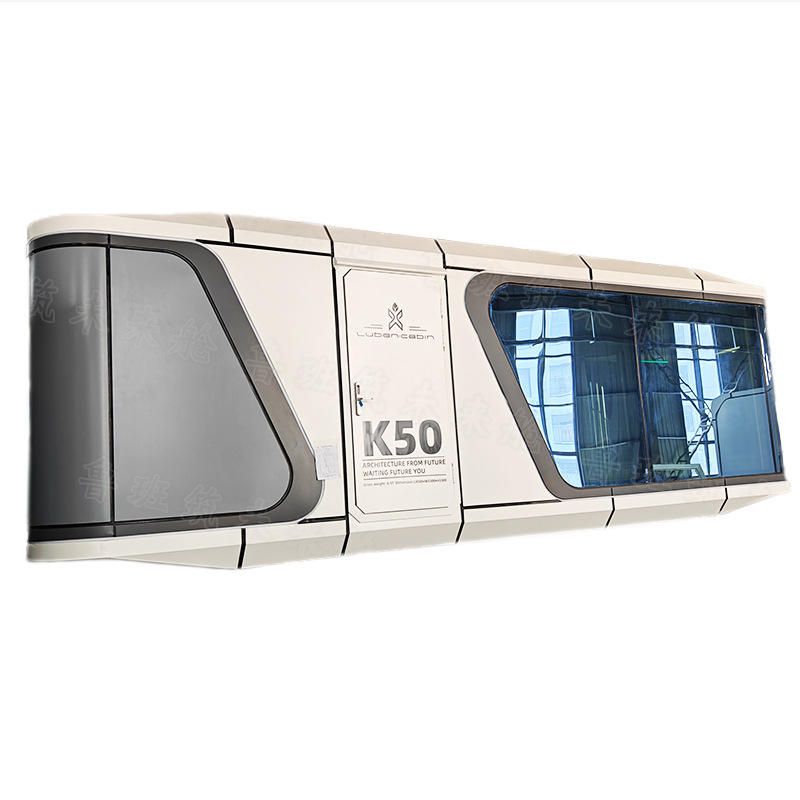
Production Mode: Industrial High-Precision Manufacturing
Components such as ceilings, floors, and water and electricity pipelines are prefabricated on factory assembly lines and assembled using welding robots and automated production lines, with errors controlled to the millimeter level. For example, the Shenzhen Zhongjian Hailong Intelligent Construction Industrial Park adopts a parallel operation mode, delivering 20,000 to 30,000 modules annually, significantly improving production efficiency. This mode transforms the traditional on-site construction's 'series' process into a factory 'parallel' production, ensuring component standardization and quality controllability.
Assembly Process: Rapid On-Site Assembly
After being transported to the site, prefabricated modules are spliced using lifting equipment, similar to 'building blocks'. For example, the 63 Chinese modular elderly care apartment modules purchased by the UK were assembled in just two weeks upon arrival; a public housing project in Shenzhen, composed of 6,028 concrete modules, had its construction and delivery period shortened from 2.5-3 years to 1 year. The assembly process relies on high-precision positioning technology and modular interface design to ensure structural stability and construction safety.
Technical Types and Core Advantages
- Technical Classification: It covers prefabricated concrete structures and steel structures, with components including prefabricated products such as beams, slabs, walls, and columns. The main types are panel-type assembly, box-type assembly, and frame-type assembly.
- Core Advantages:
- Shortened Construction Period: By paralleling factory prefabrication and on-site assembly, the construction period can be shortened by more than 60%.
- Cost Reduction: On-site labor is reduced by about 50%, construction waste is reduced by more than 70%, and industrial production reduces material waste.
- Quality Controllability: The factory environment eliminates weather interference, and mechanized operations improve component precision and durability.
- Energy Conservation and Environmental Protection: It reduces on-site wet operations, lowers dust and noise pollution, and complies with green building standards. For example, a hotel project in Papua New Guinea saved a significant amount of overseas labor costs through modular construction, leading to continuous repurchases by the owner.
Market Applications and Export Trends
China's prefabricated housing industry has formed a complete industrial chain. In the first four months of 2026, the Guangzhou Customs District exported movable houses worth 1.4 billion yuan, a year-on-year increase of 38.1%. According to data from the General Administration of Customs, China's prefabricated building exports grew nearly threefold over the decade from 2015 to 2025, with a growth rate of 45% in the first quarter of 2026. Export products are mainly steel structure modules, widely used in overseas public housing, hotels, temporary facilities, and other fields, reflecting the international competitiveness of China's construction technology.



