
Prefabricated Monolithic Structure Cement House
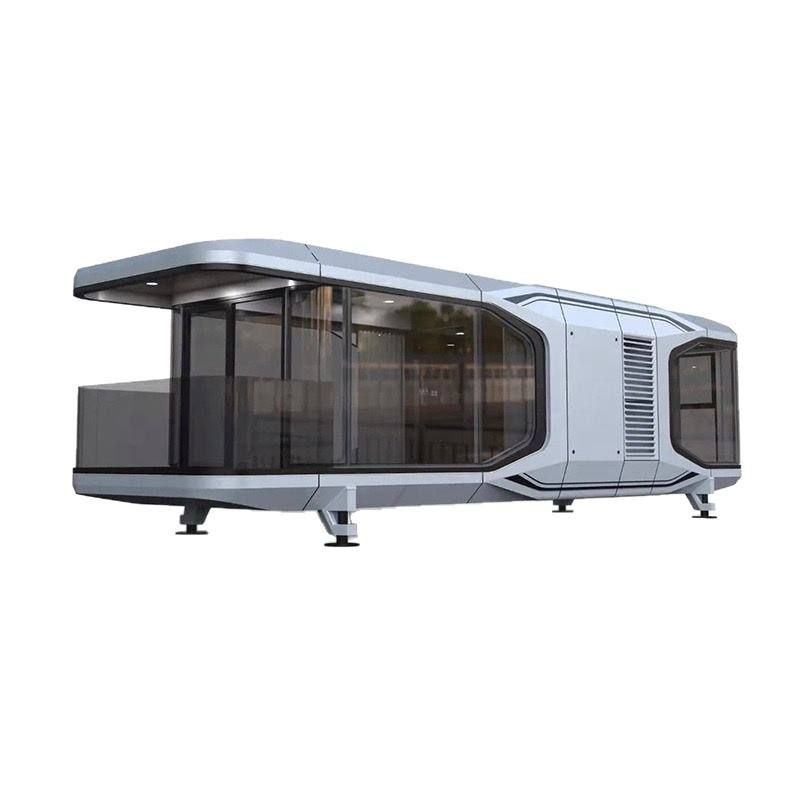
The prefabricated monolithic structure cement house is a prefabricated building centered around the on-site assembly of factory-prefabricated components. It offers advantages such as rapid construction, earthquake and wind resistance, and cost-effectiveness and environmental friendliness, making it suitable for scenarios like temporary housing and rural self-built homes. However, attention should be paid to the renovation needs for long-term occupancy and the cost of customizing the appearance.
Construction Efficiency and Time Cost
The prefabricated monolithic structure cement house is produced through standardized factory production of components such as reinforced concrete wall panels and floor slabs, which are then transported to the site for direct hoisting and assembly. For example, the main structure of a 200-square-meter villa can be erected in as little as 4 hours, saving approximately 90% of the time compared to traditional construction methods. During the Jishishan earthquake in Gansu, 2,000 resettlement houses were constructed within 72 hours, highlighting its emergency response capabilities.
Structural Performance and Safety
Technologically, it employs C35 concrete and a reinforced steel frame, which have been tested to withstand magnitude-8 earthquakes and Category-12 typhoons, meeting the building safety requirements of high-intensity earthquake zones and coastal typhoon-prone areas. Its overall structural integrity is superior to that of traditional brick-and-mortar houses, particularly excelling in earthquake resistance.
Cost-Effectiveness and Environmental Friendliness
The main structure of a 100-square-meter house costs approximately 100,000 to 120,000 yuan, which is 30% cheaper than brick-and-mortar structures, and construction waste is reduced by over 70%. Modular design further reduces long-term operating costs. For instance, some bed-and-breakfast establishments using this structure have seen their annual income triple, demonstrating its economic potential.
Application Scenarios and Renovation Needs
- Typical Scenarios: Temporary construction site housing, rural self-built homes, post-disaster resettlement housing, and other scenarios requiring rapid construction.
- Long-Term Occupancy Renovations: Soundproof cotton and insulation panels need to be installed, and roof waterproofing should be properly addressed to enhance living comfort.
- Appearance Limitations: Standard components offer limited flexibility, and non-standard designs such as rounded balconies require an additional 20% customization fee, increasing costs.
Market Supply and Brands
Domestic brands include Xinwei Hongtu, Xinsheng, etc., offering hoisting or assembly-type services. According to 2026 customs data, China's exports of prefabricated houses have grown significantly, reflecting the expanding international demand for efficient and environmentally friendly buildings.
Conclusion
The prefabricated monolithic structure cement house achieves a balance between construction efficiency, safety, and cost-effectiveness through industrialized production and on-site assembly. However, the cost of customizing the appearance and the need for renovations for long-term occupancy should be weighed according to the usage scenario. Its market expansion potential and policy support (such as the promotion of green buildings) will further drive technological upgrades in the industry.



