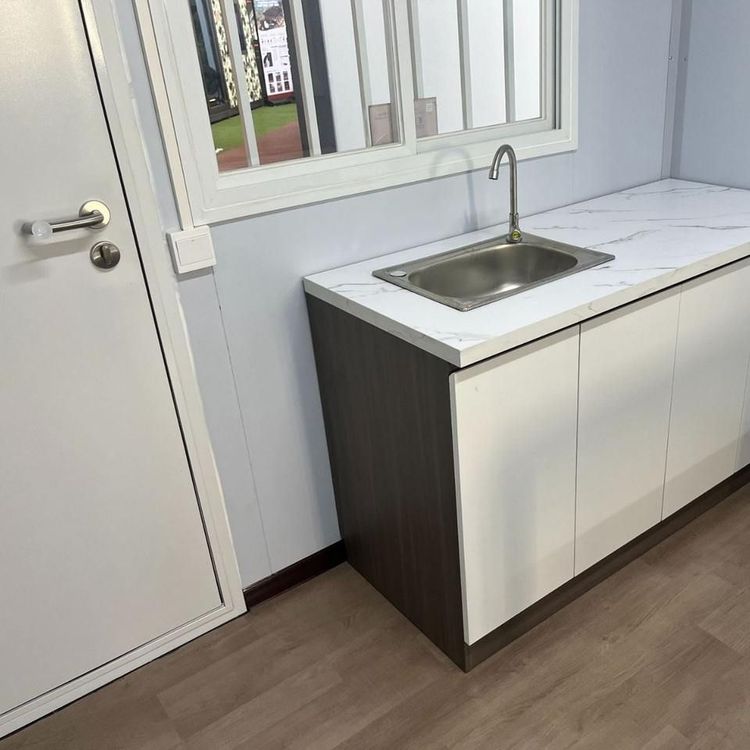
Prefabricated Modern Housing
Prefabricated modern housing is a form of architecture that involves the industrial production of building components and their on-site assembly, characterized by short construction periods, controllable quality, energy efficiency, environmental protection, and ease of maintenance.

Construction Mode and Characteristics: Prefabricated modern housing breaks down buildings into independent modules, with all components such as ceilings, floors, and plumbing and electrical systems prefabricated in factories before being transported to the site for assembly, akin to 'building with blocks'. Its core advantages include:
- Short Construction Period: Parallel operations in factories and intelligent production lines reduce construction time by over 60%. For example, the construction period for a public housing project in Shenzhen was reduced from 2.5-3 years to 1 year, with the overall construction period for prefabricated buildings being 30% shorter than traditional methods.
- Controllable Quality: Precise positioning of steel bars to millimeter-level accuracy and strict error control ensure 'industrial-grade' construction standards and more refined design details.
- Energy Efficiency and Environmental Protection: Centralized factory production reduces on-site noise, dust, and construction waste, with industrial bases in Fujian Province achieving over 70% waste reduction and alleviating traffic congestion.
- Ease of Maintenance: Modular design allows for flexible repairs, enabling targeted replacement or upgrading of components.
Types and Technologies: The main types include panel-based, box-based, and frame-based prefabrication, with technologies covering prefabricated concrete structures and steel structures. Components involve prefabricated products such as beams, slabs, walls, and columns. In terms of form, there are steel structures (lightweight, suitable for overseas transportation and high-rise buildings), concrete structures (close to traditional living experiences, with high acceptance in China), and wooden structures, with Chinese companies having advantages primarily in steel and concrete structures.
Development History: China's prefabricated concrete technology began in the 1950s, initially used for factory buildings and residential housing; in the 1970s, technical systems such as large-panel structures were formed; in the 1980s, development stalled due to cost and quality issues; in the 21st century, it has revived due to demands for efficiency and environmental protection, with companies like Vanke developing prefabricated shear wall residential systems and applying prefabricated frame technologies.
Market Prospects: The global modular construction market is expected to exceed $142.8 billion by 2030. China's exports have grown significantly, with Guangzhou Customs reporting exports of portable houses worth 1.4 billion yuan (a 38.1% year-on-year increase) in the first four months of 2026, and Shenzhen Port reporting exports worth 1.68 billion yuan (a 19.6% year-on-year increase), indicating strong international demand.