
Prefabricated Installed Housing
Prefabricated installed housing is a building form that involves the industrial production of building components and their on-site assembly. It offers advantages such as shortened construction periods and reduced pollution. In China, it has undergone a development process from its inception to resurgence, with various types and application scenarios.
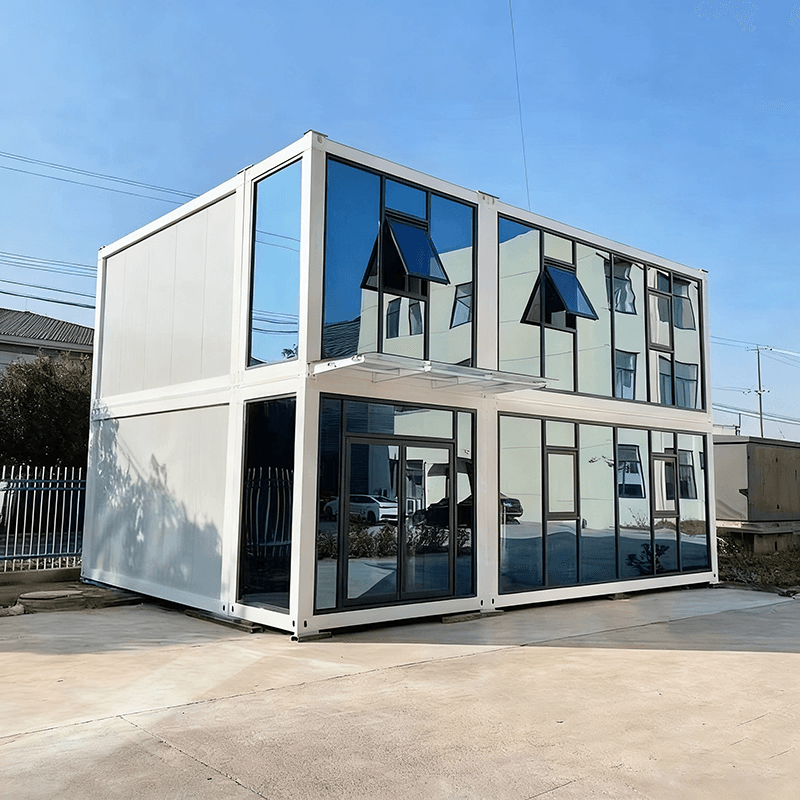
Prefabricated installed housing, also known as prefabricated assembled buildings, mainly includes panel-assembled, box-assembled, and frame-assembled types. Its technologies encompass prefabricated concrete structures and steel structures, with components including prefabricated beams, slabs, walls, columns, and other products.
China's prefabricated concrete technology began in the 1950s and was initially applied to factory and residential construction. In the 1970s, driven by the policy of building 'three modernizations', technical systems such as large-panel structures and box structures were formed. In the mid-1980s, it stagnated due to cost and quality defects. After the 21st century, it resurged due to its production efficiency and environmental advantages. Companies like Vanke Group developed prefabricated shear wall residential structural systems and applied prefabricated frame technologies in projects. For example, the Nanjing Jindi Yufang project adopted a prestressed prefabricated concrete assembled integral frame structural system.
Panel-assembled buildings use prefabricated wall panels and floor slabs as core components, which can expand the usable area but are limited by design flexibility. Box-assembled buildings combine prefabricated functional units, increasing construction speed by 50%-70%, but have higher requirements for transportation and lifting equipment. Modular buildings represent a higher level of integration in prefabricated assembled buildings. Modular houses are prefabricated in factories and installed quickly, saving time and effort. Their construction speed is ten times faster than that of common concrete houses, and they can be assembled like building blocks.
In addition, prefabricated installed housing has also performed well in terms of environmental protection and exports. Regions such as Fujian Province have established industrial bases through policy support, achieving a reduction in construction waste of over 70%. Chinese-made prefabricated houses are selling well overseas. According to customs data, in the first four months of 2026, the Guangzhou Customs District exported mobile houses worth 1.4 billion yuan, a year-on-year increase of 38.1%.



