
Prefabricated Housing Research
Prefabricated housing research covers aspects such as types and technologies, development history, advantages, application scenarios, market prospects, and existing challenges.
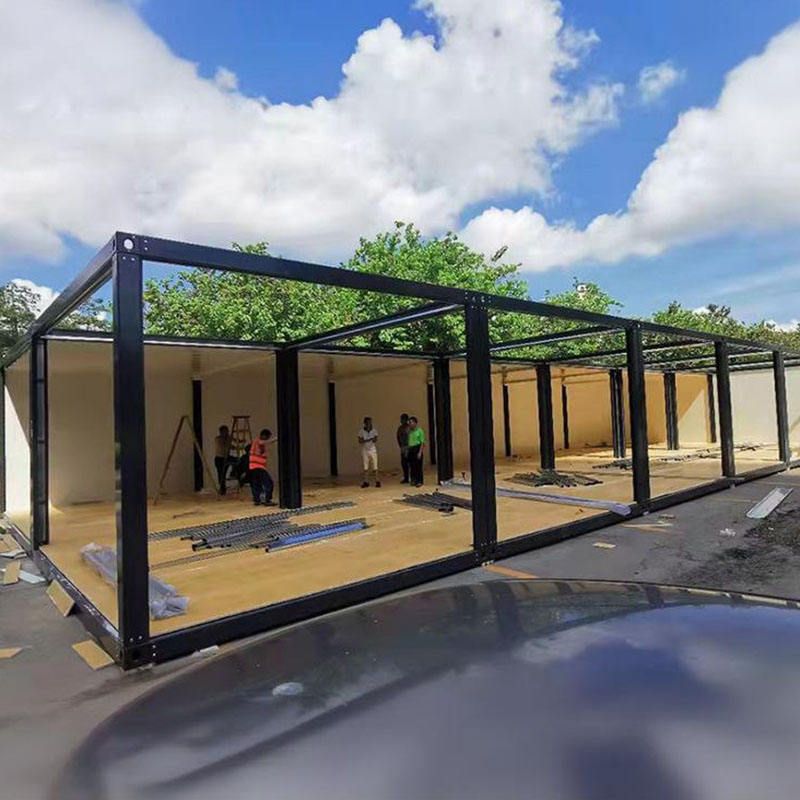
Types and Technologies: The main types of prefabricated housing include panel-assembled, box-assembled, and frame-assembled structures. The technologies encompass prefabricated concrete and steel structures, with components such as beams, slabs, walls, and columns being prefabricated products. Modular construction represents a higher level of integration, where buildings are broken down into independent modules, manufactured in factories, and then transported to the site for assembly.
Development History: China's prefabricated concrete technology began in the 1950s and was initially used for factory and residential construction. In the 1970s, driven by the policy of 'industrialization, standardization, and mechanization' in construction, technical systems such as large-panel structures and box structures emerged. By the mid-1980s, development stalled due to cost and quality issues. However, in the 21st century, it has seen a resurgence due to production efficiency and environmental advantages. Companies like Vanke Group have developed prefabricated shear wall residential structural systems and applied prefabricated frame technologies in engineering projects.
Advantages: Modular buildings offer short construction periods, reducing the construction cycle by over 60%. Quality is controllable, with errors measured in millimeters. They are energy-efficient and environmentally friendly, reducing noise, dust, construction waste, and traffic congestion. Maintenance is convenient and flexible. Space utilization is high, with stacked residential buildings allowing vertical expansion of living space. Construction is rapid, saving 30%-60% of the construction period. Customization is flexible, with module sizes, specifications, and layouts all customizable.
Application Scenarios: In addition to hotels, senior living apartments, dormitories, and office buildings, the global construction of data centers has also propelled the popularity of domestically produced modular buildings overseas. Stacked residential buildings can serve as both residences and be transformed into student apartments or commercial spaces.
Market Prospects: Market research institutions predict that by 2030, the global modular construction market will exceed $142.8 billion. Chinese-made prefabricated houses are selling well overseas. In the first four months of 2026, the Guangzhou Customs district exported 1.4 billion yuan worth of mobile homes, a year-on-year increase of 38.1%. In the first four months of this year, companies across the country exported 1.68 billion yuan worth of mobile homes through the Shenzhen port, a year-on-year increase of 19.6%, with exports to over 150 countries and regions.
Existing Challenges: Stacked residential buildings face challenges such as zoning regulations, stereotypes of affordable housing, transportation damage risks, and questions about long-term durability.



