
Prefabricated Housing Modular Components
Prefabricated housing modular components are the core part of a new construction model, where independent unit modules are prefabricated in factories and then transported to the site for assembly to complete the building construction. Details are as follows:
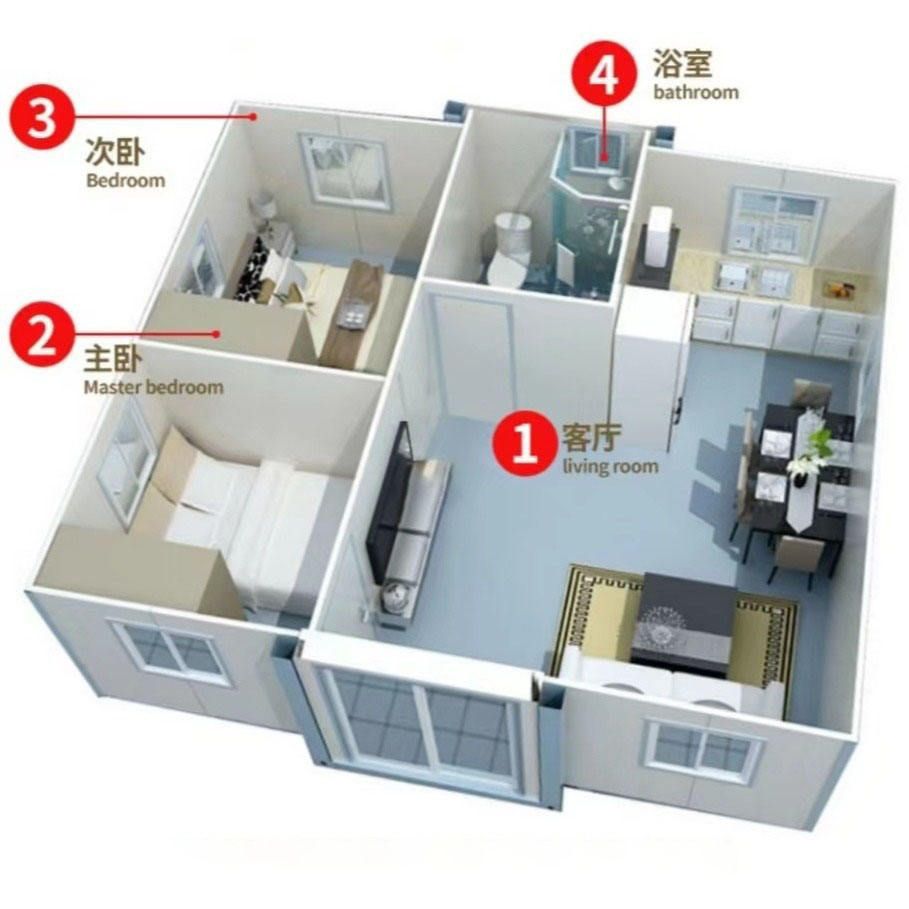
1. Component Composition and Production Characteristics
Prefabricated housing modular components cover the main structural and functional units of a building, including ceilings, floors, walls, bathroom waterproof layers, and water and electricity pipelines. All components undergo standardized prefabricated production on factory assembly lines. Each module is equipped with a unique 'ID card' that marks key information such as the project name, product model, and production date, enabling full lifecycle traceability management. This production model centralizes the dispersed processes in traditional construction and ensures component precision and quality stability through industrial means.
2. Construction Efficiency and Cycle Advantages
Modular components complete core processes such as water and electricity installation and interior decoration in the factory. Upon arrival at the site, they only need to be quickly assembled through methods such as bolt connection and welding. Compared to traditional construction models, the total construction period can be shortened by more than 50%, making them particularly suitable for time-sensitive projects (such as post-disaster reconstruction and temporary medical facilities). For example, after adopting modular technology, the main structure construction of a hospital project took only 7 days, while traditional construction would require more than 30 days.
3. Multi-dimensional Performance Improvements
- Quality Controllability: The factory environment eliminates weather interference and, combined with automated equipment and strict quality inspection processes, keeps component dimensional deviations within millimeters, significantly reducing the incidence of common quality issues such as leakage and cracking.
- Energy Efficiency and Environmental Protection: Centralized production reduces on-site construction waste by about 60% and lowers energy consumption and carbon emissions by optimizing material ratios (such as high-strength concrete and recycled steel).
- Seismic Safety: Modules adopt flexible connection technology to form an overall force-bearing system, which has been experimentally verified to withstand magnitude-8 earthquakes, making them suitable for earthquake-prone areas.
- Maintenance Convenience: Standardized design allows pipeline maintenance and equipment replacement without damaging the main structure, reducing post-maintenance costs by about 30%.
4. Typical Application Scenarios
Modular buildings have widely penetrated into fields such as residential housing, schools, hospitals, and commercial complexes. For example, Singapore's 'HDB flats' project has achieved an annual delivery volume of over 20,000 units through modular technology; a rural school in China adopted prefabricated bathroom modules, reducing the construction period from 2 months to 2 weeks and meeting barrier-free design requirements.



