
Development Trends of the Prefabricated Housing Market
The prefabricated housing market has shown strong growth momentum in recent years and is expected to accelerate towards large-scale, technological, green, and global development in the future. Specific trends are as follows:
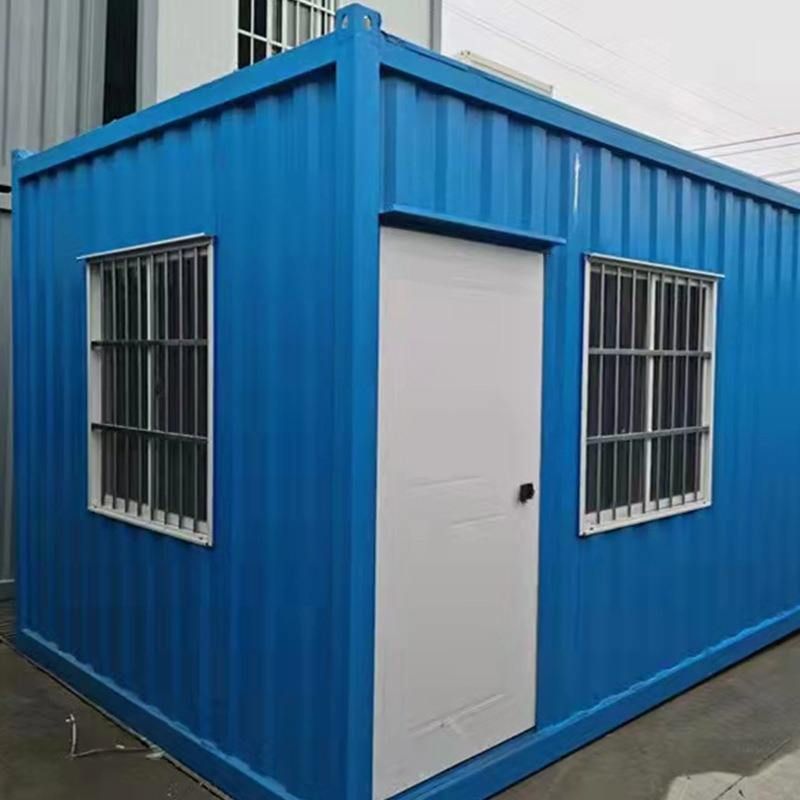
1. Continuous Market Expansion with Strong Growth Momentum The global prefabricated housing market is experiencing a period of rapid growth. In 2024, the market size reached approximately $156 billion, an 8.3% year-on-year increase; it is expected to rise to $172 billion in 2025, with the growth rate increasing to 10.3%. Market research institutions predict that by 2030, the global modular construction market size will exceed $142.8 billion. This growth is driven by accelerated urbanization, a surge in housing demand, and rising costs of traditional construction methods, making prefabricated housing an efficient solution.
2. Technological Innovation Driving Industrial Upgrading Smart building technology and modular design have become core drivers. 3D printing technology significantly reduces production costs and shortens construction cycles by automating the manufacturing of housing components. The integration of the Internet of Things (IoT) and smart home systems enables prefabricated houses to have remote monitoring, energy management, and other functions, enhancing living comfort. The widespread application of eco-friendly materials (such as recycled steel and low-carbon concrete) not only meets global environmental regulations but also aligns with consumers' pursuit of sustainable living.
3. Synergy Between Policy and Market Demand National policies provide strong support for the development of prefabricated housing. For example, China's '15th Five-Year Plan for Urban Renewal' explicitly promotes intelligent construction and prefabricated decoration, while the Ministry of Housing and Urban-Rural Development and the National Development and Reform Commission have set a target of 40% prefabricated buildings in newly constructed urban buildings by 2030. Meanwhile, urban renewal has created a trillion-dollar rigid demand market. Traditional construction methods struggle to meet large-scale, fast-paced renovation needs, while the modular and standardized characteristics of prefabricated housing make it the preferred solution for scenarios such as old house renovations and unit modifications.
4. Diversified Expansion of Application Scenarios The application of prefabricated housing has extended from domestic areas such as renovations of dilapidated houses and temporary buildings to overseas markets. The global boom in data center construction has driven a surge in exports of domestically produced modular buildings, with products covering hotels, senior living apartments, dormitories, and office buildings. Additionally, repeat orders from overseas customers continue to increase, confirming the competitive advantage of China's full prefabricated housing industry chain (design, production, logistics, and installation).
5. Green and Low-Carbon as Core Competitiveness Prefabricated housing reduces construction waste by 80% through industrial production and modular construction, significantly lowering dust and noise pollution from on-site wet operations, perfectly aligning with the 'dual carbon' goals. Its lifecycle carbon emissions are more than 30% lower than those of traditional buildings, making it a core carrier of green construction.
6. Full Industry Chain Advantage Consolidates International Position With a complete industrial chain layout, China has upgraded prefabricated housing from a 'building product' to an 'industrial export business.' From intelligent design to ocean logistics and rapid overseas installation, Chinese companies' standardized processes and cost control capabilities have enabled them to dominate the global market, with continued expansion of market space in the future.



