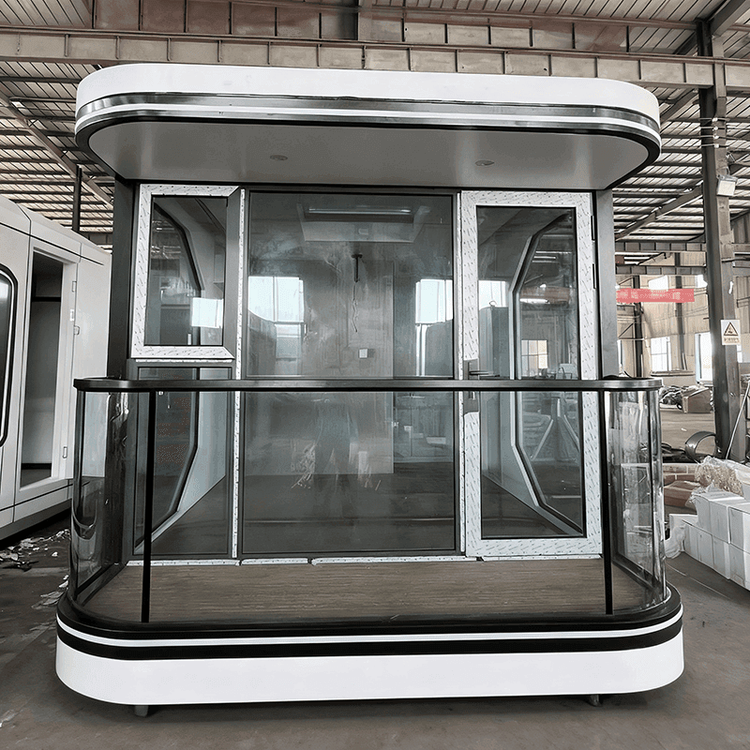
Development Trends of Prefabricated Housing
The development trends of prefabricated housing (modular construction) include market expansion, diversified application scenarios, improved technological efficiency, green and low-carbon features, a mature full industrial chain, and increased customer repurchase rates.

Rapid Market Growth: The global modular construction market is experiencing strong growth. According to market research firm projections, the global market size will exceed $142.8 billion by 2030. China's prefabricated building exports have performed exceptionally well, with customs data showing that export value nearly tripled from 2015 to 2025, with a 45% growth rate in the first quarter of 2026 and total exports of $2.79 billion in the first half of the year, a 45% year-on-year increase. This growth reflects the sustained rise in global demand for modular construction.
Expanding Application Scenarios: The application areas of modular construction have expanded from traditional residential buildings, apartments, dormitories, office buildings, and hospitals to emerging fields such as data centers. For example, CIMC's delivery of prefabricated modular data center projects in Malaysia, Japan, and Indonesia, as well as the Kikori Hotel project in Papua New Guinea (equipped with a photovoltaic power generation system), all demonstrate the widespread application of modular construction in emerging fields.
Technological Maturity and Efficiency Improvement: The application of digital technologies, parallel operations, automated production lines, and intelligent management has significantly improved the construction efficiency of modular buildings. Construction periods have been shortened by more than 60% compared to traditional methods, on-site labor reduced by 50%-70%, and overall construction time shortened by more than one-third. For example, a social housing project in Shenzhen, Guangdong, assembled from 6,028 concrete modules, had its completion and delivery time reduced from 2.5-3 years to just 1 year.
Significant Green and Low-Carbon Advantages: Modular construction stands out in environmental protection, reducing on-site construction waste by more than 75% and lowering construction noise pollution by over 90%, meeting global sustainable development needs. This advantage makes it an important development direction in the construction industry amid growing environmental awareness.
Mature Full Industrial Chain Export Model: China has formed a full industrial chain advantage from design and R&D, intelligent production to ocean logistics and overseas installation, transforming 'house building' into a standardized industrial product export business. For example, in the first four months of 2026, Chinese enterprises exported $1.68 billion worth of modular buildings through Shenzhen ports, a 19.6% year-on-year increase, covering more than 150 countries and regions.
Increased Repurchase Rates Among Overseas Customers: Customers from countries such as the UK and Papua New Guinea continue to place additional orders due to cost, time, and quality advantages, creating a 'repeat customer effect'. This trend indicates that modular construction has gained widespread recognition in the international market and holds significant future market potential.