Nationwide Promotion of Prefabricated Housing Assembly
The nationwide promotion of prefabricated housing assembly is gradually advancing and achieving remarkable progress, evident at the policy, practical, and industrial levels.

Strong Policy Support
The state attaches great importance to the development of prefabricated buildings. In September 2016, it issued the 'Guidelines of the General Office of the State Council on Vigorously Developing Prefabricated Buildings,' identifying it as a major transformation in construction methods and designating the Beijing-Tianjin-Hebei, Yangtze River Delta, and Pearl River Delta urban agglomerations as key promotion areas. Various regions have responded actively. For example, Hainan Province plans for prefabricated buildings to account for 80% of newly started construction projects by 2025. Starting from 2026, Guangzhou will implement prefabricated construction for 100% of its residential land transfers, and for commercial and industrial land where technically feasible. This year, several cities including Beijing and Guangzhou have introduced housing provident fund support policies, allowing for increased loan limits for the purchase of prefabricated housing, further encouraging its development.
Fruitful Practical Achievements
Numerous enterprises are actively participating in prefabricated building projects. Shanghai Construction Property began pilot projects for prefabricated residential buildings in 2008 and promoted them in 2016. Currently, four residential projects under construction in Huinan are all prefabricated. The 'Huazhang Xinzhu' project, as the most industrialized high-rise affordable housing community in the country, completes most construction processes in the factory and forms a complete building through on-site casting connections. A public housing project in Shenzhen, Guangdong, consists of five residential buildings nearly 100 meters high, assembled from 6,028 concrete modules, significantly shortening the construction and delivery period and reducing on-site labor by about 50%. A four-story police station office building in Huadu District, Guangzhou City, Guangdong Province, was delivered in less than a month from module hoisting, with all 'components' prefabricated in an intelligent factory and assembled on-site.
Expanding Industrial Scale
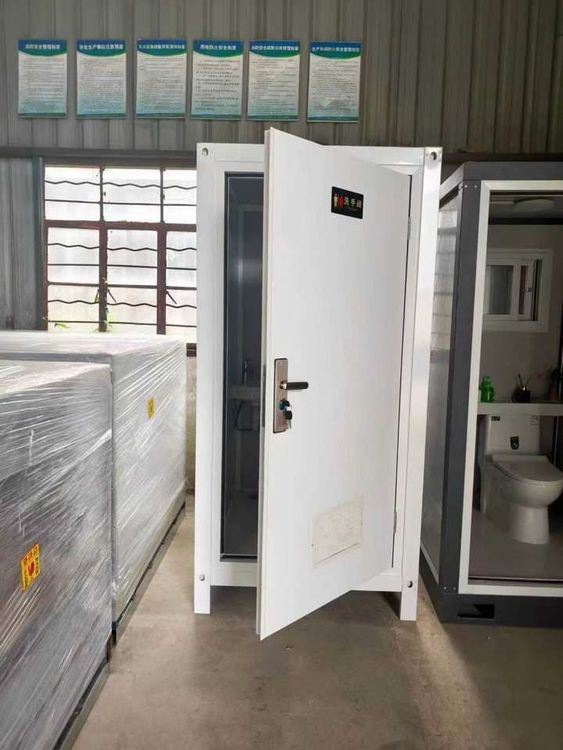
Modular construction, as an important form of prefabricated buildings, is continuously expanding its industrial scale. The CSCEC Hailong Intelligent Construction Industrial Park can deliver 20,000 to 30,000 modules annually. Market research institutions predict that the global modular construction market size will exceed $142.8 billion by 2030. Meanwhile, China's 'prefabricated houses' are also popular overseas. In the first four months of this year, enterprises across the country exported portable houses worth 1.68 billion yuan through the Shenzhen port, a year-on-year increase of 19.6%, to more than 150 countries and regions. However, the overseas expansion of modular construction faces three major bottlenecks: standards, certification, and logistics.