Prefabricated Houses in Yinchuan
The situation of prefabricated houses in Yinchuan is as follows:
Prefabricated Integrated Houses Promote Green Building Development
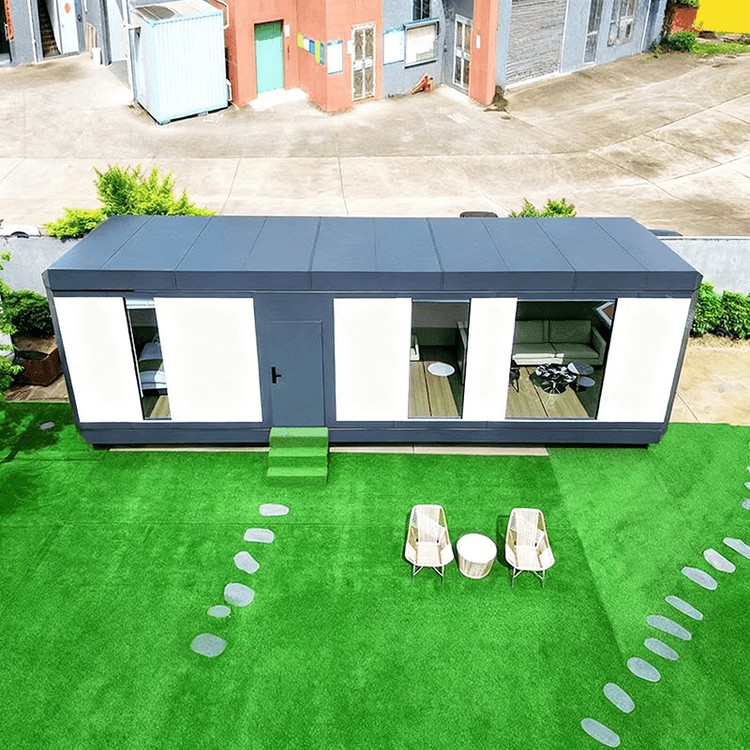
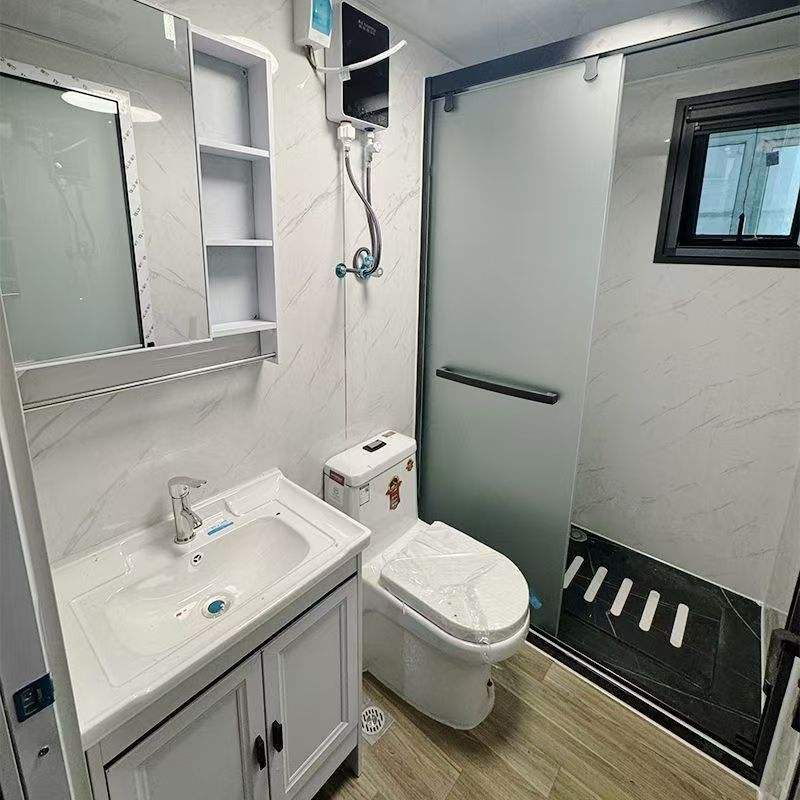
Yinchuan is located in the arid and semi-arid region of northwest China, with a dry climate and large temperature differences. This places high demands on building energy efficiency and construction efficiency, making prefabricated integrated houses an important solution for green building development. These houses are produced in factories with standardized structures, walls, pipelines, and other components, and are quickly assembled on-site. They feature high thermal insulation, airtightness, and modular design, effectively coping with severe cold in winter and high temperatures in summer, and significantly reducing building operational energy consumption. Technologically, prefabricated integrated houses combine standardized design with digital production, offering high integration, structural safety, and reliability. They support flexible layouts and post-construction modifications, making them suitable for various scenarios such as urban and rural residences, public buildings, and temporary facilities. For example, a production base in the Yinchuan Economic and Technological Development Zone uses intelligent production lines and BIM technology for collaborative management, achieving full-process digital control. The waste recycling rate exceeds 90%, and energy consumption is reduced by 30% compared to traditional construction methods. Its independently developed energy-saving composite wall system has passed national green building product certification.
Current Situation of Old Prefabricated Panel House Communities in Yinchuan's Old Town
Many old communities in Yinchuan's old town, built in the 1960s, 1970s, and 1980s, are dominated by prefabricated panel houses. These buildings are products of their time, constructed using pre-cast concrete panels for floors, offering fast construction, convenience, and relatively low costs. From the late 1950s to the late 1980s, Yinchuan's population surged, with a large influx of people supporting the development of Ningxia. The demand for housing increased significantly, and large areas of prefabricated panel house communities, such as "Shanghai New Village," became resettlement areas, transforming the appearance of Yinchuan and people's lifestyles. Today, these buildings are mostly considered "old communities," with some residents expressing concerns about safety hazards and suggesting demolition to build parking lots or small parks, while others advocate for restoring the "old Yinchuan" style.
Situation of Prefabricated Panel Buildings in Xiangmin A District
Xiangmin A District is located north of Huaiyuan Road in Xixia District, with houses mainly built from the 1970s and 1980s to the early 21st century. Building 19, constructed in 1992, is a five-story brick-concrete structure housing 60 households and has not been identified as a dangerous building. During Yinchuan's urban renewal and transformation in 2013, due to opposition from some residents, only areas with strong demolition意愿 (willingness) underwent the first and second phases of house acquisition projects in Xiangmin A District, resulting in the demolition of 14 buildings and 508 households, while 19 buildings and 1,050 housing units were retained. Currently, as a contiguous community, Xiangmin A District has no demolition plans. The Ministry of Housing and Urban-Rural Development advocates for renovations such as outdoor drainage, roof waterproofing, and exterior wall insulation for old buildings, but some residents oppose these renovations and insist on demolition and reconstruction, which is inconsistent with policies.