Prefabricated Houses: American Style
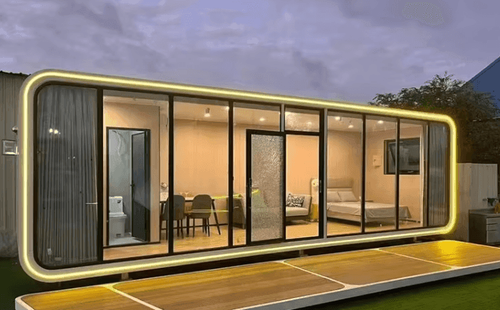
In the American context, prefabricated houses mainly refer to 'modular homes' or 'prefab homes'. Their core characteristics are factory-prefabricated components and rapid on-site assembly, serving as an important solution for addressing high housing costs in the United States.

I. Core Definitions and Product Types
American prefabricated houses primarily consist of 'modular homes' and 'prefab homes', adopting a factory-standardized production model. Components such as walls, floors, and roofs are manufactured in advance in factories and then transported to the site for assembly through splicing. This model significantly shortens the construction period, and the quality of components is controlled by the factory environment, resulting in higher precision than traditional on-site construction. Clayton Homes, as an industry leader, offers products covering modular homes, prefab homes, etc., mainly targeting middle- and low-income families and the market for essential housing needs. In 2014, its sales accounted for 45% of the American prefab housing market.
II. Cost-Effectiveness Drives Market Penetration
The popularity of prefabricated houses in the United States is closely related to housing costs. Traditional house construction relies on highly skilled construction workers, whose daily wages can reach $200-$500, and they refuse to work overtime. This leads to labor costs accounting for more than 50% of the total construction cost, with the total cost of a traditional house often exceeding one million RMB. In contrast, prefabricated houses reduce labor dependence through factory assembly-line production. A prefabricated house produced in China (including basic decoration and utilities) costs about 200,000 RMB per unit. Although locally produced prefabricated houses in the United States are slightly more expensive, they are still significantly lower than the cost of traditional house construction. For example, Clayton Homes' products further reduce costs through large-scale production, becoming the preferred choice for middle- and low-income groups.
III. Industry Consolidation Strengthens Market Position
The American prefabricated housing industry expands its market share through corporate mergers and acquisitions. In 2026, Berkshire Hathaway acquired the homebuilder Taylor Morrison for $6.8 billion and integrated it with Clayton Homes, forming a full product line covering affordable prefabricated houses to high-end detached homes. This integration made Berkshire Hathaway the fourth-largest residential developer in the United States by delivery volume. At the same time, through technology sharing (such as the combination of prefabricated components with high-end residential design), it enhanced product competitiveness and further consolidated the position of prefabricated houses in the American housing market.
In conclusion, American prefabricated houses, driven by cost advantages, standardized production, and industry consolidation, have become an important part of the American housing market.