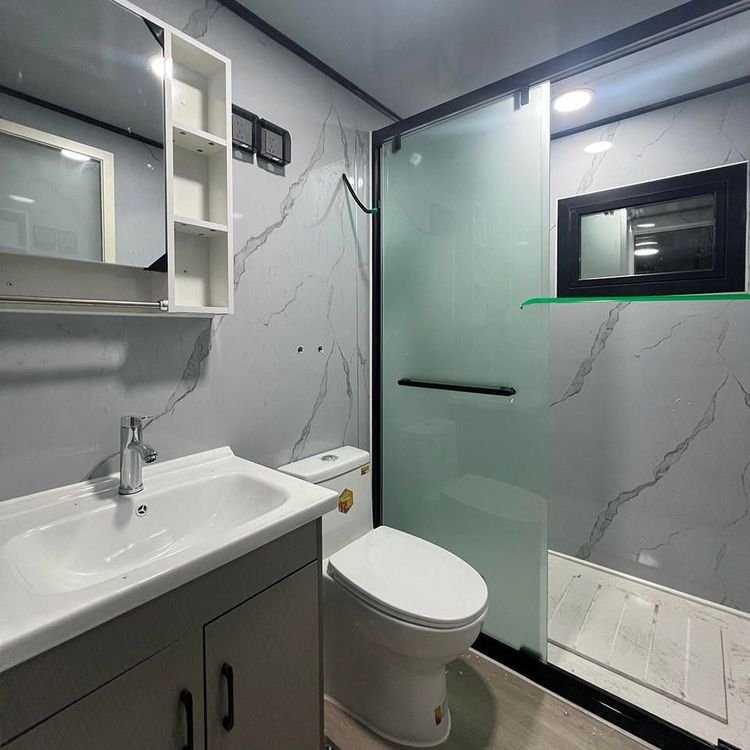
Water Leakage Problem in Prefabricated Houses
The water leakage in prefabricated houses mainly stems from their structural characteristics, and its treatment requires the use of flexible waterproof materials and attention to detail.

The water leakage problem in prefabricated houses is closely related to their structural features. Prefabricated panels are manufactured in factories and then transported to the site for hoisting and assembly. There are numerous joints between the floor slabs, and these gaps serve as the main channels for water leakage. These joints are typically filled with fine aggregate concrete or cement mortar. However, this rigid connection is prone to developing tiny cracks or separating when faced with temperature changes, building settlement, or vibrations. Water can then penetrate into the interior through these micro-cracks. Additionally, the concrete of the prefabricated panels itself can develop micro-pores over long-term use due to factors such as carbonation and freeze-thaw cycles, further exacerbating the risk of leakage.
A common approach to treating water leakage in prefabricated houses is to cover the joint areas with flexible waterproof materials. Membrane-type waterproof materials are widely used in such scenarios due to their excellent ductility and integrity. The membrane can cover the entire floor surface, especially above the joints, forming a continuous waterproof barrier that effectively prevents water penetration.
During the treatment process, it is crucial to focus on the precise location of the leakage points. Only by accurately identifying the leakage points can targeted treatment be carried out to improve the treatment effectiveness. At the same time, attention to construction details is also of utmost importance. The cleanliness and dryness of the base layer directly affect the bonding effect of the membrane. If the base layer contains dust, oil, or other impurities, or if it is damp, the bonding force between the membrane and the base layer will be reduced, leading to problems such as hollows and detachment of the waterproof layer, which will affect the waterproofing effect. Therefore, before construction, the base layer must be thoroughly cleaned to ensure it is clean, flat, and dry, providing a good foundation for the bonding of the membrane.
You may also like

Portable Toilet Independent: What to Know Before You Buy
Read More
Portable Toilet Waterproof Explained: How to Choose the Right One
Read More
Portable Toilet Insulation: Top Options & Considerations
Read More