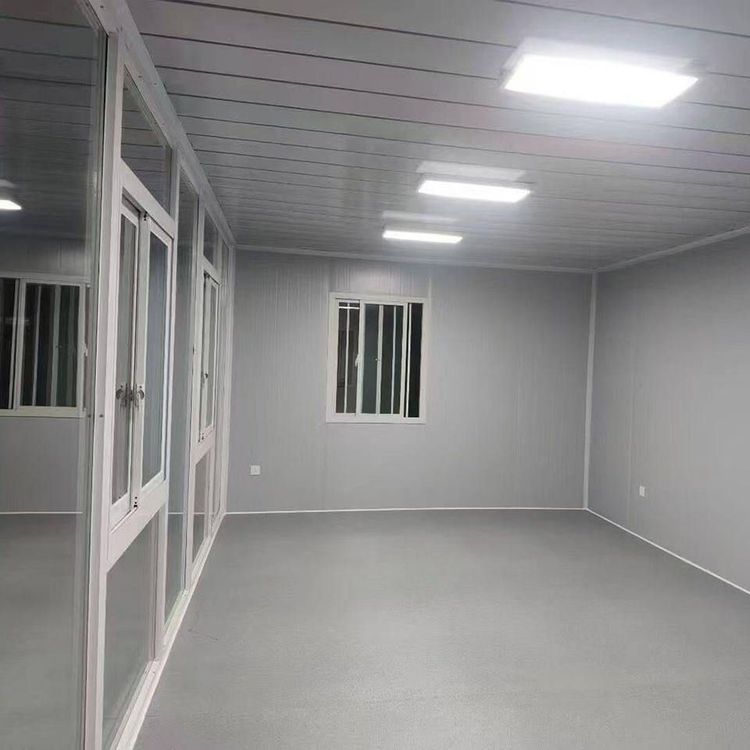
Defects of Prefabricated House Walls
The defects of prefabricated house walls are mainly reflected in insufficient seismic performance, poor sound insulation, poor waterproof performance, and poor thermal insulation performance.

Insufficient seismic performance: Prefabricated panel houses mainly rely on cement for construction. Although a certain amount of steel bars are added, their overall seismic capacity cannot be compared with that of modern buildings. According to a test report from the China Academy of Building Research, the seismic performance of prefabricated panel buildings is generally lower than the current building standards. When encountering earthquakes of magnitude 6 or above, the risk of collapse of such buildings is 3 - 5 times higher than that of modern frame-structure buildings. This means that in the event of natural disasters such as earthquakes, prefabricated house walls are difficult to provide sufficient safety guarantees, posing a significant threat to the lives of occupants.
Poor sound insulation: There are often sound bridges in the gaps and connection parts between prefabricated panels, making it easy for sounds from upstairs and downstairs, as well as from neighboring units, to spread. According to a survey by the housing and construction department, the sound insulation performance of prefabricated panel buildings is 15 - 25 decibels lower than the current standards. This not only affects living comfort but also has an impact on the physical and mental health of occupants when living in a noisy environment for a long time, such as triggering irritability, anxiety, and affecting sleep quality. Many residents report being able to clearly hear the sounds of their neighbors, which fully illustrates the seriousness of the sound insulation problem.
Poor waterproof performance: The joints between prefabricated panels are weak points for waterproofing. Over time, leakage problems are prone to occur, especially for the prefabricated panels on the roof and exterior walls. According to statistical data from the building quality supervision department, the leakage rate of prefabricated panel buildings is more than 40% higher than that of modern buildings. This not only affects the living experience but also long-term leakage can lead to structural dampness and steel bar corrosion, further affecting building safety. Some residents report that when it rains, it pours heavily outside, and it drizzles inside; when the rain stops outside, it starts to drip inside. This is a specific manifestation of poor waterproof performance.
Poor thermal insulation performance: Prefabricated panel buildings perform poorly in terms of thermal insulation and sound insulation, being hot in summer and cold in winter. In extreme weather, the walls are like paper. In winter, cold air seeps in through the gaps in the walls and the edges of doors and windows. Even when sleeping with thick quilts at night, one still feels the cold seeping into the bones, making hands and feet numb with cold. In summer, when the outdoor temperature soars, the interior is also very hot.