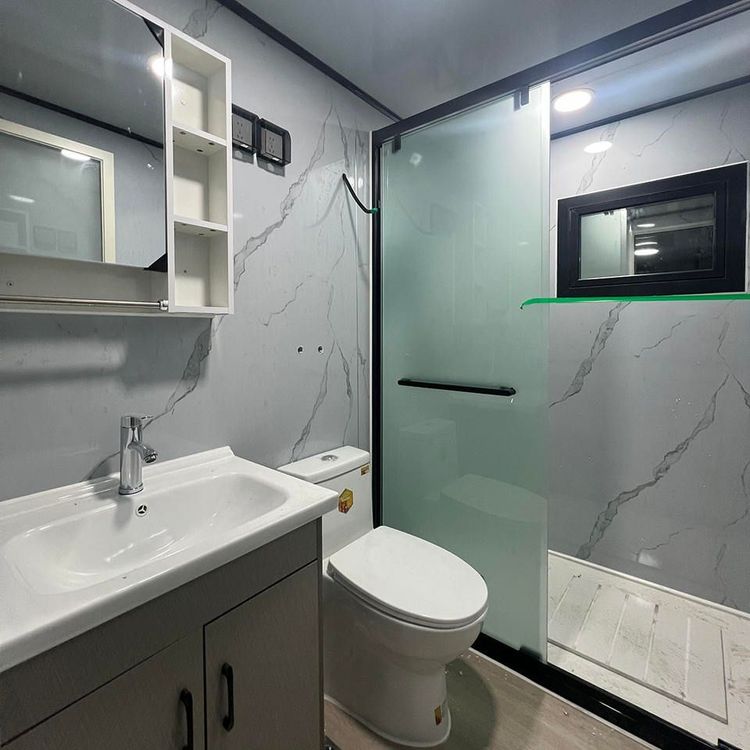
Technology of Prefabricated Houses
The technology of prefabricated houses is mainly reflected in modular construction, parallel operations and automated production, high-precision design, different structural types, and prefabricated panel production techniques.

Modular construction is one of the core technologies of prefabricated houses. It breaks down the building into independent modules, which are manufactured in a factory and then transported to the construction site for assembly. Components such as ceilings, floors, and plumbing are all prefabricated on the factory assembly line and then assembled on-site like building blocks. For example, at the CSCEC Hailong Intelligent Construction Industrial Park in Shenzhen, Guangdong, ceilings, walls, and bathroom waterproof layers are all produced here. Some scattered components are manufactured separately and then assembled on the final assembly platform, with an annual delivery capacity of 20,000 to 30,000 modules.
Parallel operations and automated production are also crucial technologies. Unlike traditional on-site sequential construction, factories employ parallel operations combined with the use of automated vertical warehouses and intelligent production lines. Compared to traditional construction, the construction period of modular buildings can be shortened by more than 60%.
High-precision design is key to ensuring the quality of prefabricated houses. To build houses like industrial products, the design of modular buildings must be more meticulous. The position of each steel bar must be precisely located, with error and precision controlled in millimeters. Each “building block” has a detailed “ID card,” including project name, product model, and production date.
Different structural types meet diverse needs. Steel structures are lightweight and suitable for ocean transportation and high-rise buildings; concrete structures offer a more traditional living experience and are widely accepted in the domestic market. For example, CMC composite modular buildings enhance earthquake resistance through integrated steel-concrete pouring, reducing the construction period by 30% compared to traditional methods.
Prefabricated panel production techniques are equally indispensable. When making prefabricated panels, a hollow mold is first created using wooden boards. Steel bars are placed inside the hollow part of the mold, which is then filled with cement. After drying, the wooden boards are removed, leaving behind the prefabricated panels, which come in both solid and hollow types. The hollow structure achieves lightweighting by reducing non-load-bearing concrete.
You may also like
Why Portable Toilet Movable Rental Matter: A Quick Guide
Read More
Portable Toilet Solution Custom & OEM: Design & Bulk Production Guide
Read More
Portable Toilet Size Drawings Specifications: Size, Area & Layout
Read More