
Requirements for Prefabricated House Suppliers
When selecting a prefabricated house supplier, it is essential to conduct a comprehensive evaluation across eight dimensions: enterprise type, product matching, case experience, delivery capability, stability, qualification and craftsmanship, standard specifications, and after-sales service. Details are as follows:
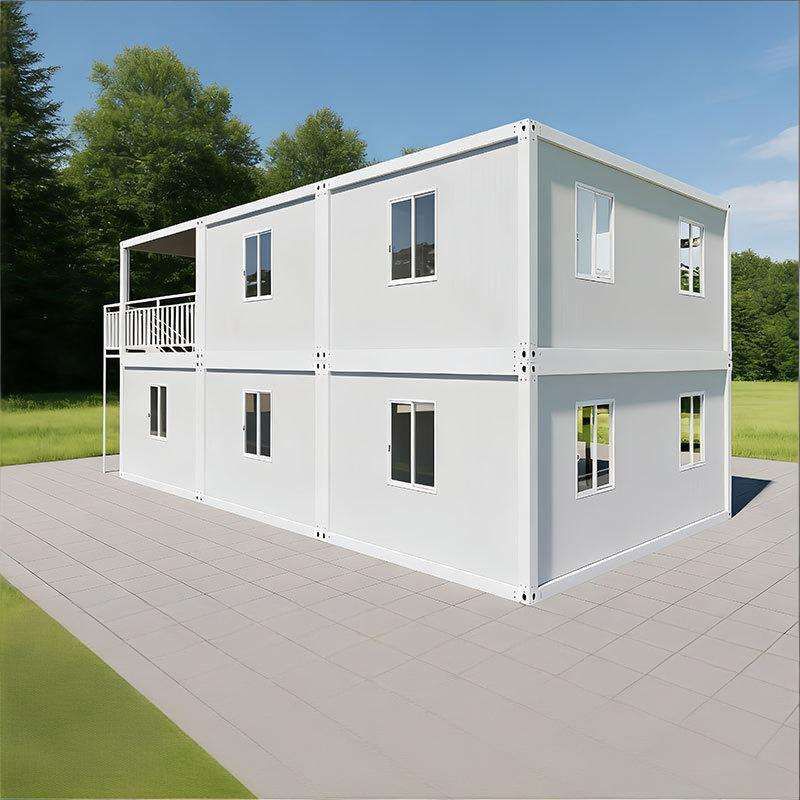
1. Enterprise Type and Production Capacity
Prioritize production enterprises over channel enterprises, especially for large-volume purchases or when custom dimensions, appearances, and configurations are required. Confirm the location of the production base, the main product types, whether the enterprise is equipped with its own production facilities, and its ability to accept non-standard size customization. Enterprises that allow on-site inspections by customers typically have stronger control over the production process, reducing communication costs and delivery risks.
2. Product Expertise and Project Requirement Matching
Prefabricated houses come in various types, and the appropriate product should be selected based on the project scenario:
- Construction Site Temporary Buildings: Focus on standardization and rapid installation, such as standard packing containers or quick-assembly containers;
- Cultural Tourism Homestays: Pay attention to appearance design and spatial flexibility, such as foldable containers or modular buildings;
- Long-term Residences: Examine structural stability, thermal insulation, waterproofing performance, and living comfort, such as light steel residences;
- Export Projects: Confirm whether the products meet container loading dimensions and environmental requirements of the destination (such as wind and earthquake resistance ratings).
Avoid suppliers with a wide range of products but insufficient experience in the target field.
3. Authentic Project Cases
Require suppliers to provide case images and implementation details similar in scale and purpose to your own project, and conduct on-site inspections of completed projects if necessary. Cases can verify whether the enterprise is familiar with the technical challenges of the target scenario (such as decoration compatibility in cultural tourism projects and transportation adaptability in overseas projects), reducing the cost of later adjustments.
4. Delivery Capability
For customized projects, clarify the manufacturer's scope of responsibility, including packaging, transportation, unloading, installation, and technical cooperation. For cross-regional projects, assess the material transportation organization capability; for overseas projects, confirm container loading, customs declaration, sea freight, and on-site installation guidance services. Also, agree on the freight payer, whether the installation work includes foundation construction, and the handling timeframe for later material issues.
5. Enterprise Stability
For long-term projects, examine the enterprise's establishment time, production base scale, qualification certificates (such as Steel Structure Engineering Professional Contracting Qualification), technical team stability, and historical project duration. Enterprises established for more than 5 years, with their own production bases and continuous cases, generally have stronger risk resistance capabilities.
6. Qualification Certification and Raw Material Craftsmanship
Prioritize enterprises that have passed ISO quality system certification and confirm the source of raw materials (such as high-strength frame structure steel, aluminum-plastic panel/rock wool sandwich panel exterior walls) and production processes. High-quality manufacturers adopt modular design to enhance wind and earthquake resistance performance and optimize materials for different scenarios (such as selecting anti-corrosion color steel plates for humid areas).
7. Standardized Specifications
The common standard container size is 3m (width) × 6m (length) × 2.5/2.8m (height), with a single unit weighing approximately 1.4 tons. Such specifications facilitate transportation and lifting, reducing logistics costs. For non-standard projects, confirm the manufacturer's customization capability and additional costs in advance.
8. Installation Method and After-sales Service
Modern prefabricated houses mostly adopt 'weld-free' or 'bolt connection' modular assembly for rapid installation. After-sales service should include at least a 1-year warranty period, electrical circuit maintenance, and container refurbishment services. Some enterprises also offer regular inspections, which can extend the service life of the house.



