
Prefabricated House Step Diagram Method
The construction steps of prefabricated houses can be illustrated through three core stages: factory prefabrication, transportation and export, and on-site assembly. The specific process is as follows:
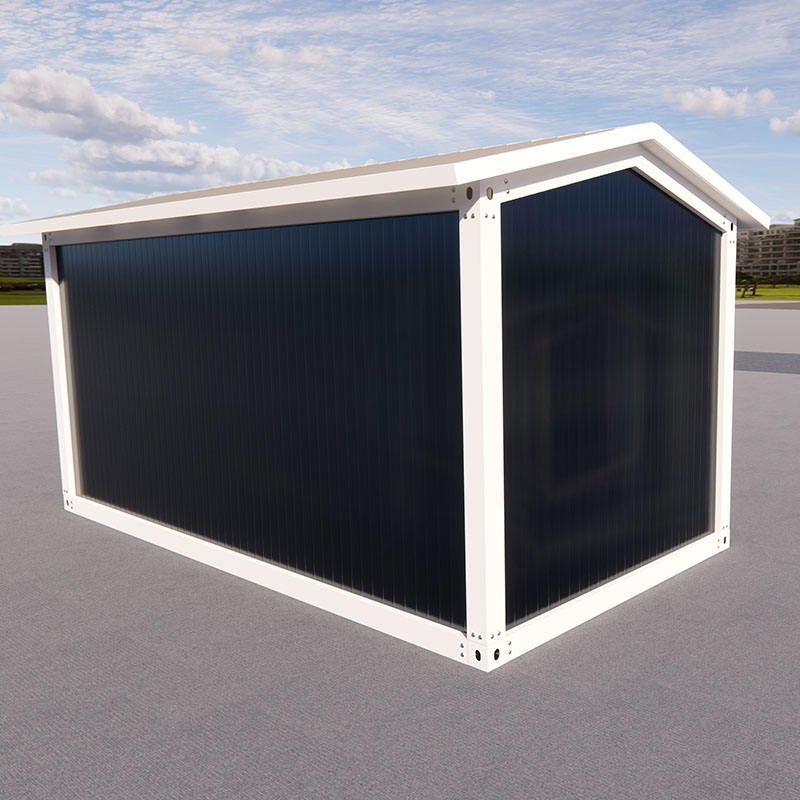
I. Factory Prefabrication Stage: Modular Production and Quality Inspection
The core of prefabricated houses lies in dividing the overall structure into independent standard modules (such as bedrooms, kitchens and bathrooms, corridors, etc.), with each module undergoing full-process production in the factory. First, the main frame is constructed through steel structure welding to ensure structural strength; subsequently, walls are laid, water and electricity pipelines are embedded, and doors and windows are installed to achieve basic functional integration. Key processes include the fine decoration phase, such as wall coatings, floor laying, and installation of bathroom fixtures, enabling modules to reach a complete state of “decorated and with utilities connected” upon leaving the factory.
During production, mechanized operations ensure millimeter-level precision, avoiding errors common in on-site construction. After completion, modules must pass waterproofing, fire resistance tests, and safety inspections, such as simulating heavy rain to detect leaks or conducting high-temperature tests to verify fire resistance, ensuring compliance with international building standards.
II. Transportation and Export Stage: Standardized Logistics and Protection
Modules are uniformly coded and classified for acceptance, followed by multiple protective treatments: waterproof layers cover module surfaces to prevent moisture damage during transportation; anti-corrosion coatings protect metal components to extend service life; anti-vibration brackets secure modules to avoid damage from bumps. After protection, modules are transferred to domestic ports via specialized flatbed trucks.
Logistics design emphasizes standardized compatibility: Module dimensions strictly match international shipping container specifications (such as 20-foot or 40-foot standard containers) for easy loading and transportation. Ocean-going freighters deliver modules to over 150 countries and regions worldwide, with real-time tracking via IoT technology throughout the logistics process to monitor location and status, ensuring safe arrival.
III. On-Site Assembly Stage: Rapid Assembly and Functional Connectivity
Upon arrival at overseas ports, modules are directly transported to the construction site, eliminating the need for traditional wall-building, plastering, or pipeline laying processes, significantly shortening the construction period. The assembly process is as follows:
- Lifting Preparation: Use tower cranes or truck-mounted cranes, selecting models based on component weight (e.g., 50-ton cranes), and harden the ground in advance (20mm thick steel plates) to distribute pressure.
- Module Docking: Lift modules to designated positions according to a pre-designed lifting sequence, securing them with high-strength bolts or welded joints to ensure structural stability.
- Functional Connectivity: Connect water and electricity pipelines, install seals to prevent leaks, and test equipment (such as lighting and air conditioning). For example, a senior living apartment project in the UK completed the assembly of 63 houses in just 14 days, demonstrating efficiency advantages.
Additional Operating Points:
- Technical Preparation: Pre-locate structural embedded parts to ensure alignment between component drawings and on-site lifting plans.
- Layout Planning: Ensure the tower crane’s coverage extends to all assembly areas to avoid blind spots.
- Lifting Sequence: Load components onto vehicles following the principle of “lower first, upper later; heavier first, lighter later,” and mark serial numbers and control lines for quick positioning.
Prefabricated houses achieve a dual improvement in construction efficiency and quality through the “industrialized production + modular transportation + rapid assembly” model, making them particularly suitable for scenarios such as overseas emergency housing and vacation villas.



