
Prefabricated House Steel Frame
Prefabricated house steel frames mainly include three types: prefabricated steel reinforcement skeletons, steel frames in prefabricated reinforced concrete houses, and reinforced concrete trusses.
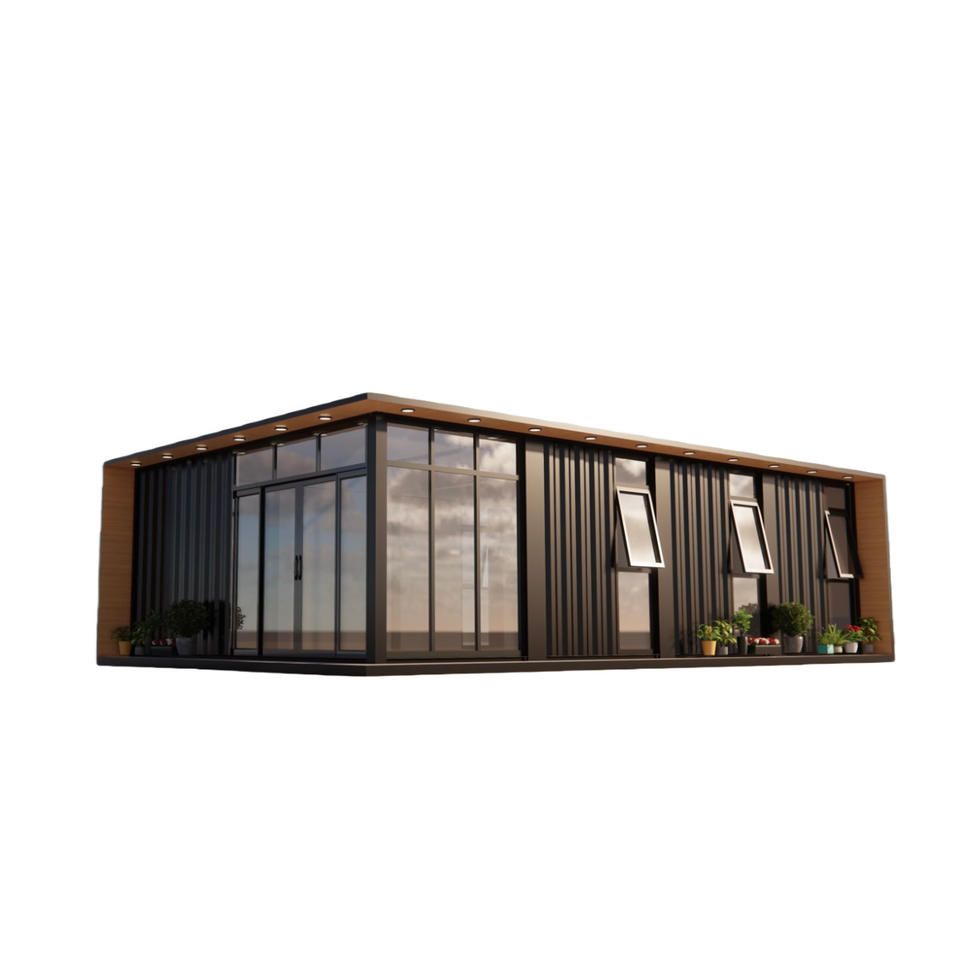
Prefabricated steel reinforcement skeletons: They play a crucial role in house construction. During production, spring-like steel bars are placed into a specific device and then bound to the main steel bars by a fully automatic machine to form a prefabricated steel reinforcement framework. The spring-like steel bars mainly serve as temporary fixtures and are removed during the later construction stage. The design of incorporating spring steel bars greatly facilitates the transportation process. Workers first use binding wires to attach the spring steel bars to the main steel bars. This automated and mechanized operation method can precisely ensure the spacing between steel bars and the stability of the overall structure, laying a solid foundation for subsequent house construction.
Steel frames in prefabricated reinforced concrete houses: Their full name is "prefabricated reinforced concrete full-frame shear wall structure houses", with the core process being a combination of factory prefabrication and on-site assembly. At specialized production bases, with the help of high-precision molds, core components such as walls, floors, and beams and columns are cast in one piece. Each module integrates multiple structures including a steel reinforcement skeleton, insulation layer, waterproof layer, and pre-embedded pipelines. Using concrete with a grade of C30 - C40 and incorporating a steel bar mesh with a diameter of Φ8 - Φ12, the compressive strength reaches 25 - 30MPa, which is 1.5 times that of traditional brick-and-mortar structures, significantly enhancing the robustness and durability of the houses.
Reinforced concrete trusses: They are truss structures made of reinforced concrete or prestressed concrete and are widely used in the construction field, mostly for roof trusses, towers, and trestle bridges. Their conventional applicable spans are 18, 24, and 30 meters, and in some special cases, the span can reach 60 meters. In terms of construction methods, options include integral in-situ casting or block prefabrication and assembly. This structure has significant characteristics such as high rigidity and good durability, being able to withstand large loads and complex external forces, providing reliable protection for the safety and stability of buildings.
You may also like

Portable Toilet Eco-Friendly: MOQ, Samples & Quotation Guide
Read More
Top Portable Toilet Color Steel Manufacturers: How to Choose a Factory Partner
Read MorePortable Toilet Picture: Types, Features & Buying Tips
Read More