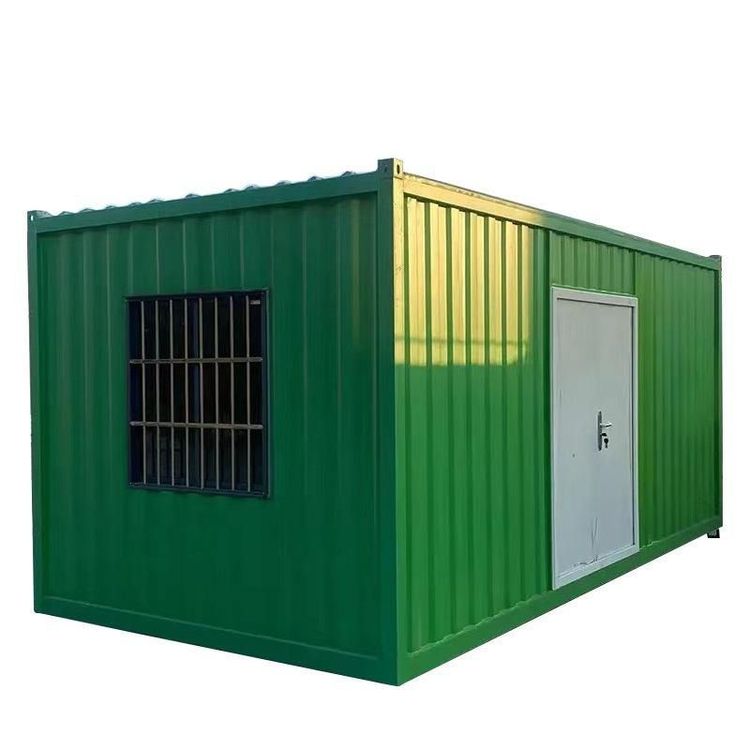
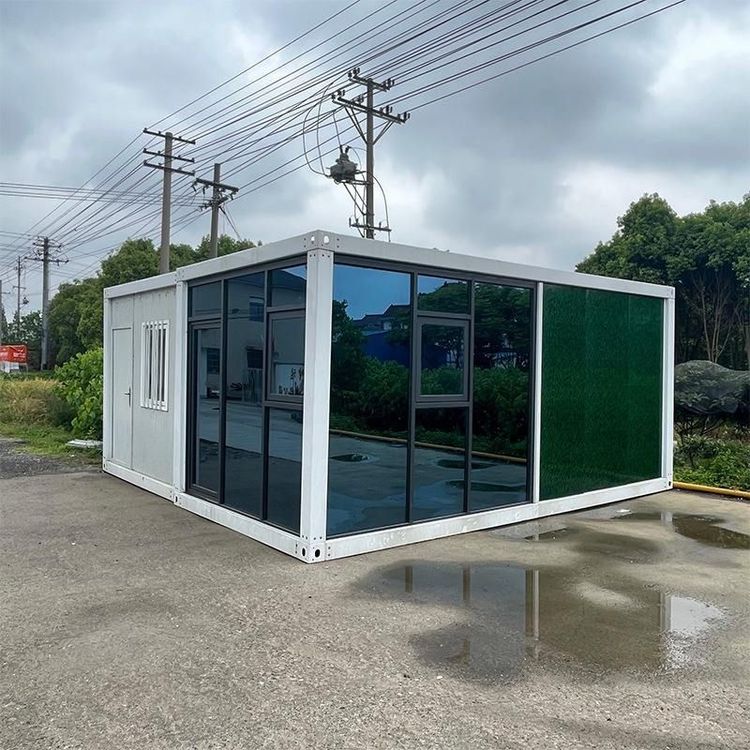
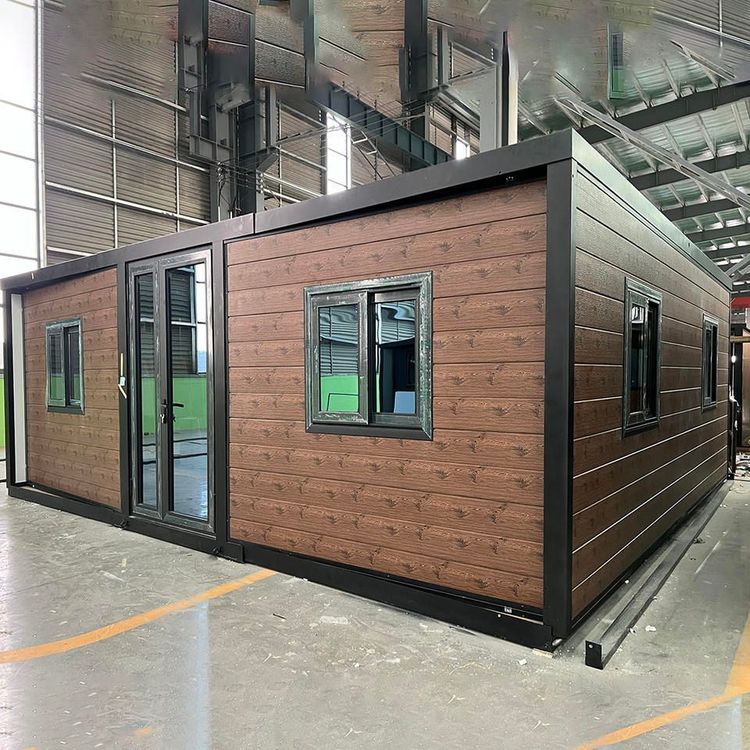
Explanation of the Process Flow Chart for Prefabricated Houses
The process flow of prefabricated houses can be divided into three core stages: factory prefabrication, transportation, and on-site assembly, as detailed below:
I. Factory Prefabrication Stage
The core of prefabricated houses lies in dividing the building into independent standard modules (such as bedrooms, kitchens, bathrooms, corridors, etc.), enabling efficient construction through industrialized production.
- Modular Disassembly and Production: Based on design drawings, the house is divided into multiple functional modules. Each module undergoes processes such as steel structure welding, wall laying, pre-embedding of water and electricity pipelines, door and window installation, and interior decoration within the factory. For example, walls may use light steel keels or concrete prefabricated components, with integrated circuits and water pipe systems inside to avoid secondary construction on-site.
- Precision Control and Quality Inspection: All modules achieve millimeter-level precision through mechanized production, ensuring seamless对接 (docking/connection) during assembly. Before leaving the factory, they must undergo waterproofing, fireproofing tests, and safety quality inspections to ensure compliance with international building standards. For instance, some companies simulate extreme environments to test module durability.
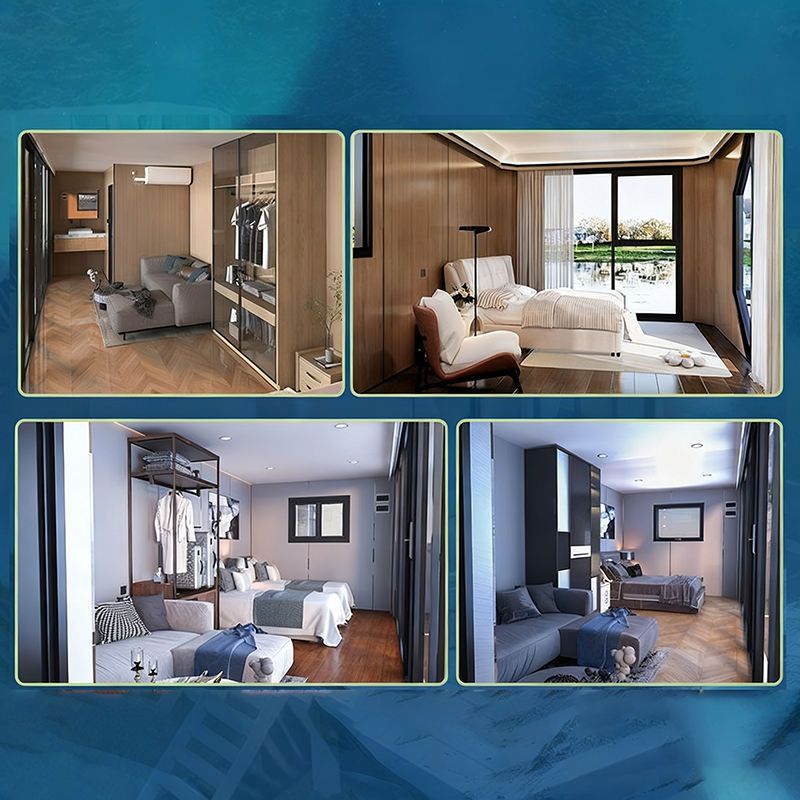
- Finished Product Status: Modules leave the factory as complete rooms with decoration and water and electricity systems, ready for assembly, reducing on-site construction time and labor costs.
II. Transportation Stage
Modules need to be transported from the factory to overseas construction sites, requiring a balance of safety and efficiency in logistics.
- Module Packaging and Protection: Module sizes are customized according to customer needs, uniformly coded and classified, and then subjected to waterproofing, corrosion prevention, and shock absorption treatments. For example, moisture-proof films are used to wrap module surfaces, and buffer materials are added at key points to reduce transportation vibration damage.
- Full-Vehicle Transportation and Sea Freight Adaptation: Modules are transferred to domestic ports via dedicated flatbed trucks, with sizes strictly adapted to international standard sea freight containers (such as 20-foot or 40-foot containers) to reduce logistics costs.
- Fully Traceable Logistics: Modules are shipped by cargo vessels to over 150 countries and regions worldwide, with real-time monitoring of transportation status achieved through IoT technology to ensure safe arrival of goods.
III. On-Site Assembly Stage
After arriving at the construction site, modules are quickly assembled to complete house construction.
- Landing and Positioning: Modules are directly transported to designated locations, minimizing secondary handling. For example, in a senior living apartment project in the UK, modules were precisely placed on pre-cast concrete foundations.
- Lifting, Docking, and Pipeline Connection: Using cranes, modules are positioned and locked according to their codes, and water and electricity pipelines are quickly connected through pre-embedded interfaces. Since the module's internal systems are already integrated, there is no need for wall construction or pipeline laying on-site, significantly shortening the construction period.
- Rapid Formation and Efficiency Improvement: The assembly process is highly efficient, with 63 senior living apartments in the UK completed in just 14 days, representing a more than 60% efficiency improvement over traditional methods. After assembly, only a small amount of finishing work (such as exterior wall decoration and landscaping) is required before delivery.
Additional Note: The construction principle of prefabricated housing is similar, but it focuses more on the disassembly and assembly of concrete prefabricated components (such as columns, beams, and floor slabs). These components need to be prefabricated in the factory in advance and then assembled on-site using tower cranes and other equipment. Key technical points include locating pre-embedded parts based on component drawings, optimizing loading sequences, and arranging steel-plate hardened road surfaces on-site.