
Occupancy of Prefabricated Houses
Prefabricated houses can usually be occupied directly after assembly and construction are completed. Here is a detailed introduction to the occupancy of prefabricated houses:
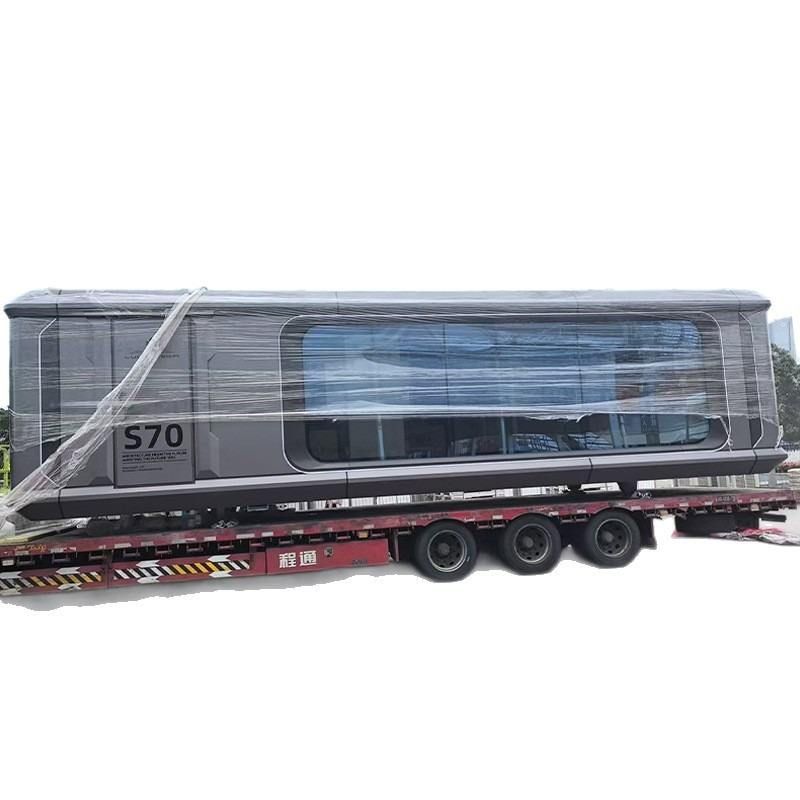
I. Occupancy Conditions Prefabricated houses are fully prefabricated in the factory, including the main structure, decoration, and all supporting facilities. The modular prefabricated house construction method divides the house into standardized modules. In the workshop, the entire process of wall, floor, water and electricity, and kitchen and bathroom decoration is completed in one go. The doors, windows, home appliances, and pipelines of the standardized living modules are all pre-installed. After on-site assembly is completed, as long as water and electricity are connected and basic living conditions are met, the house can be occupied directly.
II. Advantages
- High cost-effectiveness: The basic model costs only 200,000 RMB for the whole set, including the main structure, decoration, and all supporting facilities. Compared with traditional construction methods, it has a significant price advantage and can save a large amount of costs for home buyers.
- Fast delivery efficiency: Delivery can be completed in as little as 3 months, allowing for move-in with luggage. Traditional construction has a long cycle and is affected by various factors such as weather and construction techniques. In contrast, prefabricated houses are prefabricated in the factory and assembled on-site, greatly shortening the construction time and improving delivery efficiency.
- High construction precision: The construction precision can reach the millimeter level. Standardized production in the factory enables better control of construction quality, reducing errors caused by human factors and ensuring the quality and stability of the house.
III. Wide Application Scenarios Currently, mature modular construction technology has been implemented in multiple scenarios, covering areas such as affordable housing, rural residences, public facilities, and industrial buildings. It is also suitable for scenarios such as the renovation of old residential areas, emergency housing, and industrial park dormitories. This indicates that prefabricated houses can meet people's housing needs in different scenarios and have broad applicability and market prospects.



