
What Are the Materials for Prefabricated Houses
The main materials for prefabricated houses include steel, reinforced concrete, wood, plastics, and new environmentally friendly materials, etc. Here is a detailed introduction:
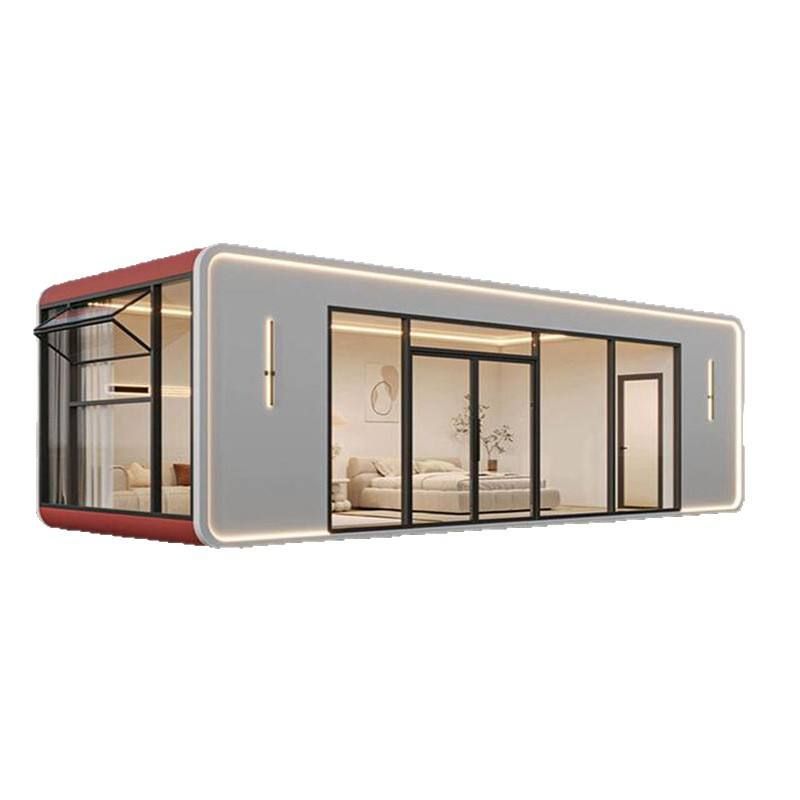
Steel: Steel is one of the commonly used structural materials in prefabricated houses. It has high strength, good toughness, and plasticity, enabling it to bear large loads and is suitable for constructing the frame structure of houses. Steel can be prefabricated in factories into components of various shapes and sizes, such as beams, columns, and trusses, and then transported to the construction site for assembly, greatly shortening the construction period. Moreover, steel can be recycled and reused, aligning with the concept of sustainable development.
Reinforced Concrete: Reinforced concrete combines the tensile strength of steel bars and the compressive strength of concrete, possessing high load-bearing capacity and durability. In prefabricated houses, reinforced concrete is often used to make prefabricated wall panels, floor slabs, and other components. These components are manufactured in factories through processes such as formwork pouring and curing, featuring precise dimensions and stable quality. During installation, only the prefabricated components need to be spliced and connected to quickly form the structural system of the house.
Wood: Wood is a traditional building material and also finds certain applications in prefabricated houses. Wood has the advantages of being lightweight, having relatively high strength, and being easy to process. It can be used to make parts such as the frame, walls, and roof of prefabricated houses. Some lightweight prefabricated houses adopt wooden frame structures, paired with insulation materials and decorative panels, ensuring both the structural safety of the house and good thermal insulation performance.
Plastics: Plastics are mainly used in prefabricated houses to make non-structural components such as doors and windows, pipes, and decorative moldings. Plastics have characteristics such as being lightweight, corrosion-resistant, and having good insulation properties, meeting different usage requirements. For example, plastic doors and windows have good sealing and thermal insulation performance, effectively reducing the energy consumption of the house.
New Environmentally Friendly Materials: With the enhancement of environmental awareness, the application of new environmentally friendly materials in prefabricated houses is becoming increasingly widespread. These materials have characteristics such as being recyclable and energy-saving and emission-reducing, such as recycled plastics, bamboo, and straw panels. They can not only reduce dependence on natural resources but also lower environmental pollution during the house construction process.



