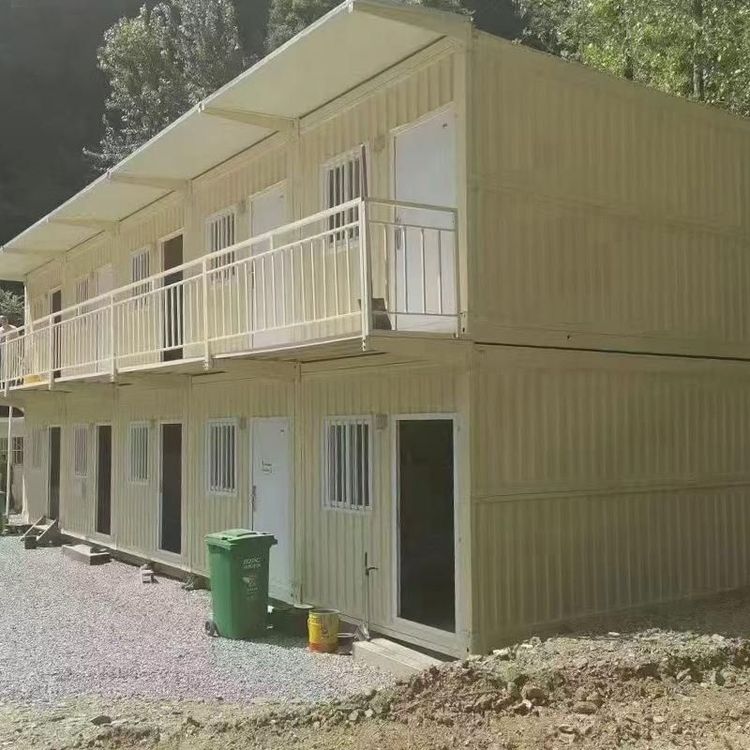
How Long Does a Prefabricated House Last?
The design lifespan of a prefabricated house is typically 30 to 40 years, but its actual service life can be extended to several decades or even over a century, depending on various factors.

Distinction Between Design Lifespan and "Obsolescence Period"
The design lifespan of a prefabricated house is generally defined as 30 to 40 years, based on a comprehensive assessment of material performance, structural stability, and normal usage conditions. However, it is important to clarify that the "design lifespan" is not the same as the "obsolescence period". The national standard design service life for ordinary urban residential buildings is 50 years, and this standard also applies to prefabricated houses. Under normal construction, regular maintenance, and without significant external damage, the house will not require major repairs within 50 years and can continue to be used after professional inspection and reinforcement upon expiration.
Potential for Extended Theoretical Lifespan
If a prefabricated house remains in a stable environment (e.g., free from earthquakes, foundation settlement, extreme weather conditions, etc.) and is properly maintained (e.g., regular structural inspections, replacement of aging components, anti-corrosion and rust-proof treatments, etc.), its theoretical lifespan can be significantly extended. For example, some prefabricated houses constructed with high-strength concrete or weather-resistant steel may have a structural lifespan exceeding 50 years, even reaching several decades or over a century, without external interference. This conclusion is based on material science principles: the durability of concrete and steel can be maintained for a long time under ideal conditions, and the factory production of prefabricated components reduces construction errors, further enhancing structural stability.
Key Influencing Factors
- Construction Quality: Defects in the connection joints of prefabricated components or foundation treatment can shorten the actual lifespan.
- Maintenance Frequency: Regular inspections and repairs (e.g., waterproof layer renewal, steel structure anti-corrosion treatments) can delay material aging.
- Environmental Conditions: Humid or corrosive environments or frequent earthquakes can accelerate structural wear and require targeted protective measures.
- Usage Norms: Overloading or unauthorized modifications can disrupt structural balance and lead to a shortened lifespan.
Summary
The lifespan of a prefabricated house is not a fixed value but is determined by a combination of design standards, construction quality, maintenance level, and environmental factors. 30 to 40 years is a conservative design estimate, 50 years is an achievable lifespan under normal usage conditions, and the theoretical lifespan can be even longer under ideal conditions. Users should maximize the lifespan of their houses through standardized construction, regular maintenance, and reasonable usage.