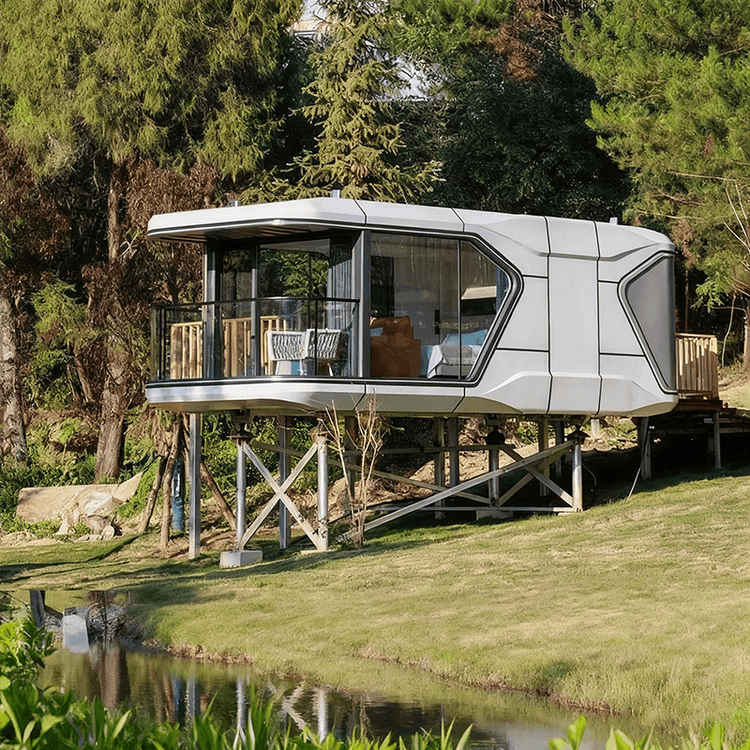
Prefabricated House Hoisting
Prefabricated house hoisting is a prefabricated construction method that involves the overall hoisting and movement of the house by a crane without the need for disassembly. The following provides a detailed introduction from the aspects of composition, hoisting process, process characteristics, and application examples:

Main Composition
The main body of a prefabricated house can be composed of different materials. One type is metal decorative insulation panels, which offer good thermal insulation performance and decorative effects, providing a comfortable living environment for the house. Another type is concrete modules, which are prefabricated in factories through standardized production, ensuring better quality. For example, in the factory, concrete is poured into modules of specific shapes and sizes according to design requirements. These modules possess various functions such as earthquake resistance, fire resistance, and energy efficiency, meeting the usage needs of different buildings.
Hoisting Process
During the hoisting process, cranes play a crucial role. The crane hoists the prefabricated concrete house modules from the transport vehicles and moves them to the designated positions. Meanwhile, workers need to closely cooperate to accurately align and place the modules onto the foundation. This process eliminates the need for on-site pouring, significantly shortening the construction time. Compared to traditional construction methods, it avoids long hours of on-site concrete mixing, pouring, and curing operations, thereby greatly reducing the construction period.
Process Characteristics
The joints between modules adopt on-site steel bar splicing and concrete pouring processes. This process ensures a firm connection between the modules, enhancing the overall stability and safety of the house. Some projects are planned with multiple prefabricated modules, each containing electromechanical pipelines and decorative components. These modules are assembled using truck cranes, similar to building with blocks, quickly forming a complete building. This feature of easy installation makes the construction process more efficient.
Application Examples
Due to its short construction period and easy installation, this building form has been widely applied in some regions. For example, the key infrastructure construction project for rural revitalization in Huoshaocheng Village, Shimen Town, Tianzhu County in 2023 adopted hoisted houses as residential buildings. This construction method not only met the housing needs of local residents but also provided strong support for the rapid advancement of rural revitalization projects.